


Listen to the article
Native American Tribes Turn to Bison Herds Amid Food Aid Disruption
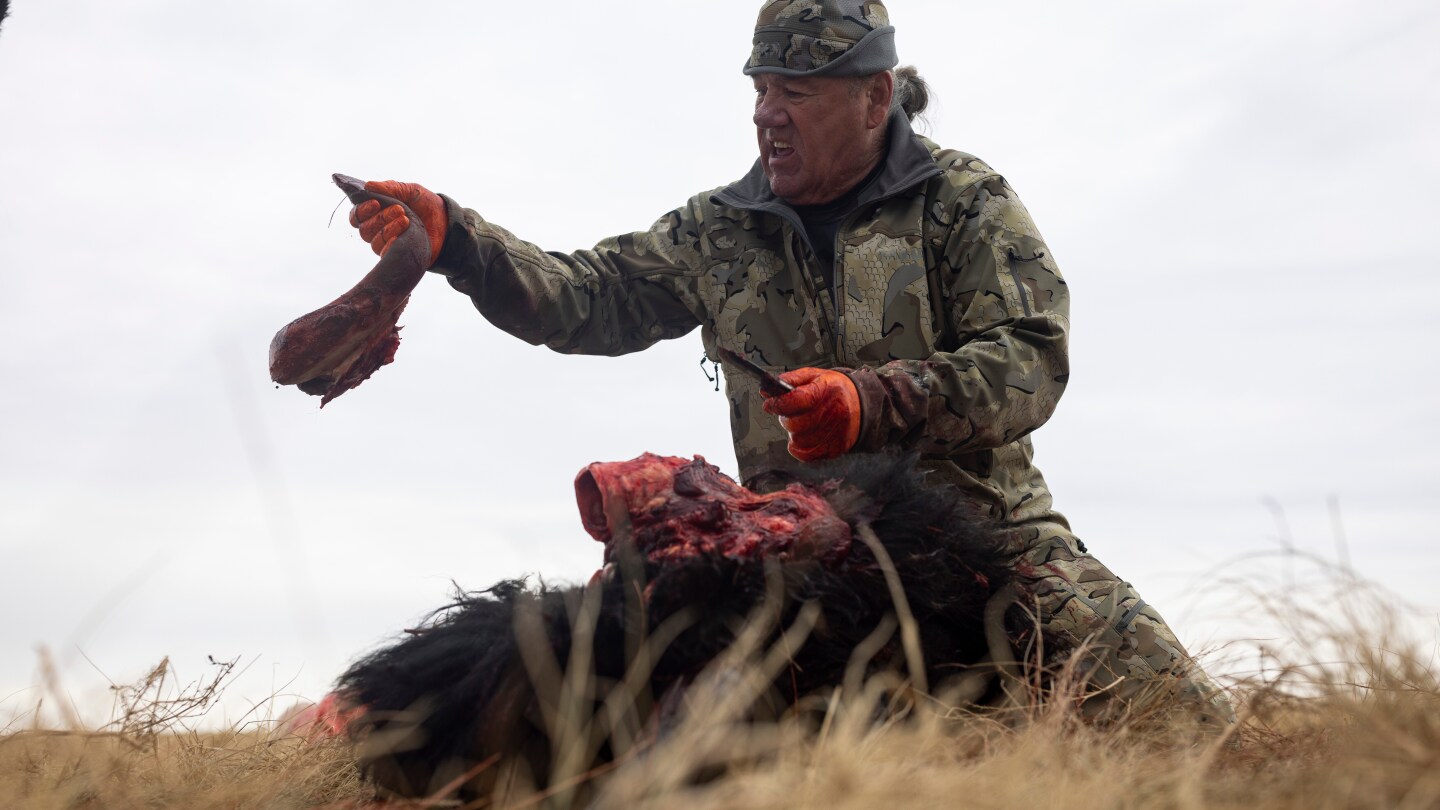
On the open plains of Montana’s Fort Peck Reservation, Robert Magnan leaned from his truck window, steadied his rifle, and with a single shot brought down a bison in its tracks. Together with a co-worker, Magnan harvested three bison that day, quickly field dressing the animals before transporting them for processing into ground beef and meat cuts for distribution to members of the Fort Peck Assiniboine and Sioux Tribes.
As lawmakers in Washington struggled to resolve the longest government shutdown in U.S. history, tribal leaders across the Great Plains took decisive action, culling their cherished bison herds to help feed their communities when federal food assistance programs faltered.
Nearly one-third of Fort Peck’s tribal members depend on monthly benefit checks, almost triple the national rate. When the Trump administration restricted funding to the Supplemental Nutrition Assistance Program (SNAP) during the shutdown, these families received only partial payments for November.
“We were bringing it up with the tribal council: What would happen if the government went bankrupt? How would we feed the people?” said Magnan, who has long managed Fort Peck’s bison herds. “It shows we still need buffalo.”
Fort Peck tribal officials say they anticipated such a crisis years ago when they strengthened their herds with animals from Yellowstone National Park, despite objections from cattle ranchers concerned about disease transmission.
The tribe authorized culling 30 bison—approximately 12,000 pounds of meat. By Tuesday, half had been harvested, and despite news of a potential deal to end the shutdown, Magnan confirmed the remaining animals would still be processed. With Montana among the states dispersing only partial SNAP payments, tribal chairman Floyd Azure said Fort Peck would continue providing buffalo meat to community members.
Similar scenes played out across Native reservations. The Blackfeet, Lower Brule Sioux, Cheyenne River Sioux, and Crow tribes all turned to their bison herds to feed their people, distributing thousands of pounds of meat to families affected by the interrupted federal aid.
“It’s the obligation they incurred when they took our lands, when they stole our lands, when they cheated us out of our lands,” said Mark Macarro, president of the National Congress of American Indians, referring to the federal government’s trust and treaty responsibilities to fund tribal health and wellbeing. “It lacks humanity to do this with SNAP, with food.”
Historical Significance of Buffalo to Plains Tribes
The relationship between Plains tribes and buffalo spans centuries, with the animals providing essential food, clothing, and shelter. This symbiotic relationship was violently disrupted in the late 19th century.
Dennis Smith, an Assiniboine historian and retired University of Nebraska-Omaha history professor, notes that white “hide hunters” arrived in the Upper Missouri River basin around Fort Peck in 1879, targeting some of the last remaining bison herds that once numbered in the millions. By 1883, the animals were virtually exterminated, leading to widespread starvation among the Assiniboine and other Plains tribes when the government denied them food aid.
Today’s tribal buffalo programs represent not just food security but cultural renewal. The Blackfeet Nation, which typically distributes buffalo meat to elders and for ceremonies, killed 18 animals from its 700-strong herd during the shutdown—an unprecedented number.
“We can’t do that many all the time. We don’t want to deplete the resource,” explained Ervin Carlson, who manages the Blackfeet buffalo program.
Beyond Bison: Diverse Tribal Responses
Other Native communities throughout the country found creative ways to address the food security crisis. The Mi’kmaq Nation in Maine stocked food banks with trout from their hatchery and locally hunted moose meat. In southeastern Oklahoma, the Comanche Nation accepted deer meat donations for food banks, while the Choctaw Nation established three meat processing facilities in the southwestern part of the state.
Although the Food Distribution Program on Indian Reservations continued operating during the shutdown, not all tribes participate in this program. The Mi’kmaq, for instance, relies heavily on funding for food pantries through the federal Emergency Food Assistance Program, which was disrupted. About 80% of Mi’kmaq tribal members in Aroostook County depend on SNAP benefits, according to Kandi Sock, the tribe’s community services director.
In South Dakota, the Cheyenne River Sioux Tribe distributed meat from about 20 buffalo and expanded its processing capacity after experiencing shortages during the COVID-19 pandemic. The tribe now operates a facility capable of processing 25-30 animals weekly.
The Lower Brule Sioux Tribe, which recently opened its first full grocery store after decades as a “food desert” requiring 100-mile round trips for groceries, distributed over 400 pounds of meat to more than 100 tribal members in a single day.
For many tribal members like Miki Astogo and Dillon Jackson-Fisher from Fort Peck, the situation became desperate. With four children to feed and only partial SNAP benefits—$196 instead of their usual $298 monthly payment—the couple walked four miles into town to collect food boxes containing bison meat.
“Our vehicle’s in the shop, but we have to put food on the table before we pay for the car, you know?” Jackson-Fisher explained.
As tribal communities continue responding to the crisis with resilience and resourcefulness, their actions underscore both the ongoing challenges of dependence on federal programs and the critical importance of maintaining traditional food sources like the once-nearly-extinct American bison.
Fact Checker
Verify the accuracy of this article using The Disinformation Commission analysis and real-time sources.

10 Comments
This is a sobering reminder of the cascading effects that government dysfunction can have on vulnerable populations. I hope these tribes are able to weather this crisis and that their bison herds can be restored once the situation stabilizes.
Agreed. The tribes’ self-reliance in this situation is admirable, but it’s concerning that they were put in a position where they had to cull their herds just to feed their people. Hopefully this galvanizes greater support and recognition for their sovereignty and needs.
I’m curious to learn more about the specific impacts the government shutdown has had on these tribes’ food aid programs. What were the gaps that led them to have to rely on culling their bison herds? It seems like an extreme measure that hopefully won’t be necessary for long.
Good question. The article mentions the tribes’ heavy reliance on SNAP benefits, which were disrupted by the shutdown. Turning to their bison herds was likely a last resort to ensure their communities had access to basic sustenance.
It’s admirable that these tribes are taking decisive action to provide for their communities during this difficult time. Restoring the buffalo herds was an important conservation effort, and now being able to utilize them for food is a real blessing.
Absolutely, these tribes are demonstrating resourcefulness and community-mindedness in the face of the government shutdown disrupting their food aid programs.
This is a challenging situation, but it’s heartening to see the tribes stepping up to care for their people. The bison have always been a vital part of their way of life, and being able to turn to that resource now is likely providing some comfort and security.
You’re right, the bison herds are a profound cultural and historical connection for these tribes. Utilizing them for sustenance during this crisis is a powerful act of self-determination.
The fact that nearly a third of the Fort Peck tribal members rely on federal food assistance programs is really eye-opening. It underscores the precarious situation these communities face, and how vulnerable they can be to political dysfunction in Washington.
Absolutely. This situation highlights the urgent need for more robust, sustainable food security solutions for Native American tribes. Relying so heavily on federal aid programs leaves them dangerously exposed to disruptions like this government shutdown.