


Listen to the article
In the halls of Congress, a unique chorus of voices is emerging in the debate over President Donald Trump’s military action against Iran. Lawmakers who personally served in Iraq and Afghanistan are bringing their battlefield experiences to bear on discussions that, for them, transcend political talking points.
Many veteran legislators admit to conflicted feelings as they assess the situation. They acknowledge a certain satisfaction in seeing a response against Iranian leadership that has targeted American troops for decades, while simultaneously harboring deep concerns about potentially embroiling another generation of soldiers in prolonged conflict.
“Do I take gratification? You know there’s the Marine side of me: Yeah, of course,” said Arizona Democratic Sen. Ruben Gallego, whose company endured some of the heaviest American casualties during the Iraq War. “I know they killed a lot of American soldiers, American Marines. But do I also understand that I have a responsibility not to let my lust for revenge drive my country into another war?”
This tension between military experience and policy decisions extends to the Trump administration itself, with key officials including Vice President JD Vance and Defense Secretary Pete Hegseth having served in Iraq following the September 11, 2001 attacks.
On Capitol Hill, the personal toll of war is visible. Some lawmakers wear memorial bracelets inscribed with names of fallen comrades. Others share stories of confronting Iran-backed militant groups or display life-altering combat injuries as living reminders of war’s consequences.
While early votes on the Iran conflict largely followed party lines—Republicans backing Trump’s actions and Democrats warning of potential escalation—veterans from both parties express similar reservations about expanded military engagement.
“As somebody who knows a lot of friends that didn’t come home and a lot of Gold Star families, that’s why the week before the attack, I was actually one of the ones that was talking about caution,” explained Republican Rep. Eli Crane of Arizona, a former Navy SEAL who enlisted shortly after the September 11 attacks.
Crane indicated that administration briefings somewhat alleviated his concerns about a protracted conflict, leading him to vote against a war powers resolution that would have required congressional approval for further actions against Iran. Nevertheless, he urged the administration to proceed with “humility and caution,” acknowledging that “I’ve been on military operations that did not go to plan many times.”
Democratic lawmakers warn that caution may come too late. They point to the six U.S. military members killed in a recent drone strike in Kuwait as evidence of the growing human cost and worry that casualty numbers will inevitably rise as the conflict continues.
“War is dirty, and mistakes happen,” Gallego observed, recalling how friends in Iraq died from seemingly random enemy fire. The longer military engagement persists, he argued, the greater the likelihood of American casualties.
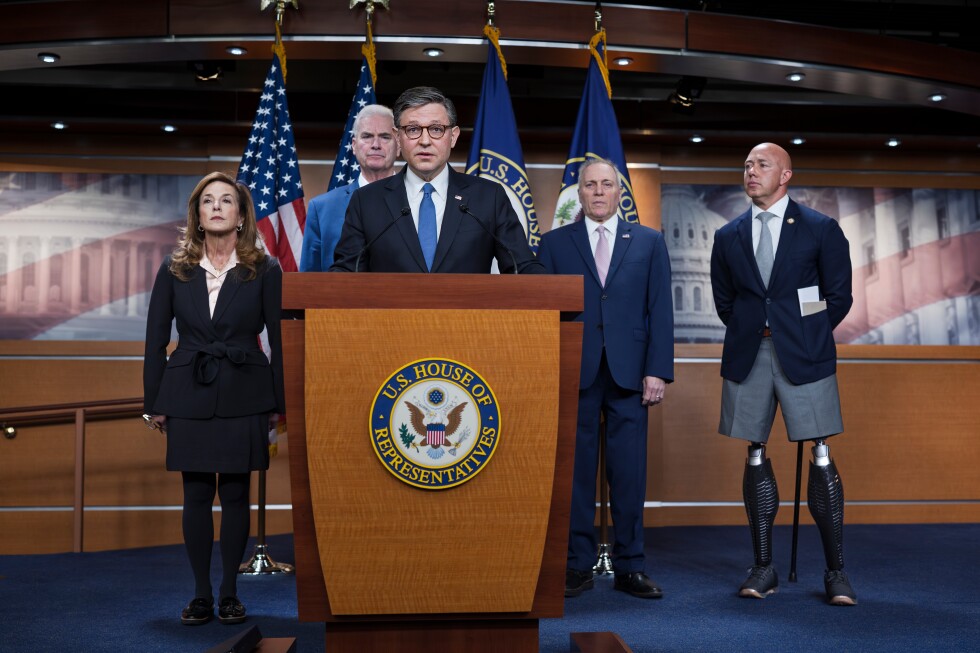
Republicans counter that confronting Iran has become necessary to stop a regime that has armed and trained militant groups throughout the Middle East for decades. Rep. Brian Mast, who chairs the House Foreign Affairs Committee and lost both legs to an improvised explosive device in Afghanistan, led opposition to the war powers resolution.
“Me especially, many of my other colleagues, no one wants to see our military go into combat or war,” Mast said, before adding, “But Iran’s terror, which has caused the deaths of thousands of Americans, it has to stop.”
As the conflict with Iran continues to unfold across the Middle East, Congress faces pressing questions about funding operations already costing billions, navigating altered global alliances, and determining the future direction of U.S. foreign policy.
Lawmakers with combat experience say they feel a special obligation to those who served alongside them—including those who never returned—to ensure that another generation isn’t sent into an “open-ended, ill-conceived regime change war,” as Democratic Rep. Pat Ryan put it while touching the memorial bracelet he wears.
Many veteran lawmakers recall their frustration with Washington’s decisions during their military service, particularly inadequate resources and strategic planning.
“I know what it was like to be on the very end of the receiving line of the decisions made in Washington,” said Democratic Rep. Jason Crow, an Army veteran of both Iraq and Afghanistan campaigns. He noted that front-line soldiers often suffered “because people stopped asking tough questions.”
Senator Tammy Duckworth, who lost both legs when her helicopter was hit by a rocket-propelled grenade in Iraq, said this experience directly motivated her political career: “I ran for Congress so that when the drums of war started beating once again, I’d be in a position to make sure that our elected officials fully considered the true cost of the war—not just in dollars and cents but in human lives.”
Fact Checker
Verify the accuracy of this article using The Disinformation Commission analysis and real-time sources.

15 Comments
It’s admirable that these lawmakers are grappling with the complexities of this new Mideast conflict, rather than resorting to simplistic solutions. Their battlefield experiences provide a unique perspective that could prove invaluable in shaping a thoughtful and strategic response.
These veteran lawmakers have a heavy burden to bear as they weigh the policy options. Their personal experiences of the human cost of war should serve as a sobering reminder of the gravity of these decisions.
While I appreciate the desire for justice, we must be cautious about the unintended consequences of military strikes. The experiences of these veteran lawmakers could help steer the discussion towards a more measured and strategic approach.
While I can understand the desire for justice, I’m glad to see these veteran lawmakers taking a measured approach. Their experiences should remind us all of the human cost of war and the importance of carefully considering the implications of military action.
It’s encouraging to see lawmakers with military experience bringing their perspectives to the table. Their ability to balance the desire for justice with the risks of escalation will be crucial in navigating this complex situation.
I’m curious to hear more about the specific concerns these veteran lawmakers have as they grapple with this new Mideast conflict. Their firsthand knowledge of the realities of combat could provide crucial insights that inform the policy decisions.
As a former combat veteran, I can understand the conflicted feelings these lawmakers are experiencing. While a sense of justice may come from retaliating against Iran, we must also consider the broader implications and avoid repeating the mistakes of the past.
The tensions these veteran lawmakers are expressing reflect the difficult trade-offs inherent in this situation. I hope their voices will help ensure that any policy decisions are made with a clear-eyed understanding of the potential consequences, both intended and unintended.
This is a complex issue without easy answers. I’m glad to see lawmakers with military backgrounds bringing their insights to the table, even if they are grappling with difficult trade-offs. Thoughtful deliberation is crucial when it comes to matters of war and peace.
These veteran lawmakers bring a valuable perspective to the table. I’m curious to hear more about how they plan to balance their personal experiences with the broader strategic considerations at play. Their insights could help chart a prudent course forward.
The fact that these lawmakers have seen the realities of combat firsthand gives me hope that they will approach this situation with the necessary caution and nuance. Their voices could be crucial in steering the debate towards a more prudent course of action.
I’m interested to hear more about how these veteran lawmakers plan to balance their personal experiences with the need for a comprehensive policy approach. Their insights could help navigate this delicate situation and avoid the pitfalls of past conflicts.
While I sympathize with the desire for retaliation, I hope these veteran lawmakers will remain steadfast in their commitment to a more measured and strategic approach. Their insights could help prevent further entanglement in the region.
It’s important that our lawmakers weigh all the factors, including the potential for escalating conflict, when making decisions about military action. Their on-the-ground experiences provide a valuable perspective that should inform the policy debates.
The desire for revenge is understandable, but we must not let it cloud our judgment. These lawmakers’ battlefield experiences give them a unique vantage point, and I hope their voices will help ensure any action is carefully considered and proportionate.