


Listen to the article
President Trump’s $300 Million White House Ballroom Draws Corporate Elite as Donors
President Donald Trump’s ambitious plan to build a $300 million White House ballroom has attracted an impressive roster of corporate and individual benefactors, according to a White House disclosure listing 37 donors. Trump previously claimed the project would be financed “100% by me and some friends of mine.”
The donor list reads like a who’s who of American business, featuring tech giants, cryptocurrency billionaires, defense contractors, energy companies, and longtime Republican supporters. Many donors have significant regulatory or business interests before the federal government.
The White House acknowledges the list remains incomplete. Notably absent are Carrier Group, which offered to donate an HVAC system, and Nvidia, whose CEO Jensen Huang publicly discussed the company’s contribution. Officials confirmed no foreign individuals or entities appear among the donors.
A senior White House official, speaking on condition of anonymity, revealed the list has expanded since its October release. Some companies have requested anonymity until financial disclosure regulations require public identification.
The tech sector features prominently with eight major companies including Amazon, Apple, Google, HP, Meta, Micron Technology, Microsoft, and Palantir Technologies. Many of these firms have experienced dramatic shifts in their relationships with Trump between his administrations. Several donated $1 million to Trump’s inauguration, and some have benefited from regulatory changes since his return to office.
Google’s YouTube subsidiary settled a lawsuit with Trump for $24.5 million after suspending his account following the January 6 Capitol riot. Court filings indicate $22 million was directed to the Trust for the National Mall, potentially supporting ballroom construction.
The cryptocurrency industry shows strong representation with Coinbase, Ripple, Tether, and the Winklevoss twins all contributing. The sector has already seen significant regulatory relief under Trump’s second administration, including the repeal of an SEC accounting rule and a previous executive order on crypto regulations.
Energy and industrial contributors include Caterpillar, NextEra Energy, Paolo Tiramani (founder of modular home builder BOXABL), and Union Pacific. The railroad giant stands to benefit from Trump’s support for its proposed $85 billion acquisition of Norfolk Southern, which would create the largest-ever rail merger.
Several Trump administration officials appear on the donor list, including commerce secretary Howard Lutnick, Small Business Administration head Kelly Loeffler and her husband Jeffrey Sprecher, and ambassador nominee Benjamin Leon Jr.
Big Tobacco makes an appearance through Altria Group and Reynolds American, with both companies actively lobbying against menthol cigarette restrictions proposed during the Biden administration.
Defense contractors Lockheed Martin and Booz Allen Hamilton are notable contributors, despite the latter paying over $393 million in recent years to settle allegations of improper billing and fraudulent claims related to government contracts.
Communications and entertainment companies include Comcast (owner of NBC), Hard Rock International (which operates the former Trump Taj Mahal casino), and T-Mobile (indirectly linked to Trump Mobile through network agreements).
Individual donors include oil tycoon Harold Hamm, Blackstone Group CEO Stephen Schwarzman, and several Palm Beach neighbors of the president. Some donors have controversial backgrounds, including Stefan Brodie, who was convicted in 2002 of circumventing U.S. sanctions on Cuba.
While the White House has released the list of contributors, they have not disclosed how much each donor is giving. When contacted by The Associated Press, almost none were willing to divulge the amounts of their contributions.
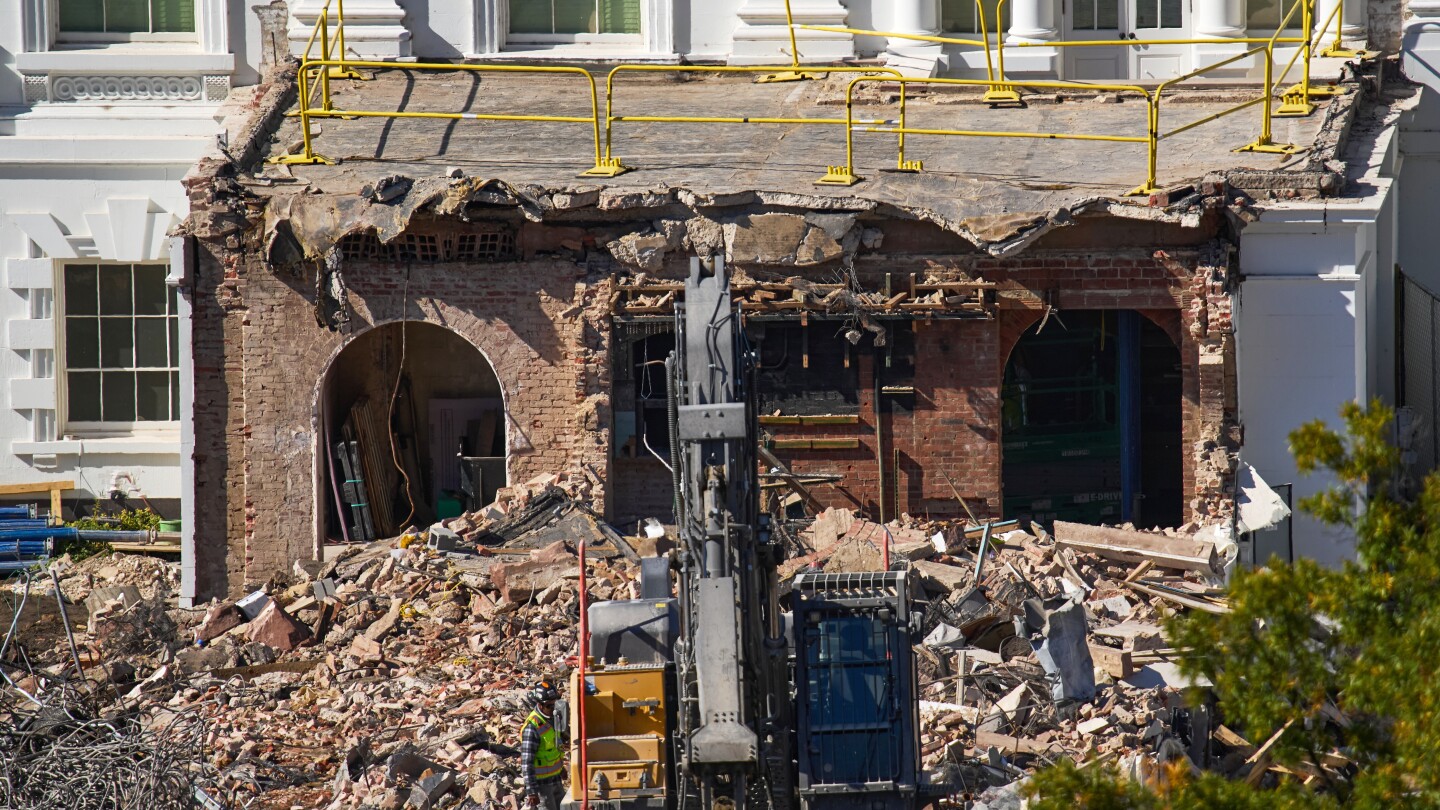
The ballroom project represents one of the most significant renovations to the White House in decades and highlights the unprecedented blending of private corporate interests with presidential legacy-building.
Fact Checker
Verify the accuracy of this article using The Disinformation Commission analysis and real-time sources.

20 Comments
While I understand the desire for updated White House facilities, the high price tag and corporate donor list are concerning. I hope there is thorough public vetting and debate around this proposal.
Absolutely, this is a major expenditure that deserves intense scrutiny. Transparency around the decision-making process and funding sources is essential.
A $300 million ballroom seems like an extravagant use of taxpayer funds, even if partially privately financed. I wonder if these resources could be better directed to more pressing national needs.
That’s a fair point. The optics of this project may be problematic, regardless of the funding sources.
While the plan for a new White House ballroom may have merit, the high price tag and corporate donor list raise concerns. I hope the administration provides thorough justification and disclosure.
Well said. Taxpayer funds should be spent judiciously, with clear public benefit, not on lavish new facilities for the political elite.
This seems like an ambitious and controversial project. I’d be curious to learn more about the specific donor list and their interests. Transparency around funding sources is important for public trust.
Agreed, the donor list raises some questions. It will be important to see full disclosure and understand any potential conflicts of interest.
Curious to see the breakdown of the donor list and their business ties. Transparency around political influence is crucial, especially for a major government construction project.
Absolutely, the public deserves to know the full details of who is financing this venture and what their motivations may be.
While I understand the desire to update White House facilities, the high price tag and corporate donor list for this ballroom project are concerning. I hope there is thorough public debate and disclosure around the justification and decision-making process.
Well said. Transparency and accountability are essential, especially for a project of this scale and cost. The public deserves to know the full details.
I have mixed feelings about this project. While updated White House facilities may be warranted, the high cost and corporate donor list raise red flags. Thorough public debate and disclosure is needed.
Well said. This is a complex issue that deserves thoughtful consideration, not just a rubber stamp. Transparency is key.
A $300 million ballroom seems like an extravagant vanity project, even with private financing. I’d rather see that money used to address pressing national needs or invest in programs that directly benefit the public.
Completely agree. This project seems to prioritize spectacle over substance. The administration should refocus its efforts on more impactful initiatives.
A $300 million ballroom seems like an extravagant vanity project. I’d much rather see those resources directed toward critical infrastructure, public services, or programs that help everyday Americans.
Agreed, this project seems more about self-aggrandizement than serving the public good. The administration should reconsider its priorities.
A $300 million ballroom seems excessive, even with private donations. I’d rather see that money directed toward issues like infrastructure, education, or healthcare that have a direct impact on people’s lives.
Agreed, this project’s price tag seems out of touch with the real needs and priorities of most Americans. The administration should carefully reconsider its plans.