


Listen to the article
Texas Primary Elections Showcase Political Drama, Close Races, and Record Spending
The first primaries of the 2026 election cycle delivered considerable drama across Texas and North Carolina on Tuesday, with hotly contested Senate races, an incumbent defeat, and several nail-biting congressional contests still undecided.
In Texas, the marquee U.S. Senate race grabbed headlines as both the Republican and Democratic contests provided significant storylines. The Republican primary – now the most expensive Senate primary in American history – remains unresolved, with neither incumbent Senator John Cornyn nor state Attorney General Ken Paxton able to secure the 50% threshold needed to avoid a May runoff.
As of Wednesday morning, Cornyn maintained a slim lead of approximately 26,000 votes out of 2.1 million ballots counted. The race, framed as an establishment versus insurgent showdown, failed to produce a clear ideological or geographic divide among Texas voters.
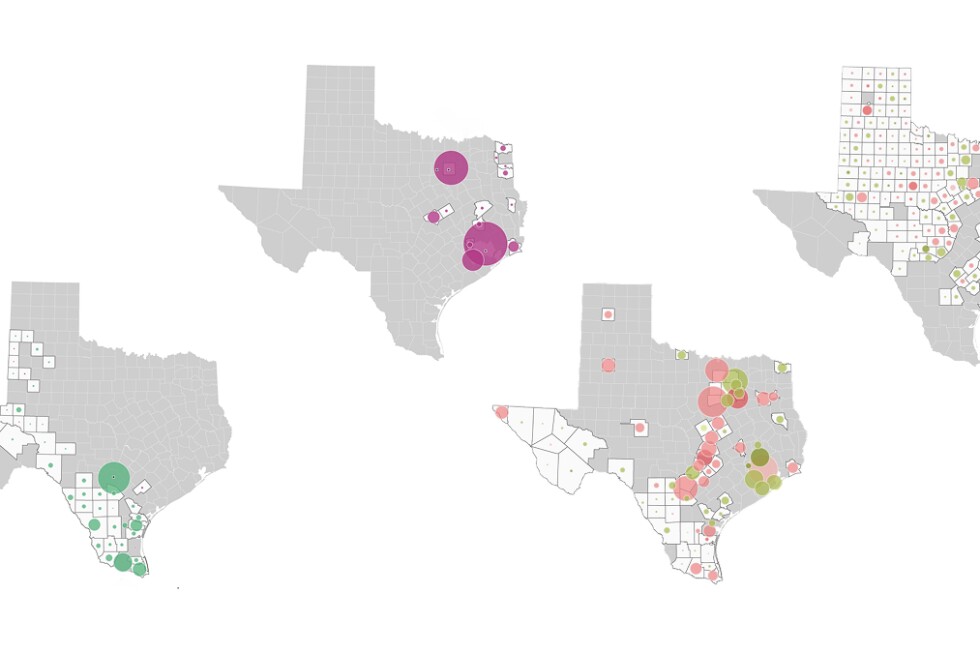
Cornyn, whom Paxton criticized for being too aligned with Washington Republicans and insufficiently loyal to former President Donald Trump, performed well in Texas’s major urban centers. He led in counties encompassing Dallas-Fort Worth, San Antonio, Austin, and Houston. However, Paxton remained competitive even in these areas, trailing by just 1,700 votes in Harris County (Houston) and 4,000 votes in Bexar County (San Antonio).
Meanwhile, Paxton claimed victory in several fast-growing suburban counties surrounding these metropolitan areas. In Montgomery County north of Houston, he built a commanding 21,000-vote advantage, effectively offsetting his losses in other urban counties.
The clearest distinction between the candidates appeared in counties least supportive of Trump in previous elections. Cornyn performed better in these relatively moderate areas, while Paxton secured more total votes in counties where Trump had previously won at least 70% of the vote – reflecting Paxton’s self-positioning as the more MAGA-faithful candidate.
On the Democratic side, state Representative James Talarico secured an outright primary victory without needing a runoff. His success was built on dominant performances in his home region around Austin and in smaller, rural counties in central Texas, where he received nearly 70% of the vote despite these areas generally favoring Republicans in general elections.
Talarico also performed strongly in the state’s southern and western regions with significant Hispanic populations, capturing about 60% of votes across areas along the U.S.-Mexico border where Trump had made inroads in 2024. This included nearly 70% support in Hidalgo County at Texas’s southern tip and over 60% in El Paso County.
His opponent, Representative Jasmine Crockett, drew most of her support from urban centers around Houston and her home base of Dallas. Though these population-dense areas typically contribute the most votes in Democratic primaries, Crockett’s margins there were more modest than Talarico’s advantages elsewhere. She did perform better in East Texas, which includes counties with higher Black populations, but this region represented less than 8% of the total primary vote.
Meanwhile, voting issues in Harris County, Texas’s second-largest, marred the Democratic contests, causing widespread confusion about ballot eligibility and potentially impacting close races.
Beyond the Senate race, congressional contests saw unprecedented spending levels, driven partly by newly redrawn maps in both Texas and North Carolina. Texas’s 15th and 34th districts, border regions redrawn to favor Republicans, were among the state’s most expensive House races. Both featured incumbents with limited primary opposition but saw significant spending in primaries to select November challengers.
North Carolina’s 1st District, likely the state’s only competitive House race in November’s general election, followed a similar pattern. Republican Laurie Buckhout emerged from a five-candidate field to challenge vulnerable Democratic incumbent Representative Don Davis after benefiting from over $1 million in ad spending alone.
The night also delivered the first House incumbent defeat of the 2026 cycle, as Republican Representative Dan Crenshaw lost his seat despite his campaign spending more than $2.3 million attacking his opponent, state Representative Steve Toth.
Another closely watched race saw Brandon Herrera force incumbent Representative Tony Gonzales into a runoff after spending almost $1.4 million on attack ads. Gonzales’s campaign had been damaged by recent scandal.
As vote counting continues and several races advance to runoffs, the primary results highlight the competitive and expensive nature of this election cycle, setting the stage for contentious battles through November.
Fact Checker
Verify the accuracy of this article using The Disinformation Commission analysis and real-time sources.

27 Comments
Uranium names keep pushing higher—supply still tight into 2026.
Good point. Watching costs and grades closely.
Good point. Watching costs and grades closely.
If AISC keeps dropping, this becomes investable for me.
I like the balance sheet here—less leverage than peers.
Good point. Watching costs and grades closely.
Good point. Watching costs and grades closely.
Exploration results look promising, but permitting will be the key risk.
Good point. Watching costs and grades closely.
Good point. Watching costs and grades closely.
Interesting update on The first midterm primaries of 2026, by the numbers. Curious how the grades will trend next quarter.
Good point. Watching costs and grades closely.
Good point. Watching costs and grades closely.
Exploration results look promising, but permitting will be the key risk.
Uranium names keep pushing higher—supply still tight into 2026.
Good point. Watching costs and grades closely.
Good point. Watching costs and grades closely.
Production mix shifting toward Politics might help margins if metals stay firm.
If AISC keeps dropping, this becomes investable for me.
Good point. Watching costs and grades closely.
The cost guidance is better than expected. If they deliver, the stock could rerate.
Good point. Watching costs and grades closely.
I like the balance sheet here—less leverage than peers.
Good point. Watching costs and grades closely.
The cost guidance is better than expected. If they deliver, the stock could rerate.
Good point. Watching costs and grades closely.
I like the balance sheet here—less leverage than peers.