


Listen to the article
Congressional Divide Deepens Over Maduro Extraction Operation
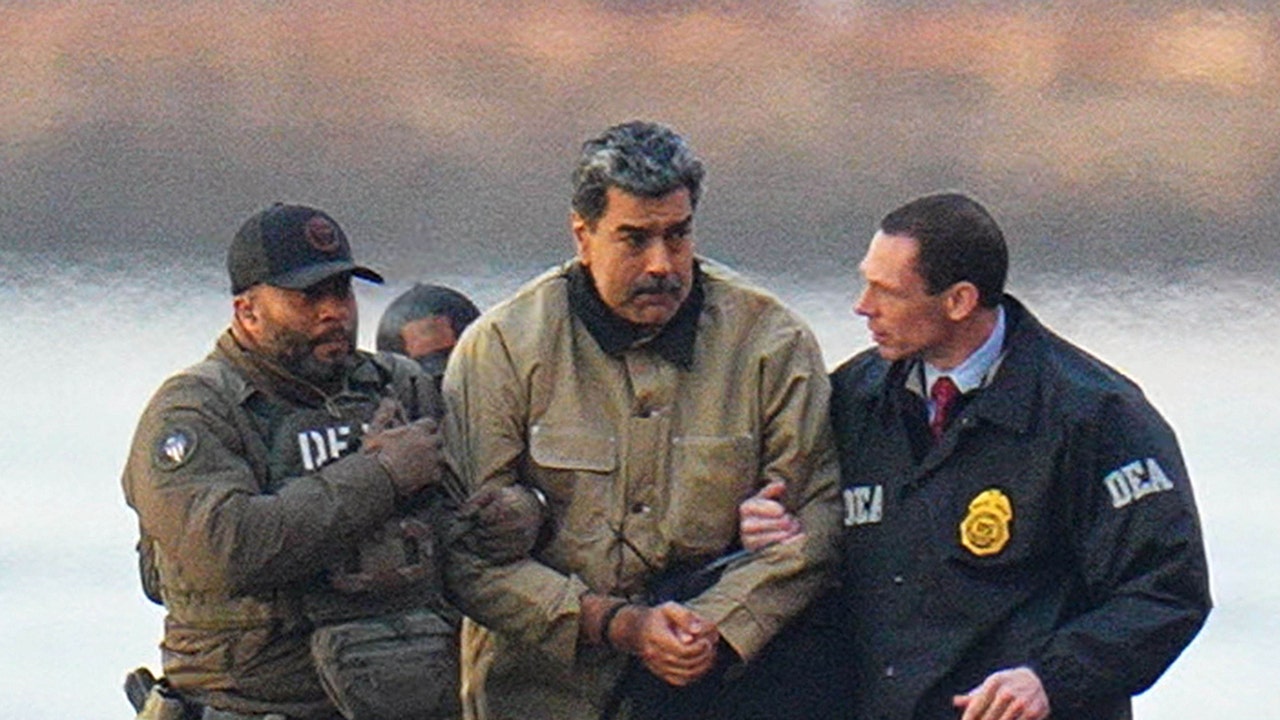
The capture of Venezuelan dictator Nicolás Maduro has ignited intense debate on Capitol Hill, with lawmakers from both parties demanding answers about the military operation that extracted him from Caracas.
A high-level briefing Monday night brought together bipartisan House and Senate leadership, Intelligence Committee members, Armed Services Committee heads, and Foreign Affairs Committee chairs. Democrats expressed outrage that the White House failed to notify Congress before launching the operation, arguing that this violated constitutional principles regarding war powers.
“This is a military operation. We all know that,” said Sen. Mark Warner, D-Va., the top Democrat on the Intelligence Committee, during a CNN appearance.
Republicans pushed back against this characterization. “This was not an act of war or an invasion. This was the lawful apprehension of a fugitive from justice,” countered Rep. Laurel Lee, R-Fla., on Fox News.
The constitutional question lies at the heart of the controversy. Most Democrats claim the administration violated Article I provisions by deploying U.S. forces abroad without congressional authorization.
“The President literally dropped into a sovereign nation, executed on this warrant, pulled the leader out with no plan for the next day,” said Rep. Madeleine Dean, D-Penn., during a CNN interview.
Some lawmakers worry about President Trump’s future intentions, questioning if Venezuela represents just the beginning of broader military interventions.
“Now he’s doubling down on this reckless policy,” said Senate Minority Leader Chuck Schumer, D-N.Y. “He’s thinking about Colombia and thinking about Cuba and Greenland. I mean, the average American is going to say, ‘What is going on in the White House?'”
Not all Democrats aligned with party criticism. Sen. John Fetterman, D-Penn., broke ranks, praising the mission’s execution: “This wasn’t a war. This wasn’t boots on grounds and in that kind of a way. This was surgical and very efficient. And I want to celebrate our military.”
During the briefing, lawmakers heard from Attorney General Pam Bondi, CIA Director John Ratcliffe, Joint Chiefs Chairman Dan Caine, War Secretary Pete Hegseth and Secretary of State Marco Rubio. Democrats accused administration officials of dishonesty in previous briefings.
“Marco Rubio personally, explicitly lied to me,” charged Rep. Pat Ryan, D-N.Y. “We asked over and over, ‘What is the larger plan? Is there an effort at regime change being planned?'”
Republicans largely dismissed these concerns, focusing instead on the operation’s success. Rep. Derrick Van Orden, R-Wis., a former Navy SEAL, called it “one of the most complicated and exquisite military operations that has ever been conducted in the history of warfare.”
With midterm elections approaching in 2026, Democrats are already attempting to leverage the Venezuela situation politically. They argue that the GOP’s focus on Caribbean and South American interventions creates an opening for Democrats to emphasize domestic economic issues.
“The American people did not sign up for this kind of military adventurism when they voted for Donald Trump. They wanted a president focused on America first. Focused on lowering the cost of living. Lowering health care costs. Lowering grocery prices,” Schumer said.
Democrats are now exploring parliamentary methods to restrict potential future military actions, both in Venezuela and elsewhere. Rep. Suhas Subramanyam, D-Va., emphasized that “to fund these operations, to fund nation-building, they need the approval of Congress.”
The timing is critical, as funding for most federal government operations expires in just over three weeks. This includes separate appropriations for the Pentagon and State Department. While progress on other spending bills has proceeded well, military and foreign operations spending remains unresolved.
Congress could potentially limit or block funds for Venezuelan operations through its constitutional “power of the purse.” Even some Republicans express hesitation about America’s role there.
“I don’t know what ‘run the country’ means,” said Sen. Jerry Moran, R-Kan. “I would think that the United States does not want to be somebody running another country. Even in an interim.”
Rep. Mariannette Miller-Meeks, R-Iowa, who represents a swing district, captured the sentiment of many constituents: “We don’t want to have troops on the ground. Iowans don’t want that. We do not want nation building. We’ve got enough problems to clear up.”
Sen. Tim Kaine, D-Va., is pushing for a vote this week on a war powers resolution that would require congressional approval for future interventions. A similar resolution last fall garnered support from only two Republicans.
As additional briefings are scheduled in the coming weeks, the fundamental question remains: What is America’s endgame in Venezuela? The answer will likely shape U.S. policy in South America and the Caribbean for years to come.
Fact Checker
Verify the accuracy of this article using The Disinformation Commission analysis and real-time sources.

7 Comments
As a mining and commodities investor, I’m interested to see how the Maduro arrest could impact the political and economic landscape in Venezuela. Stability in the region is crucial for resource development and trade. Hopefully this can help pave the way for positive change.
The Maduro capture certainly raises important questions around executive authority and congressional oversight on military operations. I’m curious to see how this plays out and whether any bipartisan compromise can be reached on the constitutional concerns.
The Maduro capture seems to be a high-stakes gambit by the US government. While I understand the rationale, I share the Democrats’ concerns about potential violations of congressional authority. These are tricky constitutional waters to navigate.
As an investor focused on mining and energy, I’m hopeful that the Maduro arrest could lead to a more stable and business-friendly environment in Venezuela. However, the partisan wrangling in Congress is concerning and could create uncertainty.
The capture of Maduro is undoubtedly a major geopolitical development, but the partisan bickering in Congress is unfortunate. I hope lawmakers can find a way to work together constructively on this issue.
Interesting development in the Maduro capture saga. It seems there is a deep partisan divide in Congress over the constitutional implications. While the GOP sees it as a lawful apprehension, Democrats argue it violates war powers. This will likely continue to be a contentious issue.
While I understand the desire to remove Maduro, the lack of congressional consultation is concerning. This sets a problematic precedent that could undermine democratic norms. I hope cooler heads can prevail and find a path forward.