


Listen to the article
The Supreme Court is poised to issue a potentially landmark ruling on President Donald Trump’s use of emergency powers to impose sweeping tariffs, with a decision that could come as early as Friday. The case has significant implications for both presidential authority and the American business landscape.
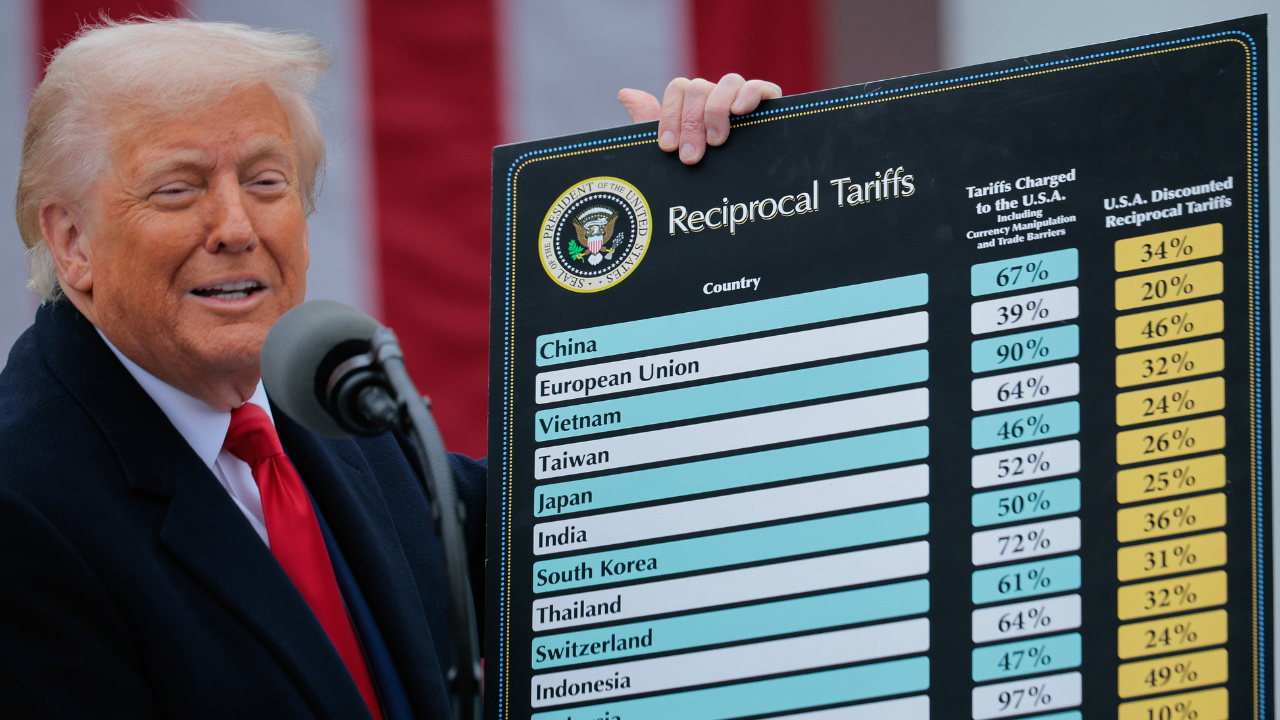
At the center of the dispute is Trump’s invocation of the International Emergency Economic Powers Act (IEEPA) to implement two major sets of tariffs: a 10% global tariff package and higher “reciprocal” tariffs established in early April. Lower courts previously ruled that the president exceeded his authority in using IEEPA for this purpose, prompting the Supreme Court to expedite its review of the case.
During oral arguments, several justices, including some appointed by Trump himself, expressed skepticism about the administration’s broad interpretation of IEEPA’s scope. The administration has maintained that this 1977 law grants the president authority to act unilaterally in response to “unusual and extraordinary threats” when a national emergency has been declared.
Trump has characterized persistent trade deficits as constituting such an emergency, framing the court case as a matter of “life and death” for America. Administration officials have warned of severe economic consequences should the Supreme Court rule against them.
However, legal experts suggest that an immediate, dramatic shift in policy is unlikely regardless of the court’s decision. Erik Smithweiss, a trade lawyer representing companies challenging the tariffs, noted that if the Supreme Court rules against the president, the cases would return to lower courts to establish a path forward.
“There’s a group of us working with the Department of Justice on getting a case management plan implemented,” Smithweiss said. “In the event the tariffs are found to be unlawful, the Court of International Trade is going to manage these thousands of lawsuits and many more that may be coming.”
The scale of the disputed tariffs is substantial. According to data from U.S. Customs and Border Protection, the government collected more than $133 billion in IEEPA tariff duties as of mid-December. Hundreds of businesses have filed suits seeking to recover these import fees.
Plaintiffs in the case argue that in the 50 years since IEEPA’s passage, no president has ever used it to impose tariffs. They contend that allowing such an interpretation would dramatically expand presidential powers at the expense of congressional authority over trade policy.
Philip Luck, director of the economics program at the Center for Strategic and International Studies, suggests that while the case is constitutionally significant, its immediate economic impact might be limited.
“It’s a fascinating situation because it’s super important. But, in the short run, economically, this doesn’t matter a huge deal,” Luck explained. “It matters in the sense that, yes, if this comes down, some goods will become cheaper. Some exporters will be able to export to the United States more cheaply.”
Even if the Supreme Court rules against Trump’s use of IEEPA, the administration has alternative mechanisms to implement tariffs. These include Section 232, which allows industry-wide tariffs for national security reasons, and Section 301, which permits tariffs against countries deemed to have discriminatory trade practices toward U.S. businesses.
“More broadly, so long as this administration is intent on raising barriers to a broad set of important goods, they will be able to do that again,” Luck said. “A few sectoral tariffs onto very broad sectors and a few country-level tariffs — if you levy tariffs on our large trading partners — cover some 90% of our trade.”
The Supreme Court’s decision is expected by June at the latest, concluding a case that could redefine the boundaries of presidential authority in trade policy and potentially reshape U.S. commercial relationships worldwide.
Fact Checker
Verify the accuracy of this article using The Disinformation Commission analysis and real-time sources.

10 Comments
This Supreme Court case could have far-reaching implications for presidential power and US trade policy. The administration’s broad interpretation of the IEEPA seems questionable, given the skepticism from some justices.
The decision will certainly impact American businesses and the overall economic landscape. It will be interesting to see how the Court navigates this complex issue of executive authority.
Persistent trade deficits are concerning, but I’m not convinced they constitute a true ‘national emergency’ that justifies such sweeping tariff powers. The administration’s arguments appear to be a stretch.
Regardless of one’s views on trade policy, the core question here is about the limits of presidential authority. The Court’s ruling will set an important precedent.
An interesting case that touches on fundamental questions of constitutional checks and balances. I hope the Court provides clarity on the proper use of the IEEPA and similar emergency authorities.
This case highlights the ongoing tensions between the executive branch and the judiciary over the scope of emergency powers. I’m curious to see how the Court balances these competing interests.
The potential impact on US businesses is also a key consideration. The Court will have to weigh the broader economic ramifications of its decision.
The administration’s framing of trade deficits as an ‘unusual and extraordinary threat’ seems like a stretch to justify such sweeping tariff powers. The justices appear rightly skeptical.
Regardless of one’s views on trade policy, this case is ultimately about the balance of power between the executive and judicial branches. The Court’s ruling will set an important precedent.
This case has significant implications for both presidential authority and the US business landscape. I’m curious to see how the Court navigates these complex and competing interests.