


Listen to the article
Supreme Court Justices Challenge Trump’s Tariff Authority in Landmark Case
Supreme Court justices from across the ideological spectrum expressed skepticism Wednesday about former President Donald Trump’s use of emergency powers to impose global tariffs, during a pivotal case that could significantly impact presidential authority over trade policy.
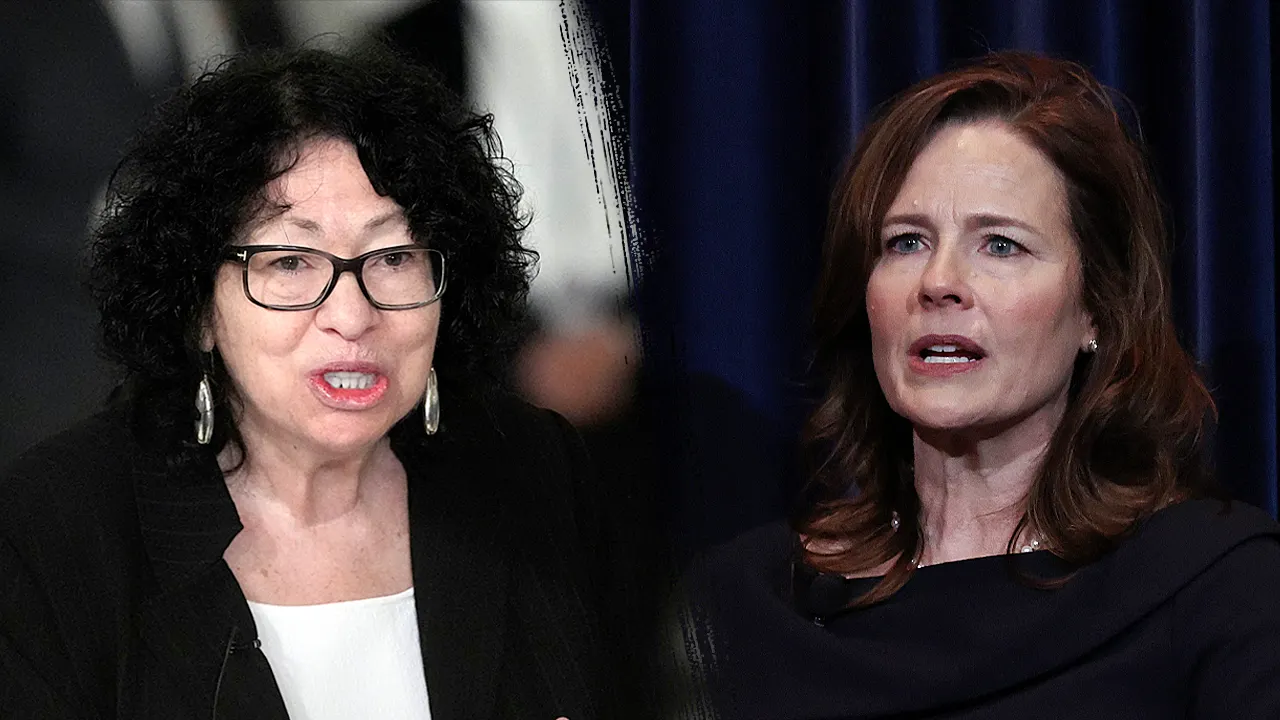
Justice Amy Coney Barrett, a Trump appointee, repeatedly pressed Solicitor General John Sauer on the legal basis for Trump’s tariff actions, focusing on the language of the International Emergency Economic Powers Act (IEEPA) that Trump had invoked.
“Can you point to any other place in the code or any other time in history where that phrase together, ‘regulate importation,’ has been used to confer tariff-imposing authority?” Barrett asked during the two-and-a-half-hour oral arguments.
The case centers on whether the IEEPA, which allows the president to “regulate… nullify [and] void… importation” during national emergencies, grants authority to impose tariffs despite not explicitly mentioning them. Trump used this law to implement tariffs on nearly every U.S. trading partner.
When Sauer struggled to provide direct examples beyond mentioning one precursor trade law, Justice Sonia Sotomayor intervened, asking him to “just answer the justice’s question.” Sotomayor, an Obama appointee, emphasized that taxing power traditionally belongs to Congress.
“It’s a congressional power, not a presidential power to tax,” Sotomayor said. “And you want to say tariffs are not taxes. But that’s exactly what they are. They’re generating money from American citizens, revenue.”
Sotomayor noted that Congress has historically used the phrasing “regulate and tax” together in legislation, suggesting that the absence of taxation language in IEEPA was deliberate. She questioned whether Sauer was claiming that “the taxing reference is superfluous” in other statutes.
Both justices also scrutinized other verbs in the statute like “nullify” and “void,” emphasizing that these terms have specific meanings distinct from imposing taxes or tariffs. “The verbs that accompany ‘regulate’ have nothing to do with raising revenues in the form of taxes,” Sotomayor stated.
Chief Justice John Roberts, another Republican appointee, also expressed doubts about the president’s claimed authority. “The exercise of the power is to impose tariffs, and the statute doesn’t use the word tariffs,” Roberts noted, questioning the scope of presidential emergency powers under the law.
The case has significant implications for U.S. trade policy and presidential authority. Trump himself has characterized the issue as “life or death” for his economic vision, writing on Truth Social this week that “a big part of [economic security] is created by Tariffs, and the Deals that we have negotiated because of them.”
Sauer argued to the justices that Trump views the trade deficit and opioid epidemic as “country killing and not sustainable,” and chose to address these issues using tariff policies. He emphasized the success of trade agreements Trump negotiated with major competitors like China, claiming that “unwinding those agreements would expose us to ruthless trade retaliation by far more aggressive countries.”
The solicitor general maintained that while the IEEPA doesn’t explicitly mention tariffs, “the power to tariff is a core application” of the regulatory authority it grants the president.
Multiple lower courts have previously struck down the IEEPA-based tariffs implemented during the Trump administration, setting up this Supreme Court showdown that could reshape the boundaries between congressional and executive trade powers.
The court’s ruling, expected later this term, will have far-reaching consequences for presidential authority and U.S. trade policy, potentially limiting a tool that Trump has deemed essential to his economic agenda should he return to office.
Fact Checker
Verify the accuracy of this article using The Disinformation Commission analysis and real-time sources.

6 Comments
The use of emergency powers to impose sweeping tariffs is a controversial issue that has faced legal challenges. It will be interesting to see how the Court navigates the complex legal and economic considerations at play.
This case could have far-reaching consequences for future presidents’ ability to leverage trade policy tools like tariffs, even in the name of national security. The justices seem intent on defining clearer limits.
Interesting to see the Supreme Court scrutinize the scope of presidential powers on trade tariffs. Both conservative and liberal justices seem skeptical of the legal basis for Trump’s broad use of emergency powers in this case.
It’s an important case that could have significant implications for how future presidents wield trade policy authority. The justices appear to be probing the limits of the IEEPA statute.
This case touches on a key tension between executive power and congressional oversight when it comes to economic policy tools like tariffs. The Court’s ruling could set new precedents around presidential trade authority.
I’m curious to see how the justices balance national security concerns versus the economic impacts of broad tariff powers. Their questions suggest a willingness to scrutinize the legal justifications.