


Listen to the article
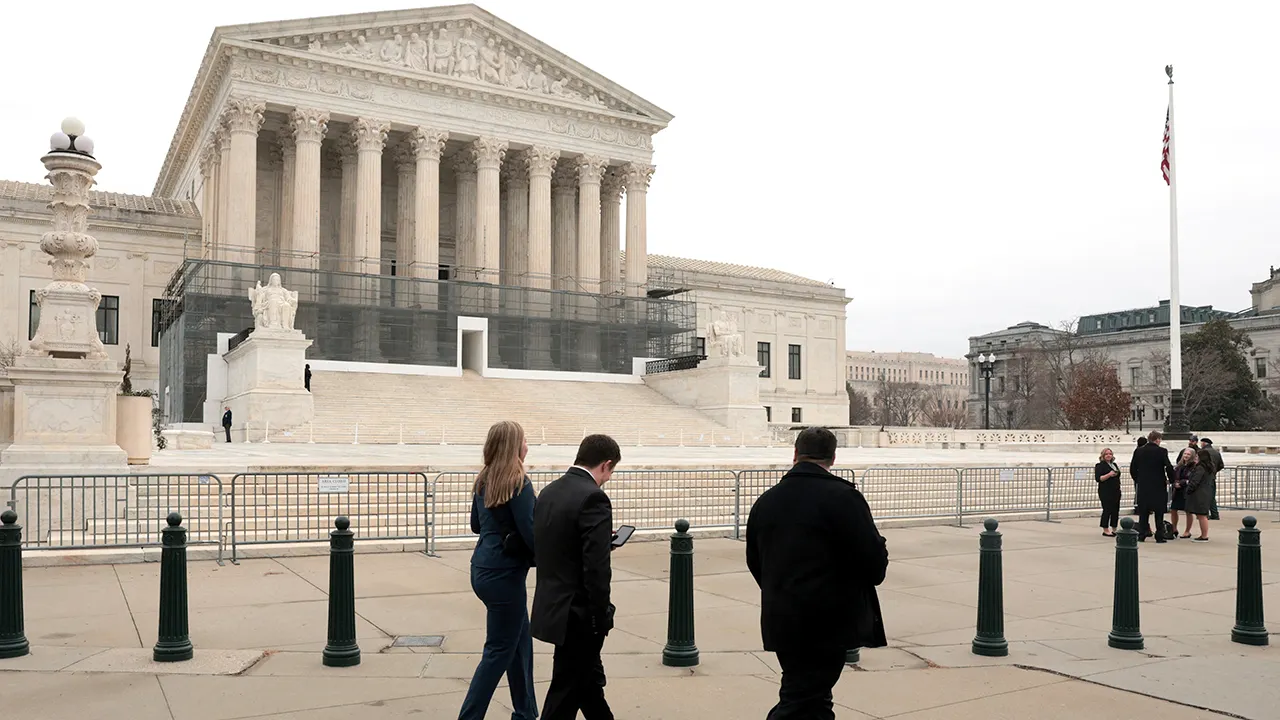
The Supreme Court is set to hear oral arguments Tuesday in two pivotal cases that could determine whether states have the authority to ban transgender athletes who identify as women from competing on girls’ and women’s sports teams.
The cases, Little v. Hecox and West Virginia v. B.P.J., will examine state bans in Idaho and West Virginia under Title IX and the Constitution’s equal protection clause. The fundamental question is whether prohibiting transgender athletes from playing on teams matching their gender identity constitutes sex discrimination.
Lower courts previously struck down these bans as unconstitutional violations, prompting the Republican-led states to appeal to the Supreme Court. The high court has scheduled an hour for each case beginning at 10 a.m., though arguments are expected to run longer as states, plaintiffs, and the Trump administration present their positions.
“It’s about Title IX. It’s about equal protection, and it’s also about common sense, but mostly it’s about protecting women in both academia and on the athletic field,” West Virginia Attorney General JB McCuskey told Fox News Digital in an interview.
The Idaho case centers on Lindsay Hecox, a transgender woman who sought to compete on the women’s track and cross-country teams at Boise State University. Hecox contends that Idaho’s Fairness in Women’s Sports Act violates the equal protection clause by excluding transgender women.
In the West Virginia case, a 15-year-old transgender athlete who identifies as a girl argues the state’s ban violates both the Constitution and Title IX’s prohibition of sex discrimination in federally funded education programs.
Attorneys defending the state bans maintain that separating sports based on biological sex preserves fairness and safety for female athletes and aligns with Title IX’s definition of sex. The Trump administration has sided with the states, asserting that Title IX and equal protection provisions permit sex-based distinctions in athletics. The administration has criticized lower courts for undermining states’ authority on the matter.
The cases have attracted substantial attention from athletes, coaches, lawmakers, and state attorneys general on both sides of the debate, evidenced by dozens of amicus briefs submitted to the court. Even the Washington Post editorial board recently urged the Supreme Court to “save women’s sports,” describing the issue as “one of the worst excesses of America’s cultural revolution.”
The potential impact of the Supreme Court’s decision extends far beyond these specific cases. A ruling favoring the plaintiffs could limit states’ ability to implement similar bans and potentially broaden interpretations of federal nondiscrimination protections. Conversely, a decision supporting the states could uphold the bans and influence other transgender policy disputes, such as bathroom access policies and sex designation on official documents like passports and driver’s licenses.
McCuskey expressed hope for a unanimous ruling in favor of the states, saying, “Ideally, in my mind, what would happen is that all 50 states in the federal government pass a similar law to the Save Women’s Sports Act and women’s playing fields will be exclusive to biological women.”
The American Civil Liberties Union, representing the transgender athletes, argues that the challenged laws unlawfully discriminate against people who identify as women by excluding them from women’s and girls’ sports.
“Categorically excluding kids from school sports just because they are transgender will only make our schools less safe and more hurtful places for all youth,” ACLU attorneys stated.
Transgender rights advocates contend that conservative states and the Trump administration have singled out transgender students, dedicating excessive resources to target what they describe as a minimal number of transgender athletes. McCuskey countered this argument by shifting focus to the impact on cisgender female competitors.
“You make the argument that B.P.J. is being discriminated against, but that belies the argument that all 300 of the other girls that B.P.J. beat in an athletic competition aren’t victims,” he said.
The Supreme Court is expected to deliver its decision by early summer, potentially setting a nationwide precedent on transgender participation in school sports.
Fact Checker
Verify the accuracy of this article using The Disinformation Commission analysis and real-time sources.

13 Comments
The Supreme Court’s decision here could have major implications for transgender athletes and the future of women’s sports. I wonder how they will balance the different legal and ethical considerations.
Protecting the integrity of women’s sports is crucial, but so is ensuring equal rights and opportunities for transgender individuals. It will be a difficult line to walk.
This is a high-stakes case that gets to the heart of ongoing debates around gender identity, fairness in sports, and the role of government. I’m curious to see how the Court will rule and the potential impacts.
It’s a sensitive issue without easy solutions. I hope the Court can provide clarity while respecting the rights and concerns of all parties involved.
This case gets to the heart of ongoing debates around gender identity, Title IX, and the limits of state authority. I’m eager to see the Court’s reasoning and how it will impact school athletics going forward.
It’s a complex issue without easy answers. I hope the Court can provide guidance that respects the rights and concerns of all involved.
The Supreme Court’s ruling on this could have sweeping consequences for transgender athletes and the future of women’s sports. I’ll be following the arguments closely to see how they navigate this delicate balance.
This case touches on fundamental questions of equality, fairness, and the limits of state authority. I’m interested to see how the Court will balance the competing principles and interests at play.
The Supreme Court’s decision here could have major ramifications for transgender athletes and the future of women’s sports. I’ll be following the arguments closely to see how the Justices navigate this complex and contentious issue.
This is a sensitive and high-stakes issue that touches on fundamental questions of equality and the role of government in regulating sports. I’ll be following the arguments closely.
Gender-based regulations in school athletics are a thorny topic. I’m interested to see how the Court rules on the competing principles at play.
Fascinating case with complex issues of gender identity, fairness in sports, and constitutional rights. I’m curious to see how the Court navigates the balance between inclusion and fair competition.
It’s a challenging situation without easy answers. I hope the Court can provide clarity while respecting the rights and concerns of all parties involved.