


Listen to the article
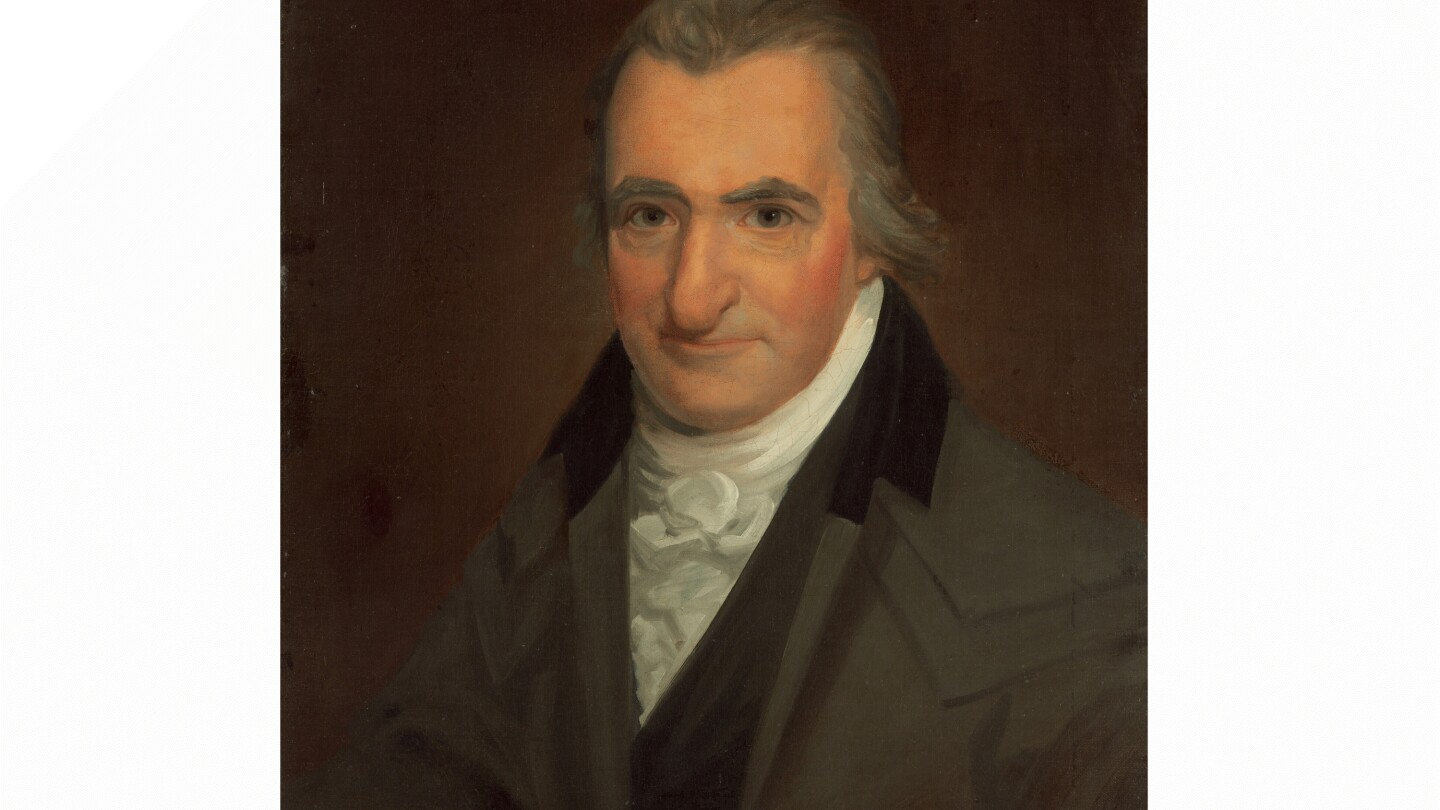
After 250 years, Thomas Paine may finally receive a proper tribute in the nation’s capital, as plans for a memorial in Washington, D.C. await approval from the Department of Interior. The proposed memorial would be the first landmark in the capital dedicated to one of the American Revolution’s most influential and controversial voices.
The push for recognition comes as the U.S. marks the 250th anniversary of “Common Sense,” Paine’s revolutionary pamphlet published on January 10, 1776, which helped galvanize colonial support for independence from Britain. The anniversary is part of a yearlong commemoration of America’s founding and the signing of the Declaration of Independence.
“He was a critical and singular voice,” said Rep. Jamie Raskin (D-Md.), who sponsored the bill authorizing the memorial in 2022. “Paine has long been underrecognized and overlooked.”
This isn’t the first attempt to honor Paine in Washington. In 1992, President George H.W. Bush signed bipartisan legislation for a memorial, but the project stalled due to insufficient funding and eventually faded from public attention by the mid-2000s.
The current initiative has advanced further, with the National Capital Memorial Advisory Commission recommending in September 2024 that the memorial be placed on the National Mall. The final decision now rests with Interior Secretary Doug Burgum. If approved, the plan would return to Congress for final enactment, with a 2030 deadline for completion.
Margaret Downey, president of the Thomas Paine Memorial Association, remains hopeful. “We are staying optimistic because we feel that Thomas Paine is such an important figure in the founding of the United States of America,” she said.
Paine’s journey to acceptance in American historical memory has been complicated by his later writings, particularly “The Age of Reason.” Published in installments beginning in 1794, this work sharply criticized organized religion. Though Paine professed belief in God, he rejected established faiths and described Christianity as “too absurd for belief, too impossible to convince, and too inconsistent for practice.”
By the time he died in New York in 1809, Paine had become estranged from many former allies. His funeral was attended by only a handful of mourners. For more than a century afterward, his legacy remained contentious, with Theodore Roosevelt dismissively calling him a “filthy little atheist.”
While Paine has been honored in some American communities – with monuments in New Rochelle, New York, and Morristown, New Jersey – other locations have resisted. In 1955, Providence, Rhode Island’s mayor rejected a proposed statue, citing Paine’s controversial reputation.
Historian Harvey J. Kaye, author of “Thomas Paine and the Promise of America,” notes that a surprising turning point came with Ronald Reagan’s 1980 presidential election. During his acceptance speech at the Republican National Convention, Reagan quoted Paine’s famous words: “We have it in our power to begin the world over again.” This helped make Paine more acceptable across the political spectrum, with the 1992 memorial legislation drawing support from figures as ideologically diverse as Democratic Sen. Ted Kennedy and Republican Sen. Jesse Helms.
Paine’s life embodied the American immigrant experience. Born in Thetford, England in 1737, he received minimal formal education before apprenticing with his father, a corset maker. His early adult years were marked by a series of failed ventures and two unsuccessful marriages.
When he arrived in Philadelphia in 1774, aided by a letter of introduction from Benjamin Franklin, Paine was debt-ridden and had few prospects. He found work contributing to The Pennsylvania Magazine, where his radical ideas about government and religion began to take shape.
After the Revolutionary War began in April 1775, Philadelphia statesman Benjamin Rush encouraged Paine to express his views on independence. The resulting pamphlet – initially titled “Plain Truth” but published as “Common Sense” – appeared in January 1776 and became an immediate sensation. Though exact sales figures vary among historians, the 47-page tract was widely shared and frequently read aloud in public gatherings.
Paine’s accessible prose helped shift public opinion from merely opposing British policies to embracing full independence. His vision was radical even by revolutionary standards – he attacked not just King George III but the very concept of hereditary rule, declaring that “of more worth is one honest man to society and in the sight of God, than all the crowned ruffians that ever lived.”
While some Founding Fathers had mixed feelings about Paine – John Adams called him a “star of disaster” and Franklin worried about his “rude way of writing” – others embraced him. George Washington praised “Common Sense” for its “sound doctrine” and “unanswerable reasoning,” while Thomas Jefferson befriended Paine and later welcomed him to the White House.
Paine’s legacy continues to resonate across the political spectrum today. Supreme Court Chief Justice John Roberts cited the anniversary of “Common Sense” in his 2025 year-end report, commending Paine for articulating that “government’s purpose is to serve the people.” Meanwhile, protesters at recent “No Kings” rallies against former President Trump displayed signs quoting Paine’s words: “No King! No Tyranny! It’s Common Sense.”
Fact Checker
Verify the accuracy of this article using The Disinformation Commission analysis and real-time sources.

8 Comments
It’s great to see momentum building for a memorial to Thomas Paine in Washington, DC. As the author of ‘Common Sense’, he was a critical voice in the lead-up to the American Revolution. This recognition is long overdue and will help cement his place in history.
Interesting to see the push for a memorial to Thomas Paine, one of the most influential voices of the American Revolution. His writings like ‘Common Sense’ played a key role in galvanizing colonial support for independence. It’s about time he receives proper recognition in the nation’s capital.
As the U.S. marks the 250th anniversary of ‘Common Sense’, a memorial to Thomas Paine is a timely and appropriate way to honor his influential writings and their impact on the Revolutionary War. Paine was a critical voice, and this recognition is long overdue.
While Paine was a controversial figure, his writings were undoubtedly pivotal in galvanizing colonial support for independence. A memorial would be a fitting way to acknowledge his legacy and the role he played in the founding of the United States.
Absolutely. Paine’s ideas were revolutionary and his influence cannot be overstated. A memorial in DC would help educate the public and ensure his contributions are not forgotten.
Paine’s ideas were revolutionary at the time and helped shape the course of American history. While he was a controversial figure, his legacy and impact on the founding of the United States should not be overlooked. A memorial would be a fitting tribute.
I agree, Paine’s contributions deserve to be commemorated. It’s unfortunate the previous memorial effort stalled, but this renewed push seems promising. A memorial would help educate the public about his important role.
Thomas Paine was a firebrand whose writings were instrumental in sparking colonial support for independence. While he was a polarizing figure, his legacy and impact on the founding of the United States deserve to be commemorated with a memorial in the nation’s capital.