


Listen to the article
The State Department continued its largest diplomatic drawdown since 2003 on Monday, ordering nonessential staff and families to depart from missions in Saudi Arabia and Adana, Turkey, as Iranian retaliation against U.S.-Israeli attacks intensifies across the Middle East.
This brings to 10 the number of U.S. diplomatic missions operating with reduced staffing in the region, though only the embassy in Kuwait City and consulate in Karachi, Pakistan, have fully suspended operations. The drawdowns reflect growing security concerns as the conflict that began on February 28 expands beyond initial expectations.
Department officials, speaking on condition of anonymity, acknowledged they underestimated the scale of Iran’s response in the conflict’s early days. They maintain, however, that the agency moved quickly to implement contingency plans once the severity became apparent.
“We had to navigate the bureaucracy rapidly after Iran’s response escalated beyond initial assessments,” one official explained, noting the challenges of balancing diplomatic presence with safety concerns in a volatile environment.
The State Department reports assisting more than 23,000 people with information or charter flight offers, with at least 36,000 Americans having returned home since the conflict began. Most arranged their own travel through commercial means. Officials noted that many Americans offered seats on government-arranged charter flights – for which the department waived congressional reimbursement requirements – have declined assistance. One flight from the United Arab Emirates was reportedly canceled when no passengers showed up.
Despite these efforts, the department faces mounting criticism from lawmakers who argue the administration failed to adequately prepare for the conflict’s regional implications. Representative Gregory Meeks, the top Democrat on the House Foreign Affairs Committee, called it “an unacceptable failure of leadership” that Secretary of State Marco Rubio “did not have plans in place to evacuate New Yorkers & Americans in the Middle East until after Trump started dropping bombs.”
A group of Democratic senators, led by New Hampshire’s Jeanne Shaheen, echoed this sentiment in a letter to Rubio last week, stating that “despite clear military planning for a significant conflict in the Middle East with the potential for regional escalation, it appears the administration failed to take sufficient steps to protect our diplomats and their families.”
The timeline of the department’s response shows an escalating series of security measures. Prior to the February 28 conflict outbreak, the department had only ordered nonessential diplomats to leave Beirut and allowed voluntary departures from Jerusalem and Tel Aviv. By March 1, embassies in Doha and Kuwait requested voluntary departure status, which was approved the same day. On March 2, Americans in 14 Middle East countries were advised “to depart now via commercial means due to serious safety risks.”
As Iranian retaliation intensified on March 3, the department ordered nonessential staff to leave Kuwait, Qatar, Bahrain, Iraq, Jordan and the United Arab Emirates. The Kuwait embassy suspended operations on March 5, followed by Monday’s ordered departures from Saudi Arabia and Adana.
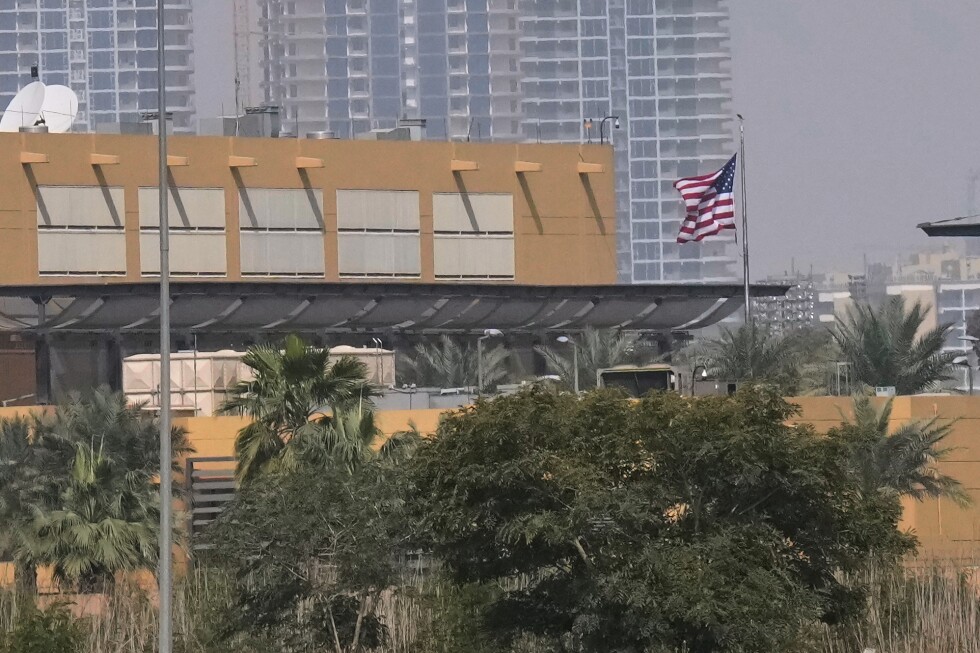
The physical threats to diplomatic facilities have been tangible. A strike on the embassy in Riyadh caused partial roof collapse, while a helicopter landing pad inside the Baghdad embassy compound was hit. Additional strikes landed in a parking lot adjacent to the Dubai consulate and near the Kuwait City embassy. Remarkably, no Americans have been injured at embassies or during evacuations thus far.
The criticism facing the State Department follows a familiar pattern seen across administrations during international crises. During the 2021 Afghanistan withdrawal under President Biden, Republican lawmakers condemned the department’s contingency planning as “woefully inadequate” after the Kabul airport attack killed 13 U.S. troops, despite the evacuation of approximately 125,000 people. Similarly, in March 2020, nine Democratic senators criticized the department for insufficient assistance to Americans stranded abroad during the COVID-19 pandemic, though a subsequent GAO report found the agency had repatriated more than 100,000 Americans from 137 countries in the pandemic’s first six months.
This historical context highlights the perpetual challenge facing the State Department during international crises – balancing rapid response with bureaucratic constraints, while navigating complex security situations and the limitations of congressional authority.
Fact Checker
Verify the accuracy of this article using The Disinformation Commission analysis and real-time sources.

18 Comments
If AISC keeps dropping, this becomes investable for me.
Good point. Watching costs and grades closely.
Good point. Watching costs and grades closely.
I like the balance sheet here—less leverage than peers.
Interesting update on State Department orders drawdown at more Mideast diplomatic missions as familiar criticism mounts. Curious how the grades will trend next quarter.
Good point. Watching costs and grades closely.
Interesting update on State Department orders drawdown at more Mideast diplomatic missions as familiar criticism mounts. Curious how the grades will trend next quarter.
Good point. Watching costs and grades closely.
Good point. Watching costs and grades closely.
Interesting update on State Department orders drawdown at more Mideast diplomatic missions as familiar criticism mounts. Curious how the grades will trend next quarter.
Good point. Watching costs and grades closely.
Good point. Watching costs and grades closely.
I like the balance sheet here—less leverage than peers.
Good point. Watching costs and grades closely.
Good point. Watching costs and grades closely.
Interesting update on State Department orders drawdown at more Mideast diplomatic missions as familiar criticism mounts. Curious how the grades will trend next quarter.
Exploration results look promising, but permitting will be the key risk.
Interesting update on State Department orders drawdown at more Mideast diplomatic missions as familiar criticism mounts. Curious how the grades will trend next quarter.