


Listen to the article
Senate Passes Temporary Extension of Surveillance Powers as Debate Continues
The Senate unanimously approved a short-term extension of the nation’s foreign surveillance powers Friday morning, stepping in after the House failed to reauthorize the program ahead of an April 20 deadline. The move gives lawmakers additional time to resolve deep-seated disagreements over privacy protections and government surveillance capabilities.
The extension of the Foreign Intelligence Surveillance Act (FISA) provides a temporary reprieve but leaves Congress in essentially the same divided position it started in, with significant disagreements remaining between privacy advocates and national security hawks.
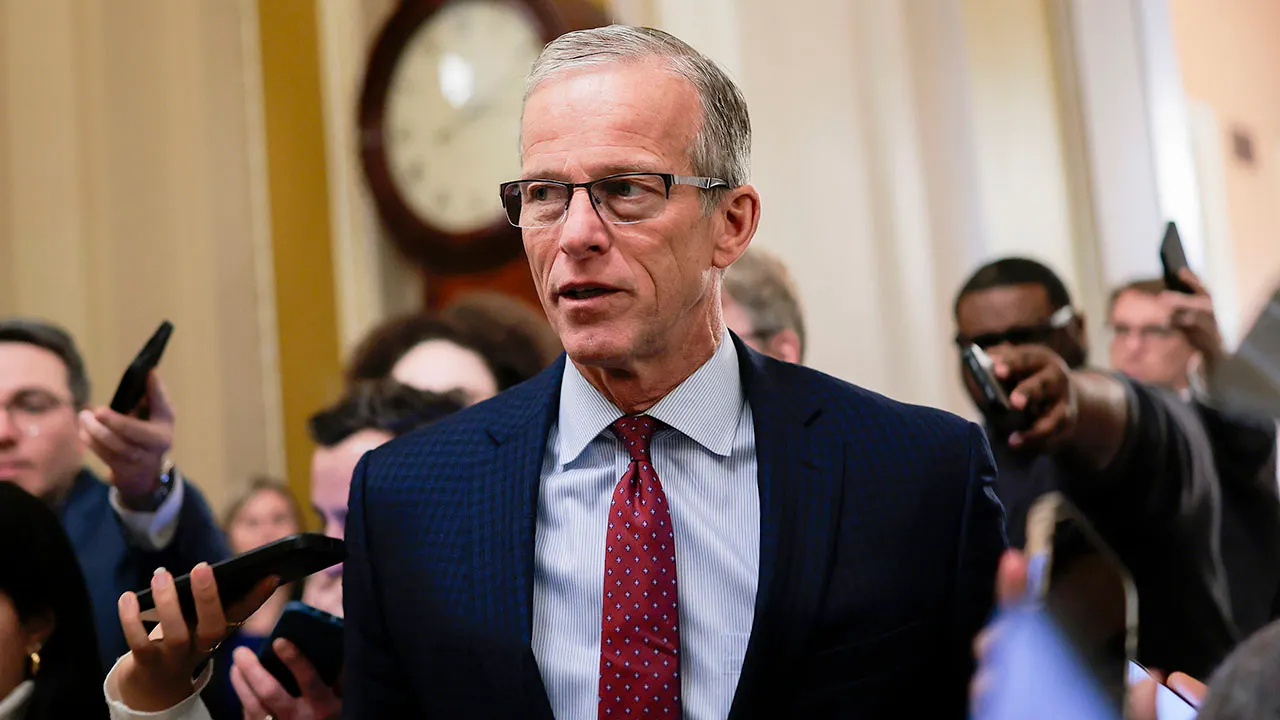
Senate Majority Leader John Thune (R-S.D.) had positioned the upper chamber to quickly act on the reauthorization but acknowledged potential resistance to passing a clean extension without reforms.
“We’re gonna need some cooperation to get it done before things will go dark on the 20th, and I hope that we have that level of cooperation,” Thune said Thursday. “But we’re not gonna know that for sure until the House processes that and sends it to us.”
The controversy centers primarily around Section 702 of FISA. While the provision is designed to allow surveillance of foreign nationals abroad, critics argue it also enables the collection of communications involving American citizens when they interact with foreign targets, raising significant constitutional concerns.
Intelligence officials consider FISA a critical national security tool, especially amid ongoing international tensions, including uncertainties surrounding Iran. However, lawmakers remain divided over how to balance security needs with privacy protections.
President Donald Trump and his administration have pushed for a clean reauthorization of the program without major changes, a position that has encountered resistance from both Republicans and Democrats in Congress. The issue represents a rare area of agreement between progressives and conservatives, who have united in their concerns about government overreach and privacy rights.
Those opposing a clean reauthorization of Section 702 are demanding warrant requirements before the government can access communications involving Americans. Senator Ron Wyden (D-Ore.), a vocal critic of surveillance overreach, has warned his Democratic colleagues that advances in artificial intelligence are “supercharging how the government can surveil Americans.”
“The focus here needs to be what Ben Franklin talked about,” Wyden told Fox News Digital. “Anybody who gives up their liberty to have security really doesn’t deserve either. And I don’t buy the idea that liberty and security are mutually exclusive, and that’s what the proponents, who just want a straight across the board approach are calling for.”
In the House, Speaker Mike Johnson (R-La.) attempted two different approaches to FISA reauthorization but failed with both. His first option was a clean 18-month extension, while the second proposed a five-year extension with modest reforms. The latter was defeated when conservative Republicans joined with most House Democrats to vote against it.
Privacy advocates argue that in the digital age, with rapidly advancing technologies, stronger safeguards are necessary to protect Americans’ Fourth Amendment rights. They maintain that requiring warrants for accessing U.S. persons’ data incidentally collected under Section 702 would preserve the program’s effectiveness while addressing constitutional concerns.
The deadlock over FISA reauthorization adds to Congress’s already packed agenda as lawmakers return next week. They must also address reopening the Department of Homeland Security, which remains partially shut down, and work on creating a framework for a party-line budget reconciliation package to fund immigration enforcement for the next three years.
The temporary extension pushes the FISA deadline to the end of the month, giving lawmakers a brief window to negotiate a more permanent solution. However, the fundamental differences between those prioritizing national security capabilities and those emphasizing civil liberties protections remain unresolved.
As technological capabilities continue to advance and global threats evolve, the debate over the proper balance between security powers and privacy rights has taken on renewed urgency, with significant implications for how the government conducts surveillance in the years ahead.
Fact Checker
Verify the accuracy of this article using The Disinformation Commission analysis and real-time sources.

16 Comments
Curious to see how this plays out. Surveillance is a complex issue with legitimate needs for national security, but also valid concerns about government overreach. Hoping Congress can find the right compromise.
Well said. These are sensitive issues that require careful deliberation. Glad they’re taking the time to get it right, rather than rushing a hasty decision.
Surveillance powers are a delicate balance between security and civil liberties. I hope Congress can come to a thoughtful, bipartisan agreement that upholds American democratic values.
Absolutely, this requires nuanced policymaking to get the details right. Hoping they can overcome partisan divides and find a sensible path forward.
Interesting to see the Senate stepping in with a temporary extension. This debate over surveillance authorities clearly has significant divides that need to be worked out. Hoping they can find the right compromise that upholds democratic values.
Surveillance is a tricky policy area with valid concerns on all sides. I’m glad to see Congress taking the time to carefully consider the implications and try to craft a balanced approach. These are difficult tradeoffs, but getting the details right is crucial.
This is a thorny policy challenge with valid concerns on both sides. I hope Congress can find a solution that upholds American democratic principles while also addressing legitimate national security needs.
Agreed, it’s critical they get the details right on this. Glad to see they’re taking the time to work through the complexities rather than rushing a decision.
This is a complex and sensitive issue without easy answers. I’m glad to see Congress taking the time to work through the details and try to find a balanced solution that respects privacy while also addressing legitimate security concerns.
Curious to see how this plays out. Surveillance powers are a delicate balance – we need to protect civil liberties while also enabling effective intelligence gathering for national security. Hoping Congress can find the right compromise.
Interesting to see the Senate stepping in to buy more time for this debate. Seems like there are still significant divides to overcome on the right balance between security and civil liberties.
Yes, this is a challenging issue without easy answers. Hopefully the extra time allows all stakeholders to have a constructive dialogue and find common ground.
The struggle to balance security and civil liberties is an age-old challenge. I hope Congress can come together and find a thoughtful, nuanced solution that respects both the need for national security and the fundamental rights of citizens.
This is a complex issue with valid concerns on both sides. The Senate’s temporary extension provides more time for Congress to work out a balanced solution that protects civil liberties while also enabling necessary national security capabilities.
I agree, it’s important they find the right compromise that respects privacy while still allowing effective intelligence gathering.
This is a complex and sensitive issue that requires careful deliberation. I hope Congress can find a way to address legitimate national security needs while also upholding civil liberties and democratic principles. It’s a difficult balance, but an important one to get right.