


Listen to the article
Iranian state television issued an unusual on-screen alert Tuesday stating that “no delegation from Iran has visited Islamabad… so far,” highlighting growing internal tensions within Iran’s government as speculation mounts about potential talks with the United States.
The alert reflects the significant debate occurring within Iran’s theocracy as officials weigh their response to the U.S. Navy’s recent seizure of an Iranian container ship. With state television firmly under the control of hard-liners within the government, the announcement signals potential disagreement among various power centers in Tehran.
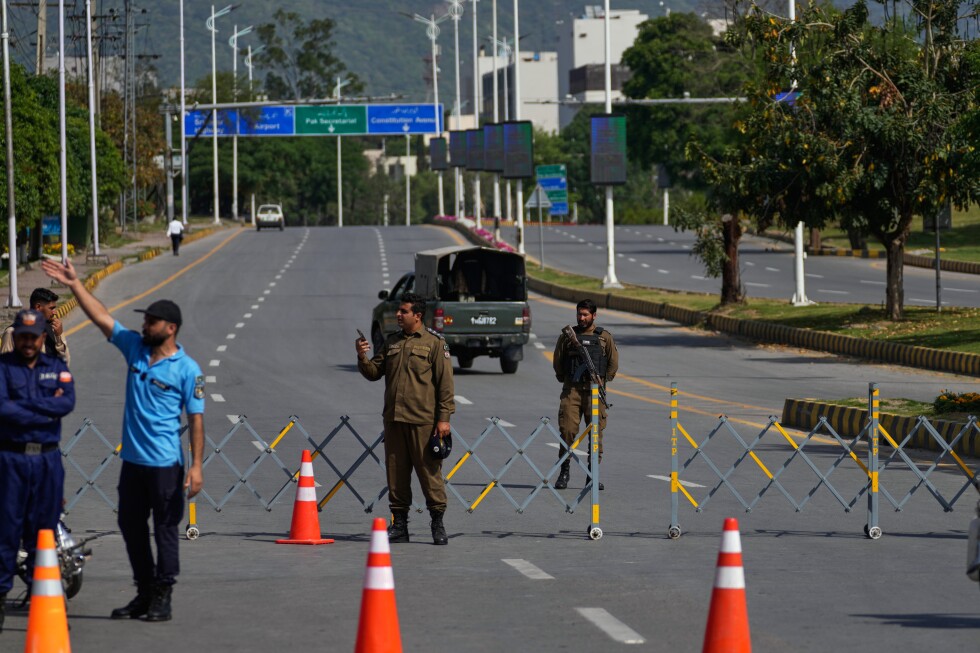
Pakistani officials have reportedly been on standby for days awaiting the possible diplomatic engagement. On the American side, Vice President JD Vance is expected to lead the U.S. delegation, though Iran has yet to announce who might represent their interests. In previous negotiations, parliamentary speaker Mohammad Bagher Qalibaf headed the Iranian team.
The prospect of renewed talks faces significant opposition from extreme hard-liners in Iran, particularly in light of the recent ship seizure. The absence of public discourse within Iran about resuming negotiations is notable, creating an atmosphere of uncertainty about the country’s diplomatic direction.
Complicating matters further is the conspicuous silence from Supreme Leader Ayatollah Mojtaba Khamenei, who has not issued any public statements regarding potential negotiations. According to Israeli and U.S. officials, Khamenei was reportedly wounded during the recent conflict and has not appeared in public since hostilities began.
This leadership vacuum has apparently empowered Iran’s Revolutionary Guard Corps to take a more prominent role in governing. The paramilitary organization has been central to Iran’s war effort and has largely operated with minimal oversight from Tehran when selecting targets for military operations.
Iran’s civilian government has remained largely silent on these matters. Foreign Minister Abbas Araghchi created confusion over the weekend by stating online that the Strait of Hormuz had reopened to shipping traffic, only to have this claim contradicted by other officials in Tehran.
The strategic waterway, which connects the Persian Gulf to open seas and is crucial for global oil shipments, has seen restricted traffic since February 28, when U.S. and Israeli forces launched attacks on Iran, marking the beginning of the current conflict. The United States has responded to Iranian pressure by implementing a blockade of Iranian ports.
This diplomatic impasse occurs against the backdrop of escalating regional tensions and economic pressure. The Strait of Hormuz is one of the world’s most important maritime chokepoints, with approximately 20% of global oil shipments passing through it. Any disruption to this vital shipping lane has significant implications for energy markets and the global economy.
The potential talks in Islamabad would represent a critical opportunity to de-escalate tensions in a region already destabilized by multiple conflicts. Pakistan, which maintains diplomatic relations with both the United States and Iran, has positioned itself as a potential mediator in this high-stakes diplomatic engagement.
As both sides consider their next moves, the international community watches closely, recognizing that the outcome of these possible negotiations could significantly impact regional stability and global energy security in the months ahead.
Fact Checker
Verify the accuracy of this article using The Disinformation Commission analysis and real-time sources.

8 Comments
The absence of public discourse within Iran about resuming negotiations is indeed notable. This suggests the hard-liners may be resisting a diplomatic solution. However, direct US-Iran talks could still yield positive results if managed carefully.
Interesting developments on the Iran-US talks. It will be crucial to see who represents each side and if they can find common ground. Diplomacy is always preferable to confrontation, but the recent ship seizure complicates matters.
Agreed. Both sides will need to approach this delicately and with an open mind if they hope to make progress.
This is an important development to watch closely. The internal divisions within Iran’s government add an extra layer of complexity. I hope cooler heads can prevail and that substantive talks can get underway.
Absolutely. Given the high stakes involved, it’s crucial that both sides approach these potential negotiations in good faith and with a genuine commitment to resolving differences.
This is a complex and sensitive issue given the history between Iran and the US. I’m curious to see if the two sides can overcome their differences and find a path forward through negotiations.
Indeed, there are significant political and ideological hurdles to overcome. A successful outcome would be a win for diplomacy and regional stability.
The potential for renewed Iran-US talks is significant, but also quite precarious. The recent ship seizure has heightened tensions, so it will take skilled diplomats on both sides to chart a constructive path forward.