


Listen to the article
Russia Condemns U.S. Seizure of Oil Tanker, Heightening Tensions
Russia issued a strong condemnation Thursday of the U.S. military’s seizure of a Russian-flagged oil tanker in the North Atlantic, marking a significant deterioration in already strained Moscow-Washington relations. The incident threatens to complicate President Donald Trump’s efforts to persuade Russia to end its nearly four-year war in Ukraine.
The Russian Foreign Ministry warned that Wednesday’s seizure of the tanker Bella 1 “can only lead to a further escalation of military and political tensions in the Euro-Atlantic region, as well as a visible lowering of the ‘threshold for the use of force’ against peaceful shipping.”
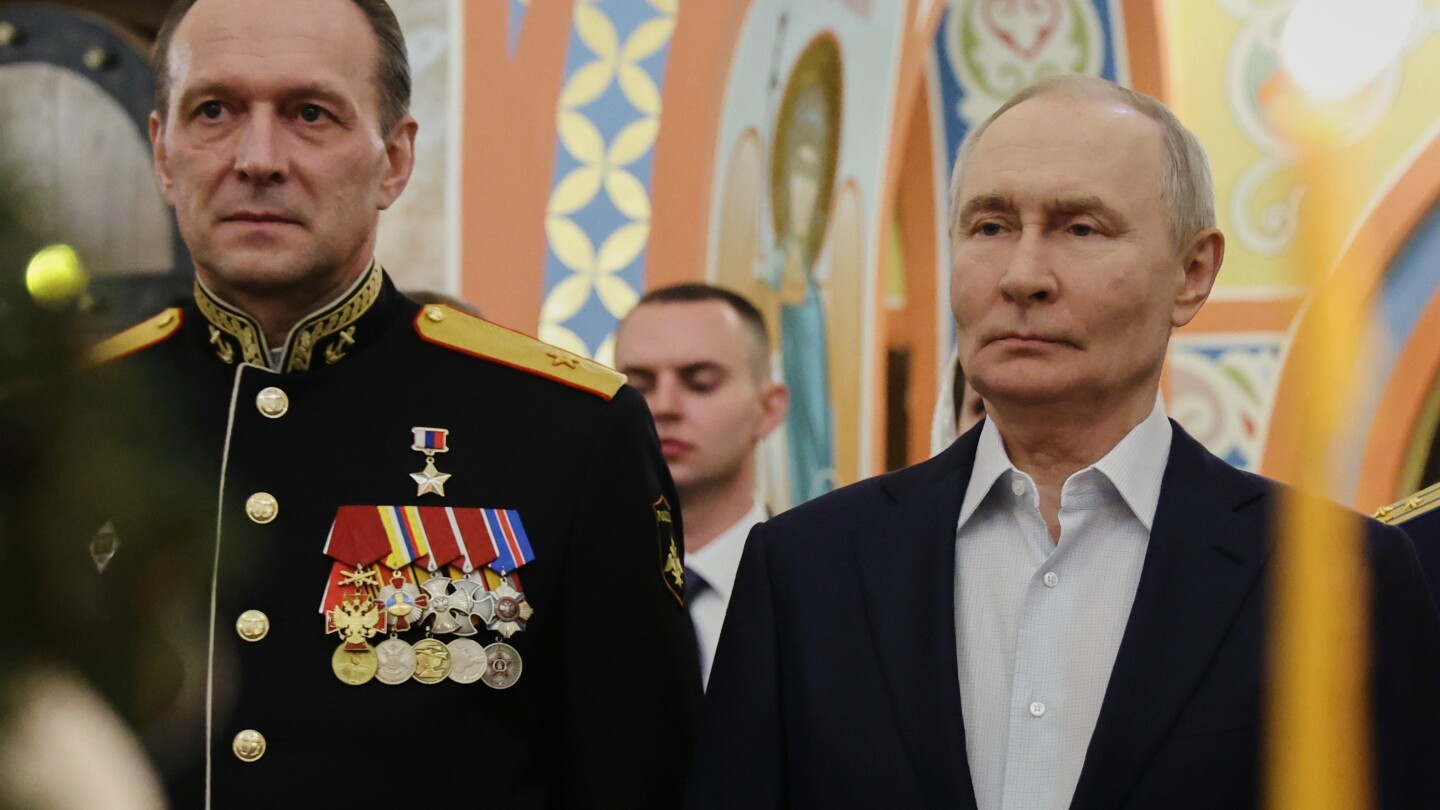
While Russian President Vladimir Putin has remained conspicuously silent about the tanker seizure—as well as the U.S. capture of Venezuelan leader Nicolás Maduro—the incident presents a fresh challenge for the Kremlin. Putin has generally avoided direct criticism of Trump, but hawkish commentators within Russia are demanding a more forceful response.
The U.S. European Command stated that the merchant vessel was seized for “violations of U.S. sanctions.” The ship, previously known as Marinera, was renamed and registered under the Russian flag in December when U.S. forces began pursuing it after it attempted to evade a blockade on sanctioned oil vessels around Venezuela.
The seizure represents a significant escalation in Western efforts to crack down on Russia’s “shadow fleet”—tankers used to circumvent international sanctions and transport Russian oil to global markets. Many Moscow observers warned this action could establish a precedent for other nations to take similar measures.
“Washington’s willingness to generate acute international crisis situations, including in relation to already extremely strained Russian-American relations, which are burdened by disagreements from past years, is a cause for regret and concern,” the Foreign Ministry stated. They characterized the U.S. move as a “gross violation” of international maritime law and “categorically unacceptable.”
The ministry dismissed the U.S. justification, arguing that unilateral sanctions imposed by Western countries are “illegitimate” and cannot justify seizing vessels on the high seas. They further accused the U.S. of harboring “neo-colonial ambitions” in its attempts to control Venezuela’s oil resources.
Daniel Fried, former assistant secretary of state for European and Eurasian affairs during the Bush and Obama administrations, suggested Russia has limited options to respond. “The Russians tend to scream and yell when they’ve been embarrassed, and they’ve been embarrassed in this case because Russian power is not what Vladimir Putin makes it out to be,” Fried said. “They couldn’t do anything about this ship.”
The incident has provoked angry reactions from Russian military bloggers, some of whom have accused the Kremlin of a weak response. Alexander Kots, a military correspondent for Komsomolskaya Pravda, argued that failure to respond forcefully could encourage the U.S. and other Western nations to impound more ships. “Facing a bully who feels all-powerful, we must slap him across the face,” Kots wrote.
Some commentators have even proposed deploying military contractors on shadow fleet ships to prevent future seizures, while others criticized the Russian military for not quickly dispatching warships to escort the tanker.
Fried countered that Russia’s complaints about international law carry little weight given its invasion of Ukraine, and noted the country’s claim to the ship is tenuous, as it was only granted a temporary Russian flag permit in late December. “If you talk about this legally, it’s a complicated issue. If you talk about this strategically, the Russians are badly overextended and vulnerable,” said Fried, now with the Atlantic Council think tank.
The tanker seizure comes at a sensitive moment, as Senator Lindsey Graham announced Wednesday that Trump has “greenlit” a Russia sanctions bill intended to economically cripple Moscow that has been in development for months.
Despite the inflammatory rhetoric, Putin may be reluctant to antagonize Trump directly. As Fried observed, “Putin has gotten further with Trump when he flatters him,” suggesting the Russian leader might pursue a more measured response to preserve what leverage he maintains with the U.S. president.
Fact Checker
Verify the accuracy of this article using The Disinformation Commission analysis and real-time sources.

12 Comments
While the US likely believes the sanctions are justified, Russia sees this tanker seizure as an unacceptable provocation. This incident highlights the fragility of the US-Russia relationship and the need for both sides to exercise restraint.
Exactly. Cooler heads must prevail on both sides to avoid an escalation that could have serious repercussions, not just for the US and Russia, but for the wider region as well.
This is a concerning development. The US and Russia have very different perspectives on the legitimacy of sanctions, and this tanker incident has the potential to exacerbate an already tense situation. Diplomacy will be crucial to de-escalate the conflict.
Well said. Maintaining open communication channels and finding common ground, even on divisive issues, will be essential to resolving this dispute peacefully.
Sanctions are a double-edged sword – they can be an effective policy tool, but also risk unintended consequences like this tanker incident. The US and Russia must carefully manage this situation to prevent it from spiraling out of control.
Geopolitical tensions surrounding energy and commodities shipments are nothing new, but this specific tanker seizure seems to have struck a nerve with Moscow. Both nations will need to tread carefully to prevent this from spiraling.
The Kremlin’s response seems understandable, given the potential impact on shipping and regional stability. However, the US likely views this tanker as violating sanctions, which they see as a justified measure. Delicate situation.
Quite a complex geopolitical issue. The US and Russia have very different perspectives on the legitimacy of these sanctions. Navigating this dispute will require nuanced diplomacy on both sides.
The US seizure of the Russian tanker is a bold move that is likely to provoke a strong reaction from Moscow. Both sides need to exercise caution and restraint to prevent this incident from escalating into a larger confrontation.
This tanker seizure is certainly an aggressive move by the US, but Russia’s warning of increased military tensions is also concerning. Both countries need to de-escalate and find a diplomatic resolution to avoid further conflict.
Interesting developments. The US seizure of the Russian tanker is likely to further escalate tensions between Moscow and Washington. While sanctions are a tool, such direct actions risk unintended consequences and retaliation.
Agreed, this could be a dangerous escalation. Both sides should exercise caution and seek diplomatic solutions to avoid an outright confrontation.