


Listen to the article
Secretary Rubio Details Three-Phase Strategy for Venezuela’s Post-Maduro Future
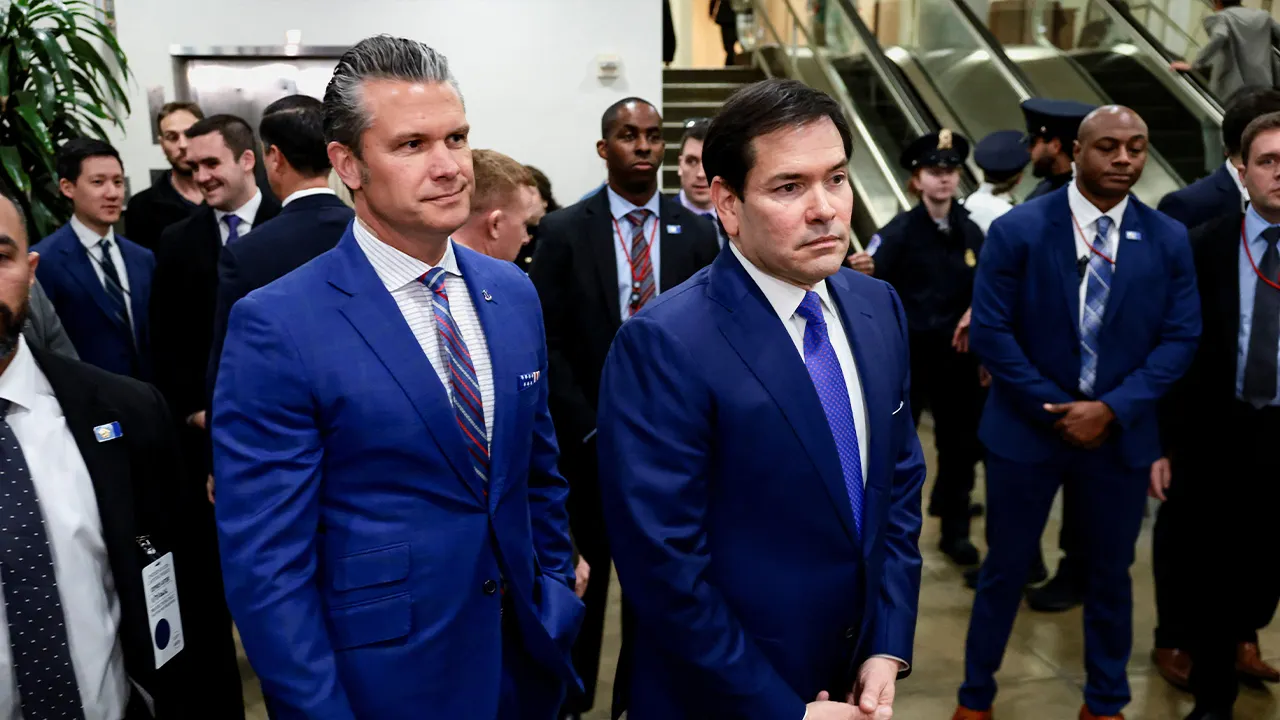
Secretary of State Marco Rubio pushed back against Democratic criticism Wednesday, insisting the Trump administration has developed a comprehensive plan for Venezuela’s governance following the capture of Nicolás Maduro. During a congressional briefing on Capitol Hill, Rubio outlined a three-phase approach focusing on stabilization, recovery, and transition.
“This is not just winging it,” Rubio told reporters, rejecting claims that the administration lacked foresight beyond the initial operation. “It’s already happening.”
The secretary explained that the first phase centers on stabilizing Venezuela to prevent chaos, primarily through American control of the country’s oil exports. He revealed the administration plans to sell between 30 and 50 million barrels of Venezuelan crude that had been immobilized by U.S. sanctions.
“That money will then be handled in such a way that we will control how it is disbursed — in a way that benefits the Venezuelan people, not corruption, not the regime,” Rubio stated.
The second “recovery” phase would focus on ensuring Western companies gain fair access to Venezuela’s lucrative oil markets while simultaneously releasing political prisoners, granting amnesty to certain figures, allowing exiled opposition members to return, and rebuilding civil society.
The third phase — transition — remained less specifically defined. “In the end, it will be up to the Venezuelan people to transform their country,” Rubio said, without providing a timeline for elections or details on how a future government would be selected.
Democratic lawmakers expressed skepticism following the briefings, with many stating they left unconvinced about the administration’s strategy.
“I heard no detailed plan,” said Sen. Tim Kaine (D-Va.), reflecting a broader Democratic concern that the administration’s Venezuela policy is driven by military and economic leverage without a clear political endgame.
Sen. Richard Blumenthal (D-Conn.) noted he “emerged having more questions than they had answered,” particularly regarding objectives and exit strategy. He questioned why the U.S. continues maintaining approximately one-fifth of its naval strength in the region if the operation was primarily law enforcement.
The administration’s apparent openness to the ascension of Delcy Rodríguez, Maduro’s vice president, has raised concerns among observers. This stance appears at odds with Western support for opposition leader María Corina Machado, especially after President Trump publicly questioned whether Machado has sufficient support inside Venezuela to govern effectively.
White House Press Secretary Karoline Leavitt defended this approach, saying, “We obviously have maximum leverage over the interim authorities in Venezuela right now.”
Republican lawmakers largely defended the administration’s strategy, though some acknowledged uncertainty about Venezuela’s future governance.
“No, we don’t know what comes next,” said Sen. John Kennedy (R-La.). “We have a plan. It’s like Mike Tyson said: ‘Everybody has a plan until you get punched in the face.'”
Sen. Kevin Cramer (R-N.D.) expressed confidence in the administration’s preparation, stating, “If people could hear everything that we just heard, I think they’d have renewed confidence in both the planning leading up to it and the planning going forward.”
The power vacuum in Venezuela has created a dynamic environment where, according to one lawmaker who attended the House briefing, remaining government figures “are all in finger-pointing mode” and “jockeying for power.”
Sen. Chris Murphy (D-Conn.) offered one of the harshest critiques, calling the strategy “an insane plan” that amounts to “stealing the Venezuelan oil at gunpoint for an undefined period of time as leverage to micromanage the country.”
Murphy warned the approach risks repeating past American foreign policy mistakes. “That sounds like a recipe for disaster,” he said. “It is just slightly different than the mistakes we made in Iraq and Afghanistan.”
As Venezuela enters this critical transition period, the administration’s ability to successfully implement its three-phase strategy while navigating complex regional politics will face intense scrutiny from both domestic and international observers in the coming weeks.
Fact Checker
Verify the accuracy of this article using The Disinformation Commission analysis and real-time sources.

14 Comments
Rubio’s outlined strategy seems to focus on the practical and logistical aspects of the transition, which is important. However, I hope the plan also addresses the political, social, and humanitarian aspects to truly help the Venezuelan people.
Agreed. The long-term stability and recovery of Venezuela will require addressing the root causes of the crisis, not just the symptoms.
This three-phase plan sounds like a reasonable framework, but I share concerns about the level of US control over Venezuela’s oil revenue. The Venezuelan people must have a strong voice in determining their own future. Careful coordination with international partners will be crucial.
Rubio’s outline suggests the administration has put serious thought into the challenges of a post-Maduro Venezuela. Managing the oil revenues and preventing chaos are crucial first steps. But the real test will be in the execution and ensuring true democratic reforms take hold.
Absolutely. The transition process will require immense diplomatic skill and a commitment to Venezuelan self-determination. Missteps could undermine the credibility of the entire effort.
This three-phase plan for Venezuela’s transition sounds like a pragmatic approach to address the complex challenges. Stabilizing the oil exports and controlling the revenue distribution could be a smart way to provide economic relief while curbing corruption.
I’m curious to see how the administration plans to ensure the benefits reach the Venezuelan people, not just the regime. Transparency and oversight will be crucial.
Rubio’s emphasis on a structured, phased approach is encouraging, but the details will be critical. Maintaining stability while also fostering genuine democratic reforms and economic recovery will be a delicate balancing act. I hope the administration remains open to input from diverse Venezuelan voices.
Agreed. The transition must be driven by the needs and aspirations of the Venezuelan people, not external agendas. Inclusive, transparent processes will be essential.
The administration’s plan to control the revenue from Venezuela’s oil exports is an interesting approach, but it raises concerns about sovereignty and self-determination. I hope there are mechanisms in place to transfer power to the Venezuelan people as soon as possible.
Rubio’s emphasis on a comprehensive, phased strategy is encouraging. Restoring stability and economic function in Venezuela will be a massive undertaking, so a well-planned approach is critical. I’m curious to learn more about the specific details and timeline.
Agreed. The transition will need to balance short-term stabilization with long-term democratic reforms. Careful coordination with international partners will be key.
This three-phase plan seems like a pragmatic approach, but the devil is in the details. I hope the administration engages closely with Venezuelan stakeholders and the international community to ensure a truly inclusive and sustainable transition.
While the three-phase plan appears comprehensive, I have concerns about the level of US control over Venezuela’s oil exports and revenues. Ensuring transparent, accountable distribution of funds to benefit the Venezuelan people should be the top priority.