


Listen to the article
Secretary of State Rubio to Visit Caribbean Amid Shifting U.S. Regional Focus
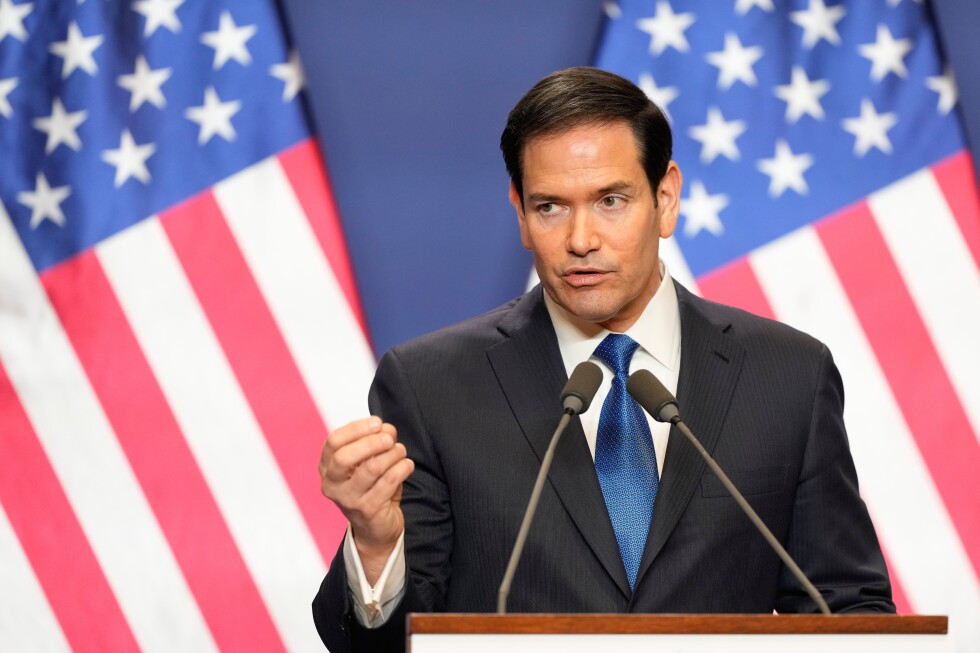
Secretary of State Marco Rubio will travel to St. Kitts and Nevis this Wednesday to attend a summit of Caribbean Community (CARICOM) leaders, in a move aimed at reinforcing the Trump administration’s commitment to the Western Hemisphere just weeks after its military intervention in Venezuela.
The one-day diplomatic visit comes at a pivotal moment as the administration’s foreign policy attention appears to be pivoting toward Iran, where U.S. military forces are amassing in numbers that now exceed the deployment that preceded the January 3rd operation in Venezuela.
Despite this shift in focus, Rubio—long an advocate for stronger U.S. engagement in Latin America and the Caribbean—seeks to maintain momentum in what the administration has characterized as America’s sphere of influence. During the CARICOM meetings, Rubio plans to discuss regional security initiatives, stability measures, trade opportunities, and economic growth strategies with Caribbean leaders.
“During his visit, the Secretary will reaffirm the United States’ commitment to working with CARICOM member states to enhance stability and prosperity in our hemisphere,” the State Department announced in a Monday statement.
The Caribbean summit follows the controversial U.S. military operation that removed Venezuelan President Nicolas Maduro from power in January. Maduro, who has since pleaded not guilty in a U.S. court to charges of collaborating with drug cartels to facilitate the shipment of thousands of tons of cocaine into the United States, was captured and deposed in an operation that surprised many international observers.
The Trump administration’s increasingly assertive posture in the region has generated mixed reactions from neighboring countries. While some smaller states have voiced support for U.S. initiatives, others have expressed concern about the aggressive approach to regional issues including drug trafficking and migration.
Trump and his administration have explicitly framed their Western Hemisphere strategy as a modern interpretation of the Monroe Doctrine—the 19th century policy that rejected European colonialism in the Americas and asserted U.S. primacy in the region. President Trump has gone so far as to label his approach the “Donroe Doctrine,” a personal corollary that encompasses actions including Maduro’s removal, military strikes against suspected drug vessels in the Caribbean, seizures of sanctioned oil tankers, and tightened restrictions on Cuba.
“This is America’s backyard, and we have a responsibility to ensure stability and security,” a State Department official said, speaking on condition of anonymity to discuss the policy framework behind Rubio’s visit.
Regional analysts note that Rubio’s diplomatic mission takes on additional significance as it demonstrates an effort to maintain focus on hemispheric concerns even as tensions with Iran escalate dramatically. The administration now faces the challenge of balancing multiple foreign policy crises simultaneously, with President Trump openly threatening military action against Iran while consolidating recent gains in Venezuela.
The St. Kitts summit provides Rubio an opportunity to engage directly with Caribbean leaders whose countries often feel overlooked in U.S. foreign policy considerations despite their strategic importance for regional security, migration management, and trade.
Caribbean nations have their own concerns to bring to the table, including economic vulnerability, climate change impacts on their island nations, and desires for expanded trade opportunities with the United States.
“Secretary Rubio’s attendance signals that despite global distractions, the administration remains committed to its regional strategy,” said a Caribbean diplomatic source familiar with the upcoming meetings. “How that commitment translates into practical cooperation is what many leaders are waiting to see.”
Fact Checker
Verify the accuracy of this article using The Disinformation Commission analysis and real-time sources.

9 Comments
This trip is likely part of a broader US strategy to counter growing Chinese and Russian influence in the Caribbean. However, the Caribbean nations will want to see tangible benefits from closer ties with the US, not just geopolitical posturing. Rubio should focus on areas like trade, investment, and disaster resilience.
Given the administration’s shifting focus, Rubio will need to strike a delicate balance during this trip. He’ll need to reassure Caribbean leaders of the US’s commitment to the region, while also managing expectations and avoiding overpromising on what the administration can deliver in the long run.
It’s an interesting time for Rubio to be visiting the Caribbean, with the administration’s foreign policy focus shifting toward the Middle East. The Caribbean nations will likely want assurances that the US remains committed to the region, despite these other pressing global issues.
The Trump administration seems eager to shore up its influence in the Caribbean, but it remains to be seen if this visit translates into meaningful, long-term engagement. Rubio will need to offer concrete economic and security initiatives that address the priorities of CARICOM members, not just reaffirm US commitment.
This seems like a delicate diplomatic balancing act for the administration. On one hand, they want to demonstrate continued commitment to the Caribbean. But on the other, their attention is increasingly drawn to the Middle East amid the Iran tensions. Rubio will need to tread carefully to avoid the perception of neglect or diminished interest in the region.
This visit is a chance for the US to demonstrate its continued commitment to the Caribbean, but it will require more than just rhetoric. Rubio should come prepared with specific initiatives and proposals that address the economic, security, and developmental needs of the CARICOM nations.
Interesting to see Rubio visiting the Caribbean. The US seems keen to reassert its influence in Latin America and the Caribbean, especially amid tensions with Venezuela and Iran. It will be important to see what concrete initiatives come out of this trip to boost regional security and economic growth.
The Caribbean is an important strategic area for the US, both economically and geopolitically. Rubio’s visit is likely aimed at shoring up support from CARICOM nations and countering growing Chinese and Russian influence in the region. However, the administration’s shifting foreign policy focus may limit its bandwidth to deliver tangible results.
Given the recent military intervention in Venezuela, Rubio’s visit is a chance for the US to reassure Caribbean leaders that it remains a reliable partner. However, some may be wary of getting pulled into a proxy struggle between the US and its regional adversaries. Striking the right tone of cooperation will be crucial.