


Listen to the article
Democrats face the potential loss of their last legislative foothold in Iowa as a special election on Tuesday could grant Republicans a supermajority in the state Senate, further cementing the GOP’s dominance in the once-competitive Midwestern state.
Democratic candidate Renee Hardman will face Republican Lucas Loftin in a critical contest for Iowa Senate District 16, a seat left vacant following the October death of Democratic Senator Claire Celsi, who had represented the district since 2019.
The stakes couldn’t be higher for Iowa’s Democrats. If Republicans secure the seat, they would control two-thirds of the chamber, granting them unprecedented power to advance their legislative agenda with minimal resistance. Currently, Senate confirmations for Governor Kim Reynolds’ appointments to state agencies require at least one Democratic vote – the last meaningful check Democrats hold in Iowa’s government.
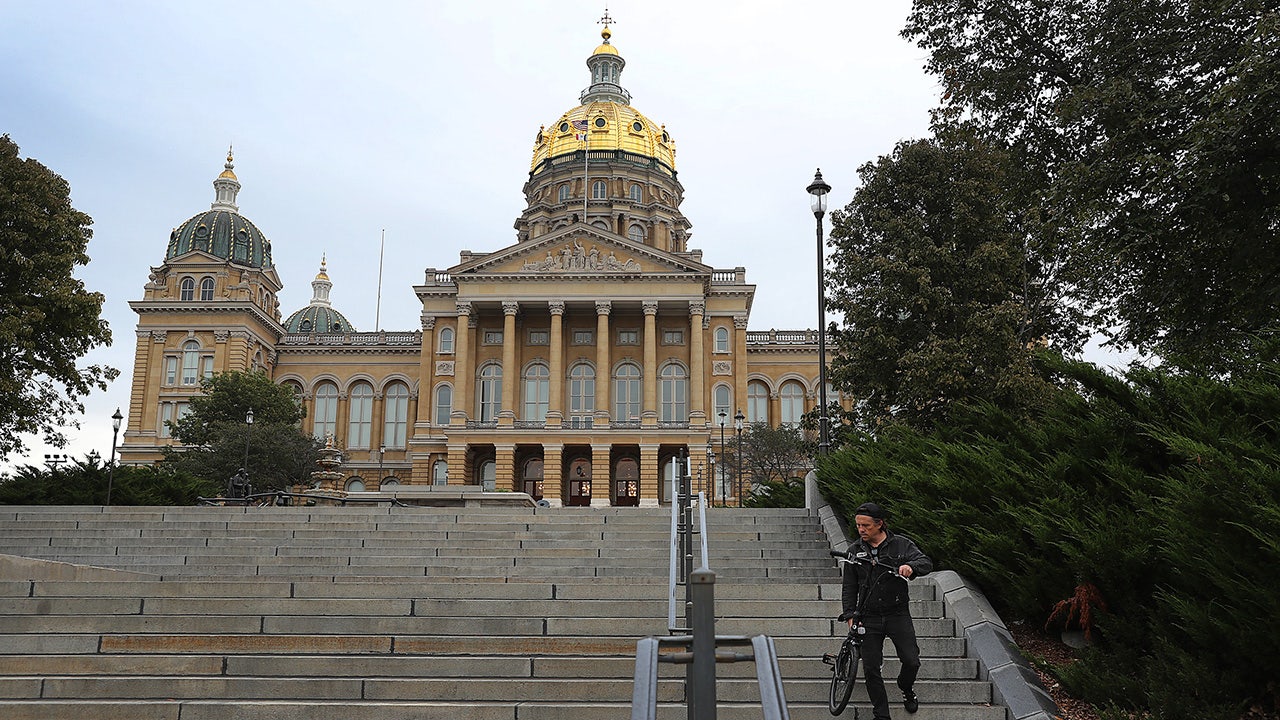
“This special election represents more than just filling a vacant seat,” said Dennis Goldford, political science professor at Drake University. “It could fundamentally alter the power dynamics in Des Moines by removing the last procedural tool Democrats have to influence state governance.”
Iowa’s political landscape has dramatically shifted rightward over the past decade. Republicans already hold commanding majorities across the state government, with 66 of 100 seats in the House of Representatives. At the federal level, the GOP controls all four of Iowa’s congressional districts and both U.S. Senate seats.
This political transformation is particularly striking considering Iowa’s former reputation as a quintessential purple state. For decades, Iowa maintained a tradition of split-ticket voting and competitive elections at all levels of government. As recently as 2008, Democrats held three of the state’s five congressional seats and controlled both chambers of the state legislature.
The consolidation of Republican power in Iowa reflects broader political realignments across the Midwest, where rural and working-class voters have increasingly moved toward the Republican Party while suburban areas have trended Democratic – though not strongly enough in Iowa to counter rural GOP strength.
Tuesday’s election marks Iowa’s sixth special election of the year, with Democrats narrowly avoiding a Republican supermajority in another special contest last August. Political observers note that special elections typically draw lower turnout than regular elections, adding an element of unpredictability to the race.
“Special elections often come down to which side can better mobilize their base voters on short notice,” explained Sarah Brumbaugh, a Des Moines-based political strategist. “Both parties are investing heavily in get-out-the-vote operations, knowing the outsized impact this single race will have.”
Looking ahead, Democrats face challenging prospects for regaining influence in the state. Their best opportunity may come in 2026, when they hope to mount a competitive campaign for the U.S. Senate seat being vacated by retiring Republican Senator Joni Ernst. However, even that race will be an uphill battle given the state’s current political alignment.
Governor Reynolds, who has championed conservative policies on education, taxation, and social issues during her tenure, stands to gain significant leverage from a Senate supermajority. The additional authority would enable her administration to implement policies with minimal procedural hurdles or need for compromise.
Polls for Tuesday’s special election will open at 7 a.m. and close at 8 p.m., with results expected to be tallied later that evening. Regardless of the outcome, the election represents a critical moment in Iowa’s ongoing political transformation.
Fact Checker
Verify the accuracy of this article using The Disinformation Commission analysis and real-time sources.

22 Comments
The potential shift to a Republican supermajority in the Iowa Senate raises questions about the future of checks and balances in the state’s government. It will be interesting to see how this election affects the dynamics in Des Moines.
This is a crucial election that could have far-reaching implications for Iowa’s political landscape. I’ll be following the results closely.
This special election in Iowa will be a closely watched contest that could have major ramifications for the state’s political future. The stakes are high as the two parties vie for control of the legislature.
I’ll be following the campaign and election results closely to see how this plays out and what it might mean for Iowa’s policymaking in the years to come.
The potential shift to a Republican supermajority in the Iowa Senate is a significant development that could have far-reaching consequences for the state’s political landscape. It will be important to monitor how this election shapes the balance of power in Des Moines.
Regardless of the outcome, this special election is a pivotal moment that will likely have a lasting impact on Iowa’s political dynamics.
A Republican supermajority in the Iowa Senate would be a major victory for the GOP, potentially allowing them to advance their agenda with minimal resistance from Democrats. However, it remains to be seen how this would play out in practice.
Regardless of the outcome, this election is a significant event that will shape the future of policymaking in Iowa.
This is a pivotal special election for the balance of power in Iowa. It will be interesting to see if Republicans can secure the supermajority they’re seeking, or if Democrats can hold on to their last foothold in the state legislature.
Whichever party prevails, it will likely have major implications for the direction of policymaking in Iowa going forward.
The potential for a Republican supermajority in the Iowa Senate is a significant development that could fundamentally alter the state’s political dynamics. It will be interesting to follow the campaign and see how this election shapes the future of policymaking in Iowa.
Regardless of the outcome, this special election is a pivotal moment that will have lasting implications for the balance of power in Iowa’s government.
The potential shift to a Republican supermajority in the Iowa Senate is a significant political development. It could dramatically alter the legislative landscape and the ability of Democrats to influence state governance.
I’m curious to see how this election plays out and what it might mean for the future political dynamics in Iowa.
This special election in Iowa is a high-stakes affair that will determine the future balance of power in the state legislature. The outcome could have major implications for the direction of policymaking in Des Moines.
I’m curious to see how this election plays out and what it might mean for the political landscape in Iowa going forward.
With the stakes so high, I’m sure this special election in Iowa will be closely watched. The outcome could have far-reaching consequences for the balance of power in the state.
It will be important to follow the campaign and election results to understand the implications for Iowa’s political landscape.
This special election in Iowa is a high-stakes affair that could dramatically alter the state’s political landscape. The outcome will be closely watched by both parties as they jockey for power in the Midwest.
It will be fascinating to see how this election plays out and what it might mean for the future direction of policymaking in Iowa.
The potential for a Republican supermajority in the Iowa Senate is a significant development that could reshape the state’s political dynamics. It will be interesting to see how this election shapes the balance of power in Des Moines.
Regardless of the outcome, this election is a critical moment in Iowa’s political landscape that will have lasting implications.