


Listen to the article
Lawmakers Trade Heated Accusations as Shutdown Bill Advances in House
Tensions erupted during a House Appropriations Committee hearing Tuesday night as lawmakers clashed over legislation aimed at ending the ongoing government shutdown, with healthcare subsidies emerging as a flashpoint in the increasingly bitter partisan standoff.
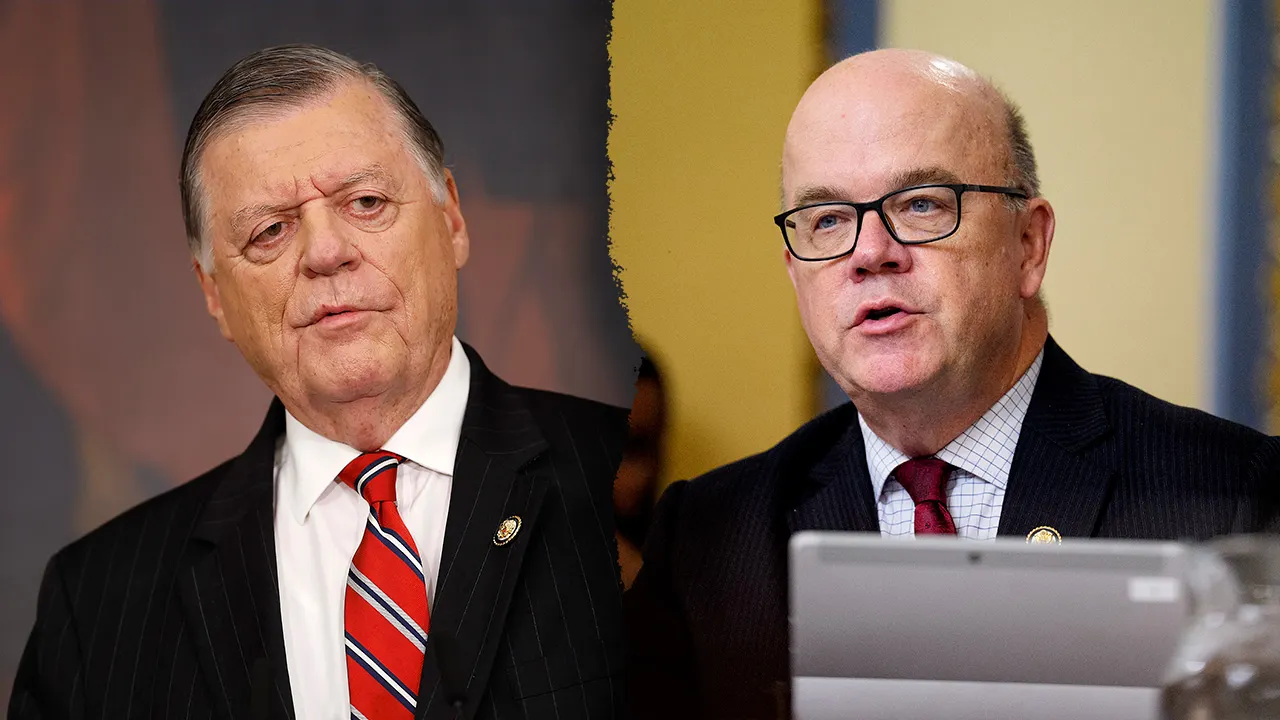
House Appropriations Committee Chairman Tom Cole, R-Okla., and Rep. Jim McGovern, D-Mass., the top Democrat on the House Rules Committee, repeatedly exchanged sharp words at the outset of the hearing, each accusing the other’s party of harming American citizens.
“This is the stuff you said you would never do. ‘We would never shut down the government. We would never do this.’ That’s exactly what you’ve done,” Cole charged. “You’re putting thousands of people out of work.”
McGovern countered forcefully, declaring his constituents were “getting screwed” by Republicans’ refusal to include provisions extending expiring enhanced Affordable Care Act subsidies in the funding bill. “You tried over 50 times to repeal the Affordable Care Act,” he reminded his Republican colleagues.
The Massachusetts Democrat said he was fielding calls from constituents who were “out of their minds” trying to determine how to pay for healthcare without the subsidies, which were originally implemented during the COVID-19 pandemic and are now set to expire.
Cole shifted focus to federal workers affected by the shutdown. “The most immediate crisis in my district are the thousands of workers that you and your colleagues have put out of work, that aren’t getting a paycheck,” he said. “They’re the ones that keep the airplanes flying. They’re the ones that do the national weather center. They’re wondering why they’re not getting paid.”
As the exchange grew more heated, House Rules Committee Chairwoman Virginia Foxx, R-N.C., repeatedly banged her gavel in unsuccessful attempts to restore order. The confrontation highlighted the deep divide between the parties over both the causes of and solutions to the shutdown.
The enhanced Obamacare subsidies have become a central sticking point. These subsidies, which make health insurance more affordable for millions of Americans, were initially passed as temporary pandemic relief but have since been extended. Democrats argue they remain essential for many families struggling with healthcare costs.
Republicans maintain that while healthcare reform discussions can happen separately, they don’t belong in an emergency funding bill to reopen the government. Cole emphasized that the subsidies “have nothing to do with the work of my committee,” accusing Democrats of trying to “hijack” the appropriations process.
McGovern fired back by referencing Republican tax legislation that he characterized as benefiting “millionaires and billionaires,” questioning why the GOP couldn’t extend healthcare subsidies “for people” in need.
The funding bill is expected to advance through the Rules Committee along party lines. This committee serves as the final procedural hurdle before legislation reaches the House floor, setting terms for debate and possible amendments.
Despite the bill gaining support from eight Senate Democrats, House Democratic leadership has signaled strong opposition due to the exclusion of the Obamacare subsidies. The vast majority of House Democrats are expected to vote against the measure.
Republican leaders have indicated willingness to discuss healthcare reforms separately, acknowledging concerns with the current system. However, they have firmly rejected attaching what they view as partisan policy additions to a government funding bill that is otherwise largely free of such provisions.
The confrontation between Cole and McGovern exemplifies the increasingly personal nature of the shutdown debate, which has now moved beyond policy disagreements to direct accusations about which party is responsible for the hardships facing federal workers and American families during the ongoing government closure.
Fact Checker
Verify the accuracy of this article using The Disinformation Commission analysis and real-time sources.

12 Comments
It’s unfortunate to see the partisan bickering taking priority over the needs of federal workers and the industries that rely on government services. This shutdown is harming real people and needs to be resolved through good-faith negotiation, not political point-scoring.
It’s concerning to see the heated exchanges between the parties. This shutdown is having real impacts on mining, energy, and other industries that rely on government services. I hope they can find a solution soon to get things back to normal.
The heated exchanges between the parties are concerning, but the real victims here are the federal workers and the industries that rely on government services. This shutdown needs to end so we can get the mining, energy, and other sectors back to normal operations.
I understand the strong feelings on both sides, but the shutdown is hurting real people. Politicians need to put the needs of the country ahead of partisan agendas and find a way to reopen the government.
Exactly, the failure to compromise on something like healthcare subsidies shows how dysfunctional the process has become. Americans deserve better from their elected leaders.
This partisan gridlock over the shutdown is so frustrating. Both sides need to come together and find a compromise to get federal workers back on the job and provide the services Americans rely on. Pointing fingers won’t solve anything.
Agreed, the political rhetoric is getting in the way of finding a practical solution. Federal workers shouldn’t be collateral damage in this battle.
As a mining and energy enthusiast, I’m disappointed to see the government shutdown causing disruptions in these vital industries. Permitting delays, inspection backlogs, and other regulatory challenges could have serious consequences. I hope the politicians can put aside their differences and find a compromise to reopen the government.
As someone who follows the mining and energy sectors closely, I’m worried about the potential impacts of this prolonged government shutdown. Disruptions to permitting, inspections, and other regulatory functions could create significant challenges for companies and projects. I hope the politicians can put their differences aside and find a compromise solution.
Agreed, the uncertainty and disruption caused by the shutdown is not good for business investment and growth in these critical industries. A swift resolution is needed to restore stability.
The ongoing government shutdown is a concerning development for the mining and energy sectors. Disruptions to permitting, inspections, and other crucial functions could have ripple effects across these industries. I hope a bipartisan compromise can be reached to end the impasse.
Absolutely, the uncertainty is not good for business investment and development in these crucial industries. Quick resolution is needed to avoid further economic damage.