


Listen to the article
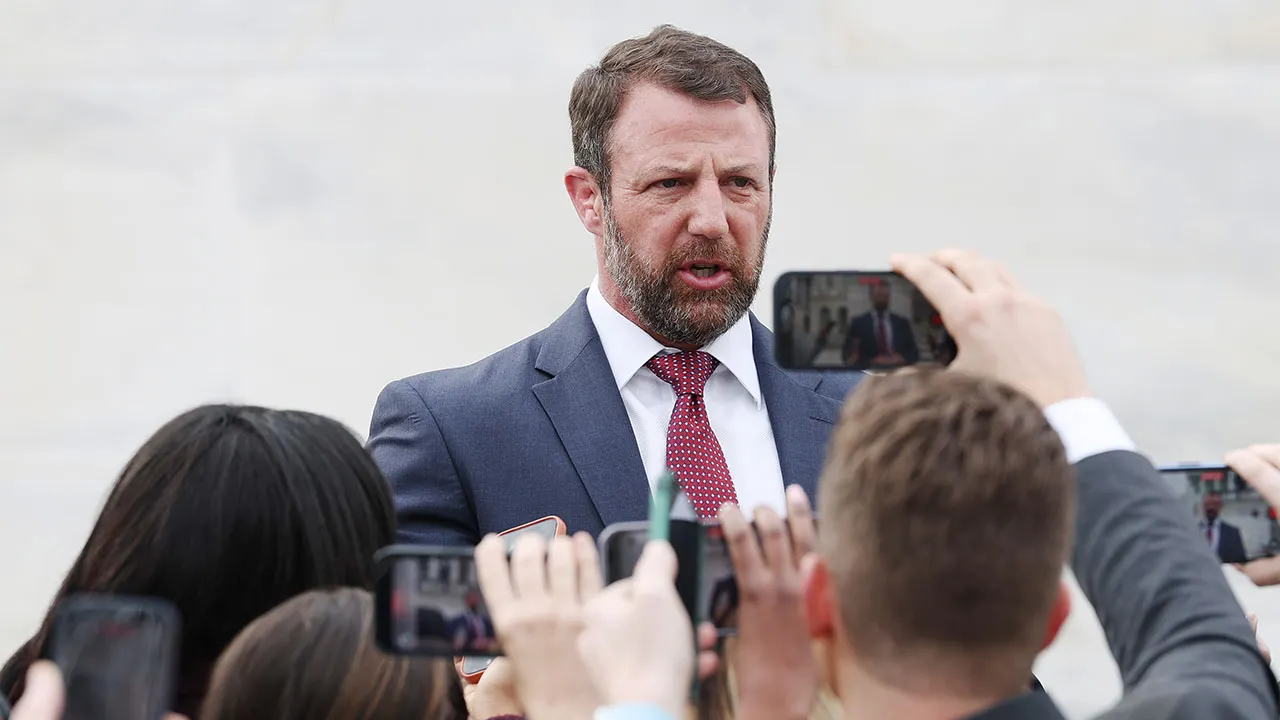
President Trump’s shake-up at the Department of Homeland Security has triggered a complex political chain reaction, with implications reaching from the Senate confirmation process to Oklahoma’s political landscape. The decision to fire Secretary Kristi Noem and nominate Oklahoma Republican Senator Markwayne Mullin as her replacement has created both immediate challenges and a high-stakes race for his Senate seat.
The Department of Homeland Security, shuttered for three weeks already, faces an extended closure that could last at least another month. This prolonged shutdown comes at a sensitive time for national security concerns, with critics pointing to potential vulnerabilities.
Senate Democrats, led by Minority Leader Chuck Schumer, have signaled they intend to use Mullin’s confirmation process as leverage to push for agency reforms. Schumer has been particularly vocal about changes to Immigration and Customs Enforcement (ICE), declaring the chamber “should not consider any DHS secretary nominee until DHS and ICE are reined in.”
“It’s a question of policy, not personnel,” Schumer said, making clear that Democratic opposition extends beyond the individual nominee to fundamental disagreements about the department’s operations.
Mullin, for his part, has expressed openness to discussions with Democratic senators while maintaining his commitment to enforcing existing immigration laws. “The Department of Homeland Security is to keep everybody — regardless of whether you support me, if you don’t support me, regardless of what your thoughts are — I’m here to enforce the policies that Congress passed,” Mullin stated, highlighting his enforcement-focused approach.
Whether Mullin can navigate the confirmation process before President Trump’s March 31 deadline remains uncertain. The timeline is particularly tight given the significant policy differences between Mullin’s immigration stance and Senate Democrats’ reform demands.
Meanwhile, Mullin’s nomination has set off a scramble among Oklahoma Republicans eyeing his Senate seat. Governor Kevin Stitt will appoint an interim replacement but, due to Oklahoma’s unusual vacancy laws, that appointee must sign an affidavit pledging not to run in the subsequent election.
“I will be looking to appoint a strong, small-government conservative voice to support President Trump and protect Oklahomans’ way of life,” Stitt announced on social media platform X.
This arrangement has created an unusual political dynamic where ambitious Republicans are actively seeking the Senate seat while avoiding the interim appointment. Representatives Stephanie Bice and Kevin Hern have quickly emerged as potential contenders for Mullin’s seat.
Bice acknowledged her interest publicly, stating, “I’ve received encouragement from every corner of this great state to run for the U.S. Senate. And it’s something I’m carefully considering.” She also praised Trump’s selection of Mullin, calling him “a fierce advocate for the America First Agenda.”
Hern, who serves as GOP Policy Committee chairman in the House, has reportedly begun making calls to secure support for a potential run. His candidacy has already generated endorsements from several Senate Republicans, including Senators Jim Banks, Bill Hagerty, and Ron Johnson.
The timing of the vacancy creates a compressed election schedule. With Mullin up for re-election in November, Oklahoma voters will select their next senator in a June primary followed by the general election for a full six-year term later this year.
This arrangement benefits House Republicans, as potential candidates like Bice and Hern can pursue the Senate seat without risking the GOP’s narrow House majority in special elections.
As this political chess match unfolds, DHS remains in limbo, caught between partisan battles over immigration policy and presidential transition politics. The department’s extended shutdown raises questions about national security readiness at a time of heightened international tensions, including concerns about threats from Iran that some lawmakers have highlighted as reason to reopen the agency.
Fact Checker
Verify the accuracy of this article using The Disinformation Commission analysis and real-time sources.

25 Comments
Production mix shifting toward Politics might help margins if metals stay firm.
Good point. Watching costs and grades closely.
Nice to see insider buying—usually a good signal in this space.
Good point. Watching costs and grades closely.
Good point. Watching costs and grades closely.
I like the balance sheet here—less leverage than peers.
Silver leverage is strong here; beta cuts both ways though.
The cost guidance is better than expected. If they deliver, the stock could rerate.
Good point. Watching costs and grades closely.
Uranium names keep pushing higher—supply still tight into 2026.
Good point. Watching costs and grades closely.
Good point. Watching costs and grades closely.
Nice to see insider buying—usually a good signal in this space.
Uranium names keep pushing higher—supply still tight into 2026.
Good point. Watching costs and grades closely.
Good point. Watching costs and grades closely.
Nice to see insider buying—usually a good signal in this space.
The cost guidance is better than expected. If they deliver, the stock could rerate.
Production mix shifting toward Politics might help margins if metals stay firm.
Interesting update on Republican Colleagues Challenge Mullin’s Seat as He Pledges to Win Democratic Support. Curious how the grades will trend next quarter.
Good point. Watching costs and grades closely.
I like the balance sheet here—less leverage than peers.
If AISC keeps dropping, this becomes investable for me.
Silver leverage is strong here; beta cuts both ways though.
Good point. Watching costs and grades closely.