


Listen to the article
Democratic Representatives Removed from ICE Facility After Unannounced Visit
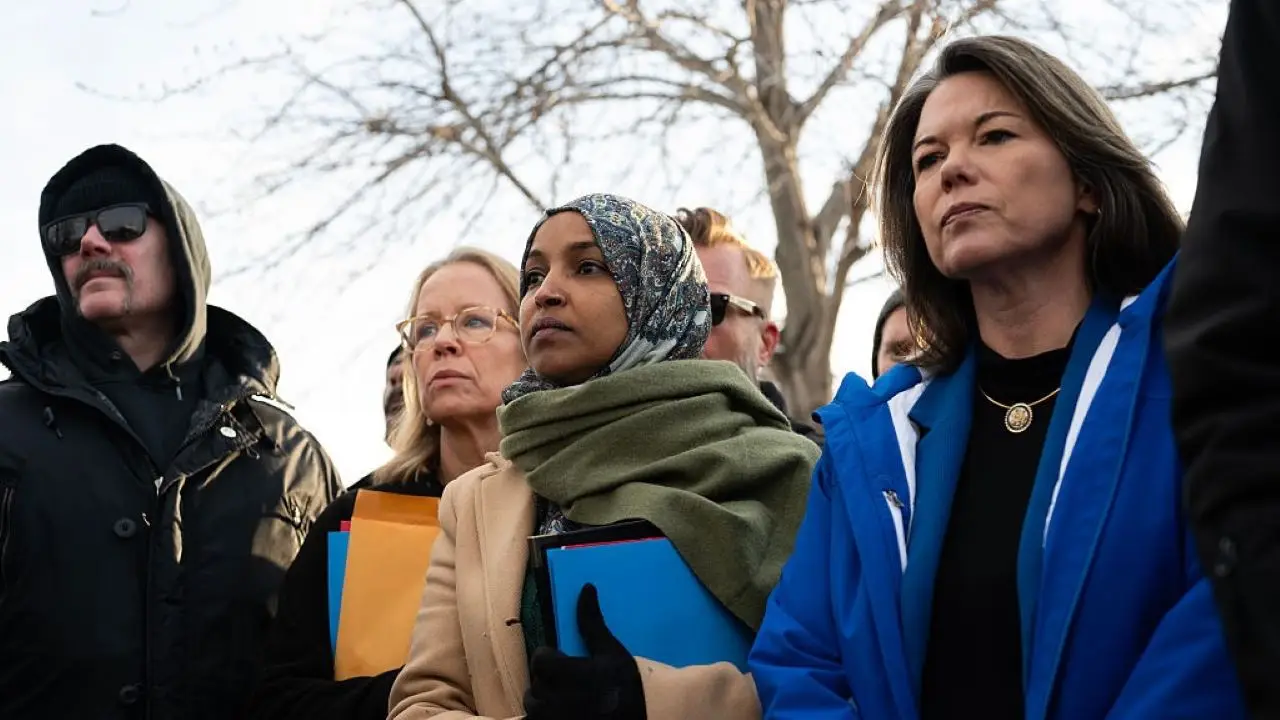
Democratic Representatives Ilhan Omar and Angie Craig were removed from an Immigration and Customs Enforcement (ICE) facility in Minneapolis on Saturday after officials cited a new Trump administration policy requiring advance notice for congressional visits.
The Minnesota lawmakers said they were initially permitted to enter the Whipple Building to conduct what they described as congressional oversight under their Article I duties. However, shortly after gaining access, they were informed they would need to leave.
“We were initially invited in to do our Congressional oversight,” Omar told reporters outside the facility. “When we made it in, it was with the authorization of someone who’s been here for a really long time, who understood that we had a Congressional duty to enter the building and see the facility.”
According to Omar, two officials soon approached them, stating they had received instructions to rescind the lawmakers’ invitation and deny further access to the building.
The incident highlights escalating tensions between congressional Democrats and the Trump administration over immigration enforcement oversight. The administration implemented a new rule Saturday requiring lawmakers to provide at least one week’s notice before entering any ICE facility.
This marks the second attempt by the administration to restrict congressional access to immigration facilities. A similar requirement from Homeland Security Secretary Kristi Noem was previously struck down by a federal judge, who ruled that federal spending laws guarantee members of Congress unrestricted access to facilities receiving federal funds.
DHS officials maintain the new policy complies with federal law because funding for the facility reportedly comes from the “Big Beautiful Bill” rather than standard congressional appropriations, potentially creating a legal loophole to the previous court ruling.
DHS spokeswoman Tricia McLaughlin offered a different characterization of the visit, suggesting more confrontational intentions by the lawmakers. In a statement to reporters, McLaughlin claimed the representatives entered the facility “with the explicit goal of ‘hunting down’ ICE officers who they believed may have been staying there.”
“For the safety of detainees and staff, and in compliance with the agency’s mandate, the Members of Congress were notified that their visit was improper and out of compliance with existing court orders and policies which mandate that members of Congress must notify ICE at least seven days in advance of Congressional visits,” McLaughlin said.
Despite their brief time inside, Omar said her group managed to question officials about detainee conditions, including hygiene practices. She described the responses as “insane” and accused officials of downplaying the length of time immigrants are held at the facility.
The confrontation occurs amid heightened scrutiny of immigration enforcement actions in Minneapolis. Just days earlier, on January 7, U.S. Border Patrol agents conducted detentions near Roosevelt High School during dismissal time, sparking community unrest.
Immigration policy has become increasingly contentious during the second Trump administration, with Democratic lawmakers pushing for greater oversight of detention conditions and enforcement tactics. Republicans have countered that stricter immigration controls are necessary for national security.
The dispute over congressional access to immigration facilities reflects broader disagreements about separation of powers and oversight authority between the legislative and executive branches. Legal experts suggest this latest incident could potentially trigger another court challenge to determine whether the administration’s new notification requirement improperly restricts Congress’s constitutional oversight role.
As immigration remains a divisive political issue, confrontations between lawmakers and federal agencies are likely to continue, particularly in regions like Minnesota where immigration enforcement has become a focal point of community concern.
Fact Checker
Verify the accuracy of this article using The Disinformation Commission analysis and real-time sources.

16 Comments
I’m curious to learn more about the justification for this policy change. Was there a specific security concern, or is this more about limiting transparency and accountability? Congressional oversight is crucial.
Good point. The rationale needs to be clearly explained, not used as a pretext to obstruct legitimate oversight.
This seems like a concerning overreach by the Trump administration. Elected officials should have reasonable access to inspect government facilities, especially on sensitive issues like immigration enforcement.
Absolutely. Limiting oversight sets a dangerous precedent and undermines democratic principles.
It’s concerning to see Congressional oversight being restricted, especially on sensitive issues like immigration enforcement. Transparency and accountability are so important, even if it creates some inconvenience.
I agree, access for lawmakers is crucial to ensure facilities are operating ethically and legally. Hopefully this can be resolved constructively.
This seems like an overreaction by the Trump administration. Denying elected representatives access to government facilities is troubling, regardless of party affiliation. The public deserves transparency on these issues.
Absolutely. Oversight should not be obstructed – it’s a core part of the checks and balances in our democracy.
As a concerned citizen, I find it troubling to see elected representatives denied access to government facilities. Transparency and oversight are essential, even if it creates some logistical challenges.
Agreed. The public deserves to have confidence that these facilities are operating ethically and within the law.
This incident highlights the ongoing tensions between the Trump administration and Congressional Democrats over immigration enforcement. Denying access to elected officials is concerning and requires further scrutiny.
Absolutely. Oversight should not be obstructed, regardless of political affiliations. The public interest must come first.
I’m curious to learn more about the policy that led to this situation. Was there a valid security or logistical reason for denying access, or is this more about political posturing? Congressional oversight is crucial.
Good point. The rationale behind this policy should be scrutinized to ensure it’s not being abused to limit legitimate oversight.
As a taxpayer, I want to see our government facilities operating with the highest levels of transparency and accountability. Denying elected representatives access is troubling, regardless of party affiliation.
Agreed. The public deserves to have confidence that these facilities are being run properly and ethically.