


Listen to the article
Plea Negotiations Underway for Wisconsin Judge Accused of Helping Immigrant Evade Federal Agents
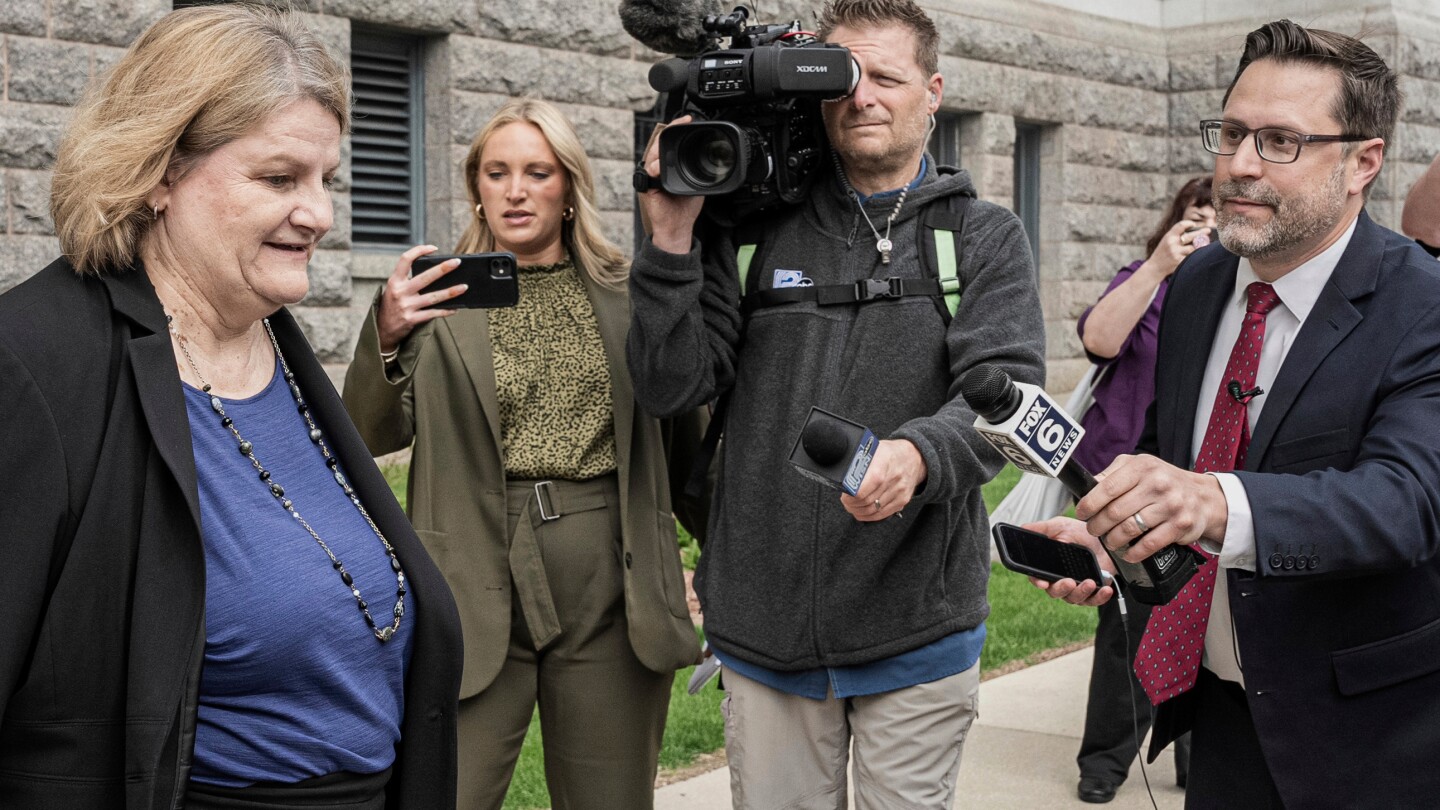
Federal prosecutors and defense attorneys are engaged in plea negotiations in the case of Milwaukee County Judge Hannah Dugan, who stands accused of helping an undocumented immigrant escape federal agents, according to newly appointed Interim U.S. Attorney Brad Schimel.
In a telephone interview Tuesday, Schimel told The Associated Press that attorneys are “discussing potential resolution” of the case against Dugan, though her legal team has not yet indicated a willingness to accept any offer.
“Plea negotiations are part of a normal process to resolve a case and eliminate risk for both sides, to find a resolution that makes sense. That’s all,” Schimel explained.
Dugan’s defense team maintains her innocence and is preparing for trial, which is scheduled to begin December 15. If convicted, she could face up to six years in prison on charges of obstruction and concealing an individual to prevent arrest.
The case stems from an April incident at the Milwaukee County Courthouse. According to court documents, federal agents arrived at the courthouse to apprehend Eduardo Flores-Ruiz, a 31-year-old undocumented immigrant who was scheduled to appear before Dugan in a state battery case. Upon learning of the agents’ presence, Dugan allegedly escorted Flores-Ruiz out of her courtroom through a private door, enabling him to flee the building. Agents eventually captured him following a foot chase. The U.S. Department of Homeland Security announced Friday that Flores-Ruiz has since been deported.
Dugan was arrested at the courthouse a week after the incident, and a federal grand jury indicted her in May. Her defense has centered on the argument that she did nothing wrong and has complete authority over movement in her courtroom.
The case has become a flashpoint in the broader immigration policy debate, intensifying tensions between the Trump administration and local authorities. Democrats have accused the administration of trying to make an example of Dugan to discourage judicial opposition to immigration enforcement policies.
High-ranking officials in the Trump administration have taken to social media to publicize the case. FBI Director Kash Patel posted a photo on X (formerly Twitter) showing Dugan being led out of the courthouse in handcuffs. Similarly, the Department of Homeland Security commented on the platform that Dugan had taken the term “‘activist judge’ to a whole new meaning.”
The prosecution was originally brought under acting U.S. Attorney Richard Frohling. On Monday, U.S. Attorney General Pamela Bondi appointed Schimel as the Eastern District of Wisconsin’s interim U.S. Attorney. Schimel previously served as Wisconsin’s attorney general from 2015 to 2019 before being appointed to a state judgeship by then-Governor Scott Walker after losing his reelection bid in 2018. Earlier this year, Schimel unsuccessfully ran for the state Supreme Court.
John Vaudreuil, who formerly served as U.S. attorney in Wisconsin’s Western District, expressed surprise that Schimel would publicly disclose ongoing plea negotiations, noting such discussions are typically private. Public comments about negotiations, Vaudreuil suggested, could be perceived as placing pressure on the defendant.
Nevertheless, Vaudreuil acknowledged that extending plea offers is standard procedure in most federal cases, even when compromise seems unlikely. He speculated that Schimel is likely following directives from Justice Department leadership on handling the politically sensitive case.
“If the attorney general of the United States says it has to be a felony and it has to be jail time, I don’t suspect that’s where the defense is starting from,” Vaudreuil observed. “When the case started, there were a lot of things said from on high that would make it difficult to come to a resolution of the case.”
The possibility of a plea agreement marks a potentially surprising development in a case that has drawn significant national attention amid heightened focus on immigration enforcement policies.
Fact Checker
Verify the accuracy of this article using The Disinformation Commission analysis and real-time sources.

12 Comments
While I understand the judge may have been trying to protect the immigrant, obstructing federal agents is a serious charge. Hopefully the plea talks can find a fair outcome that upholds the law.
It’s a tricky situation balancing the interests of justice, individual rights, and immigration enforcement. I’ll be following this case closely to see how it unfolds.
This case raises some complex legal and ethical issues around the role of judges in immigration enforcement. It will be interesting to see how the plea negotiations unfold and what kind of resolution is reached.
Agreed, the judge’s actions seem to have put her in a difficult position legally. I’m curious to learn more about the specifics of the case and her rationale.
Given the serious charges the judge is facing, the plea negotiations will be crucial in determining an appropriate outcome. I hope the process is fair and takes into account the complexities of the situation.
Absolutely, this is a high-stakes case with significant implications. A thoughtful, balanced resolution will be important for upholding the integrity of the justice system.
This is a complex issue with valid arguments on both sides. I’m interested to see how the plea negotiations address the judge’s actions and the broader implications for the justice system.
Agreed, there are important principles at stake here around judicial independence, immigration policy, and the rule of law. A fair and thoughtful resolution will be crucial.
The case against the Wisconsin judge seems to highlight the tensions between federal immigration enforcement and local judicial discretion. I’ll be curious to see how the plea talks navigate those tensions.
Yes, this case touches on some fundamental questions about the separation of powers and the role of the courts in immigration matters. It will be an important test case to watch.
While I understand the judge may have been trying to protect the immigrant, obstructing federal agents is a serious matter. Hopefully the plea talks can find a fair compromise that respects the rule of law.
Yes, this case touches on some fundamental tensions in the immigration debate. It will be interesting to see how the prosecutors and defense work to resolve it through the plea negotiations.