


Listen to the article
Sewage Crisis in Struggling Communities Worsens as Federal Aid Dries Up
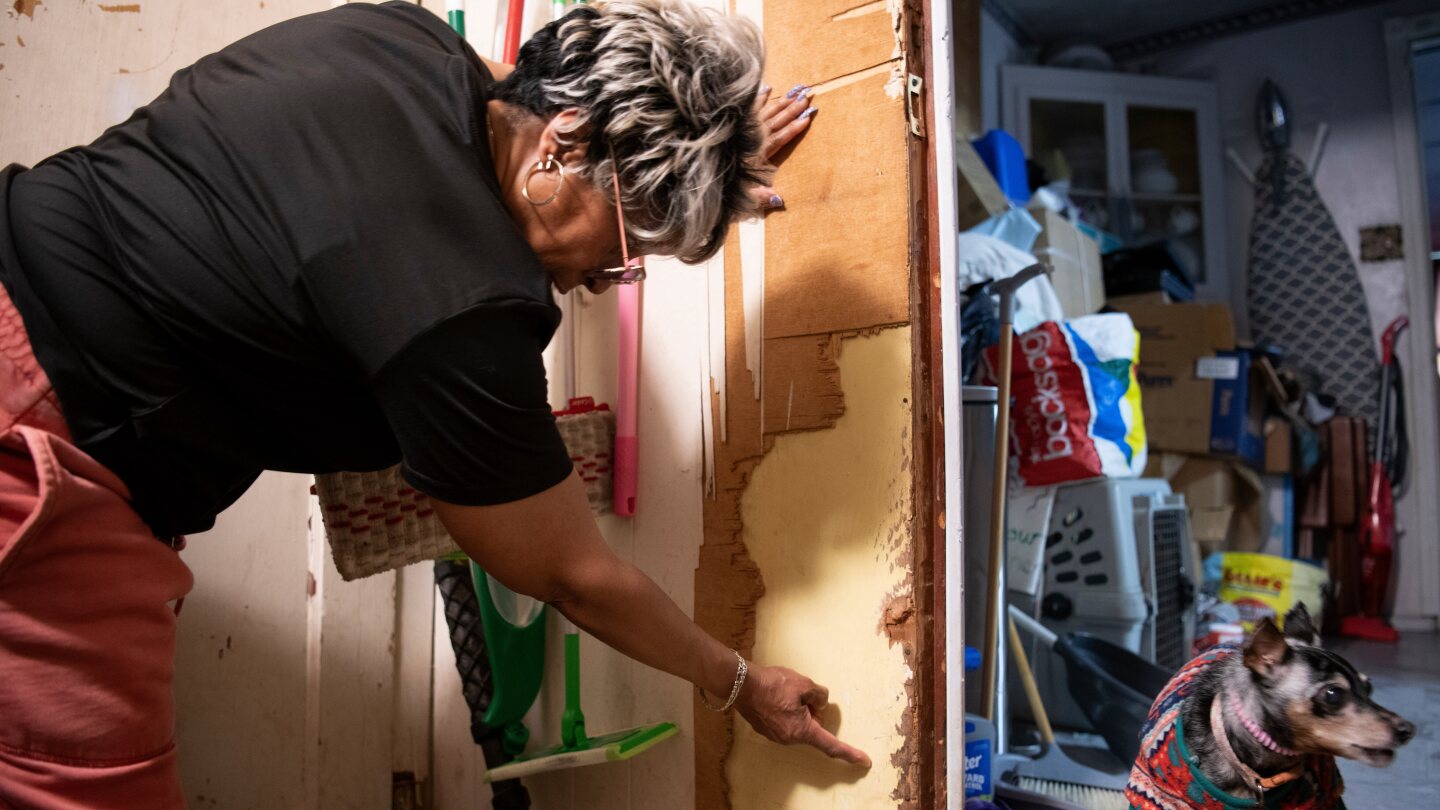
When Yvette Lyles purchased her brick ranch home in Cahokia Heights, Illinois, she envisioned it as a Christmas present for her family—a place near a state park where they could picnic, fish and create lasting memories. Instead, her family found themselves trapped by recurring floods that sent untreated sewage into streets, yards and homes, buckling floors and cracking walls.
“I had to turn my back so my children wouldn’t see me cry,” Lyles recalled.
Cahokia Heights, a predominantly Black community where about one-third of residents live in poverty, represents just one of many communities nationwide grappling with aging and deteriorating wastewater infrastructure. These failing systems expose residents to untreated sewage, which can enter homes through backed-up plumbing or floods when rainwater overwhelms sewer systems, posing serious health risks.
For many of these struggling communities, a lifeline of federal funding promised under the Bipartisan Infrastructure Law during the Biden administration is now being withdrawn. The Trump administration has eliminated the Environmental Protection Agency’s Environmental Justice office as part of what critics call a broader attack on diversity, equity and inclusion initiatives, along with canceling grants for hundreds of infrastructure and climate adaptation projects in underserved communities.
Among the canceled funding: $14 million for septic systems in majority-Black Alabama counties where many residents must pipe sewage from their homes onto their own property, and $20 million in Thomasville, Georgia, nearly half of which was intended to address aging sewer lines in historically Black neighborhoods. The EPA stated these projects didn’t align with the current administration’s priorities.
The Trump administration has also proposed deep cuts to state revolving loan funds for drinking and wastewater projects. The Biden-era infrastructure bill allocated nearly $50 billion to these funds, with almost half designated for disadvantaged communities. While Congress is considering a compromise bill that rejects the deepest cuts, it would allow lawmakers to direct about half the money to pet projects rather than letting states allocate it based on need.
“Since day one, the Trump EPA has been crystal clear that the Biden-Harris Administration shouldn’t have forced their radical agenda of wasteful DEI programs and ‘environmental justice’ preferencing on the EPA’s core mission of protecting human health and the environment,” the agency told The Associated Press in a statement.
Advocates argue that this characterization misrepresents the severity of infrastructure problems in long-overlooked communities.
“The mischaracterization of it as DEI really masks how severe this problem is in the United States,” said Catherine Coleman Flowers, who founded the Center for Rural Enterprise and Environmental Justice and helped bring attention to sewage issues in Lowndes County, Alabama. “It’s an infrastructure issue. It’s health and dignity.”
Decades of Decline
For Patricia Johnson, a resident of Cahokia Heights, heavy rains mean sewage sometimes backs up in her toilet and bathtub—a problem that has worsened over years. Outside her modest home, standing water and high grass create breeding grounds for mosquitoes.
“It is just bad,” Johnson said. “I am just sad because I have never experienced water being such a problem as it is out here.”
Sewer overflows have plagued the city for years. A 2024 settlement with the U.S. Justice Department requires Cahokia Heights to invest an estimated $30 million in system upgrades. City officials have told the court they’ve made efforts to divert floodwater and complete other repairs.
Records indicate at least $41 million in mostly state and federal funds have been spent or sought for improvements, but the city’s engineering firm estimates tens of millions more are needed. In a recent court filing, city officials stated that finding funding has become more difficult under the current administration.
The city lost access to a Federal Emergency Management Agency infrastructure program—which a federal judge recently ruled was unlawfully terminated by the Trump administration—that could have addressed flooding in Cahokia Heights and neighboring communities. Additionally, $1.1 million that Congress had appropriated for a sewer project last year was canceled. The Trump administration says the FEMA program is now under review.
Nationwide, approximately 17 million Americans are served by roughly 1,000 wastewater systems in serious violation of federal pollution standards. At least 2.7 million people rely on the most troubled systems—concentrated in rural areas with consistent Clean Water Act violations—where household incomes average nearly $12,000 below the national average.
Meanwhile, the estimated cost to address flooding and water quality needs over the next two decades has grown to at least $630 billion, according to federal data.
Many communities are saddled with oversized infrastructure they can’t afford to maintain as residents and industry have relocated. Rural areas often lack both sewers and functioning septic systems, with an estimated 2.2 million Americans without adequate indoor plumbing.
These conditions create serious health hazards. In Shaw, Mississippi—a poor, majority-Black town where sewers back up into homes during heavy rains—a 2023 study found 38% of children tested had intestinal parasites like hookworms, and 80% showed high levels of intestinal inflammation.
Lyles, the Cahokia Heights mother who joined a lawsuit over the flooding, believes she contracted H. pylori, a bacteria that can cause gut inflammation, from sewage exposure. She said her doctor assumed she must have traveled abroad to contract such an infection.
“There is a misperception that such conditions aren’t common in the U.S. anymore,” noted Theresa Gildner, a human biologist at Washington University in St. Louis.
Progress in Peril
Some conservatives believe the federal government shouldn’t fund such infrastructure projects or prioritize disadvantaged communities. Jack Spencer, a senior research fellow at the conservative Heritage Foundation, argues that poor communities need economic growth policies rather than federal infrastructure funding.
“I think that’s up to state and local populations to decide how they prioritize their resources,” Spencer said.
Despite the funding cuts, some financing sources remain. In November, the EPA announced $6.5 billion for wastewater and drinking water projects through a loan program, plus another $550 million for states. The U.S. Department of Agriculture also maintains a smaller program supporting water infrastructure.
However, the poorest communities often struggle to access these funds, according to Sri Vedachalam, a water and climate expert at Corvias Infrastructure Solutions. Many lack the money, staff, and expertise to prepare studies, engineering reports, and complex applications. The Trump administration’s cancellation of tens of millions in funding for technical assistance centers has created additional barriers, though the EPA maintains it still provides some technical support to rural, small, and tribal communities.
“If we’re telling communities, ‘You need to pull yourself up by your bootstraps or figure this out for yourself,’ OK,” said Rebecca Lewison, executive director at the Center for Energy and Environmental Justice in California, which lost $8 million from a Biden-era grant. “But to be able to do that, you need assistance.”
In Alabama, Sherry Bradley attempted to save funding for septic systems in Lowndes and two other rural counties by strategically rewording project descriptions, removing terms like “environmental justice,” “poverty,” “African American,” “climate change,” “disadvantaged” and “Gulf of Mexico.”
Despite these efforts, the grant was canceled, leaving hundreds of residents dependent on the same inadequate systems that carry sewage to ravines, ditches, and yards. Earlier grants had funded 160 septic systems in Lowndes County and will cover about 30 more, but state health officials say 600 residents have requested assistance.
“When I look at their faces, I see that they’ve lost hope and that’s not a good feeling,” Bradley said, fighting back tears. “We are the forgotten ones.”
Fact Checker
Verify the accuracy of this article using The Disinformation Commission analysis and real-time sources.

13 Comments
This news about the rollback of EPA funding is disheartening. Struggling communities need more support, not less, to address crumbling sewers and the public health risks they pose. I hope there’s a way to restore this crucial aid.
Losing federal aid for sewer upgrades in struggling communities is really concerning. Crumbling infrastructure and sewage flooding pose serious risks to public health and safety. This is a complex challenge that requires bipartisan solutions.
This is a sobering reminder of the real-world impacts when crucial federal funding for infrastructure is cut. Disadvantaged communities bearing the brunt of these challenges deserve better support and solutions.
It’s troubling to see the Trump administration scaling back EPA funding for wastewater infrastructure, especially in communities already grappling with aging, failing systems. This is a public health crisis that needs a comprehensive, nonpartisan response.
I agree, this issue shouldn’t be politicized. Ensuring all Americans have access to safe, functioning sewers is a basic responsibility of government. Hopefully the Biden administration can find ways to restore this critical aid.
The impact of slashed federal aid on communities already facing infrastructure challenges is really troubling. Reliable and safe sewage systems are a fundamental public health issue that shouldn’t be neglected, regardless of politics.
I agree, this is a critical issue that transcends partisan divides. Ensuring all communities have access to functioning water and sewage infrastructure should be a priority for policymakers.
This is a concerning situation for struggling communities. Aging sewers and inadequate funding for infrastructure repairs can have serious health and environmental consequences. I hope the Biden administration can find a way to restore critical aid and support these communities in need.
You’re right, this is a complex issue without easy solutions. Prioritizing investment in basic infrastructure like wastewater systems is so important, especially for disadvantaged areas. Curious to see if any bipartisan solutions emerge.
Wow, the details about sewage flooding homes and cracking foundations in these disadvantaged communities is really alarming. This highlights the urgent need for infrastructure investment, regardless of politics. Curious to see what solutions emerge.
You’re right, this is a serious public health issue that requires bipartisan cooperation. Restoring federal aid and finding ways to support infrastructure upgrades in struggling communities should be a top priority.
This is a sobering example of how political decisions can have real, tangible impacts on vulnerable communities. Reliable wastewater systems are a fundamental public service, and cutting aid for infrastructure repairs only exacerbates existing inequalities.
Absolutely, this underscores the importance of investing in critical infrastructure, regardless of partisan politics. Ensuring access to safe, functioning sewers should be a basic right for all Americans.