


Listen to the article
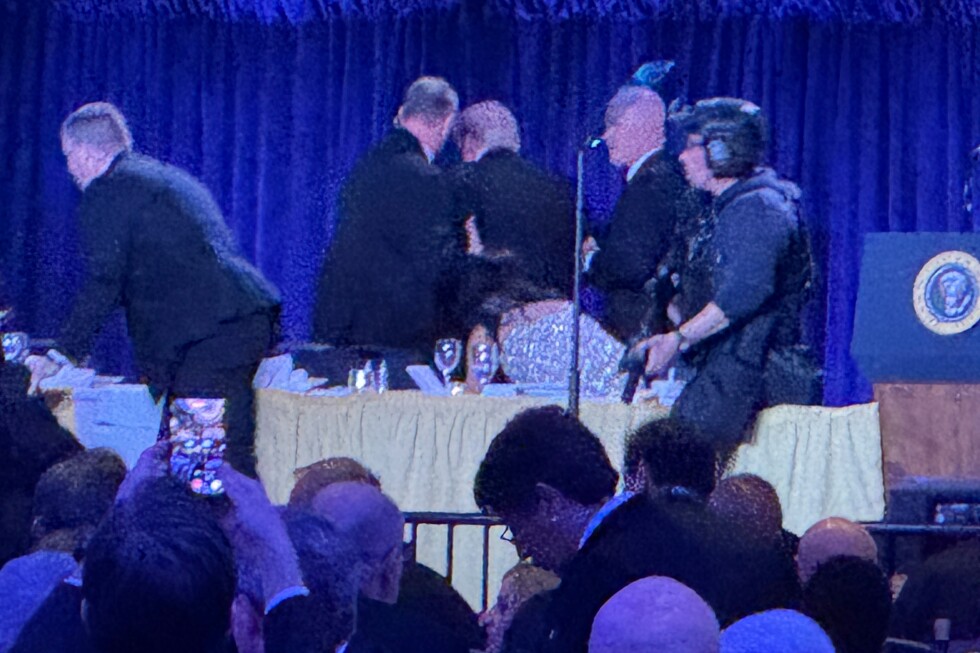
Federal law enforcement officials are reassessing security protocols for upcoming presidential events following the attempted attack at the White House Correspondents’ Dinner, the third violent incident near President Donald Trump in less than two years.
Saturday’s security breach, in which an armed man attempted to enter the Washington hotel ballroom where Trump was scheduled to speak, has renewed concerns about balancing the president’s public appearances with adequate protection measures.
The incident comes ahead of a busy schedule for the president, who is expected to participate in several high-profile events in the coming months. These include celebrations marking the nation’s 250th anniversary, the U.S. co-hosting of the World Cup, and campaign rallies aimed at bolstering Republican support before November’s midterm elections.
According to a source familiar with the matter, the Secret Service was already operating under heightened alert due to the extraordinary number of threats facing Trump, including two back-to-back assassination attempts in 2024, as well as ongoing geopolitical tensions such as the U.S.-Iran conflict. The agency is now conducting a comprehensive reevaluation of its security measures for upcoming events.
“I can’t imagine that there’s any profession that is more dangerous,” Trump remarked from the White House on Saturday night, acknowledging the inherent risks of the presidency.
Secret Service intelligence teams are actively reviewing recent threats against Trump, mindful that high-profile attacks can inspire copycat attempts. Despite these concerns, some events are proceeding as planned, including King Charles and Queen Camilla’s state visit on Monday.
However, security planning for other upcoming events may become more complex. These include a UFC bout scheduled to take place on the White House lawn for Trump’s 80th birthday celebration in June, World Cup matches, and an IndyCar race past the White House.
The correspondents’ dinner security breach has drawn criticism from several quarters. Rep. Michael McCaul (R-Texas), chairman emeritus of the House Homeland Security Committee, suggested that protocols need revision, particularly regarding joint appearances by the president and vice president. Kari Lake, Trump’s nominee to lead the U.S. Agency for Global Media, highlighted what she perceived as lax identification procedures at the event.
The Secret Service, whose mandate focuses specifically on protecting its designated individuals rather than managing entire events, has defended its response. Director Sean Curran stated that “our multilayered protection works,” a sentiment echoed by Trump himself in a CBS “60 Minutes” interview where he praised the agents’ performance.
Security expert Garrett Graff noted that the system functioned largely as designed, operating within “the always necessary trade-offs of security in a free society.” Retired Secret Service Agent Thomas D. Quinn similarly emphasized that the security plan effectively prevented the assailant from reaching the president, while acknowledging the continuing challenges of protecting officials in a democratic nation.
Looking ahead, Ronald Kessler, author of “In the President’s Secret Service,” predicts that enhanced security measures are likely. These could include expanded use of bulletproof glass around the president during both indoor and outdoor speaking engagements, similar to arrangements implemented after the assassination attempt in Butler, Pennsylvania during the 2024 campaign.
Event attendees will probably face more rigorous screening processes, potentially resulting in longer entry lines. This was evident last fall when Trump’s attendance at the U.S. Open tennis tournament’s men’s final created significant security delays.
These incidents highlight the complex balance between presidential protection and public accessibility in American democracy. “Presidents don’t like to have too much protection,” Kessler observed. “By their nature, they’re very outgoing. They want to meet people. They don’t want to be accused of being prisoners of the White House.”
The tension between security requirements and presidential preferences has historical precedent. After the Secret Service assumed full-time presidential protection following William McKinley’s assassination in 1901, Theodore Roosevelt sometimes evaded his security detail for unaccompanied outings. In 1981, Ronald Reagan was shot after his staff chose an open-air exit from the Washington Hilton—the same hotel where Saturday’s incident occurred—rather than the covered garage preferred by security personnel.
Trump himself acknowledged his reluctance to follow security protocols during Saturday’s incident, telling CBS, “I wasn’t making it easy” for agents. “I wanted to see what was happening,” he explained, adding that he “probably made them act a little bit more slowly” before eventually complying with instructions to get down on the floor.
Despite these challenges, Trump has expressed interest in rescheduling the correspondents’ dinner with “even more security” and “bigger perimeter security,” demonstrating the ongoing negotiation between presidential accessibility and safety in the public sphere.
Fact Checker
Verify the accuracy of this article using The Disinformation Commission analysis and real-time sources.

10 Comments
Security for the president is always a complex challenge, but the recent incidents suggest they may need to rethink their approach. I’m curious to see what specific changes are implemented to address the heightened threat level.
Ensuring the president’s safety is a top priority, but it’s concerning to hear about the rising number of threats. I hope the Secret Service can find an effective balance between security and allowing the president to engage with the public.
Agreed. The president’s ability to connect with the people is important, but his protection must be the top concern. Finding the right protocols will be critical.
The number of threats facing the president is deeply concerning. I’m curious to learn more about the specific security protocols the Secret Service is considering to address this heightened risk environment.
The attempted attack at the White House Correspondents’ Dinner is very concerning. I hope the Secret Service can quickly identify any vulnerabilities and shore up security measures to keep the president safe.
Given the high-profile events coming up, the Secret Service will need to be extremely vigilant. I’m curious to hear more about the specific security changes they’re considering to address the increased threats.
Me too. Protecting the president is a huge responsibility, and they’ll have to carefully analyze the risks and adjust their approach accordingly.
Keeping the president secure during high-profile events is critical, but it’s a delicate balance. I hope the Secret Service can find ways to protect him while still allowing him to engage with the public.
Agreed. It’s a tough line to walk, but they’ll need to carefully assess the risks and adjust accordingly to ensure the president’s safety without overly restricting his interactions.
Protecting the president is an immense responsibility, and the recent incidents suggest they may need to reevaluate their approach. I hope the Secret Service can find effective ways to keep the president safe without overly restricting his public presence.