


Listen to the article
The Pentagon announced Friday it will ban military members from attending several prestigious universities, including Columbia, Yale, Brown, and the Massachusetts Institute of Technology, starting in the next academic year. This decision expands upon an earlier move to sever ties with Harvard University.
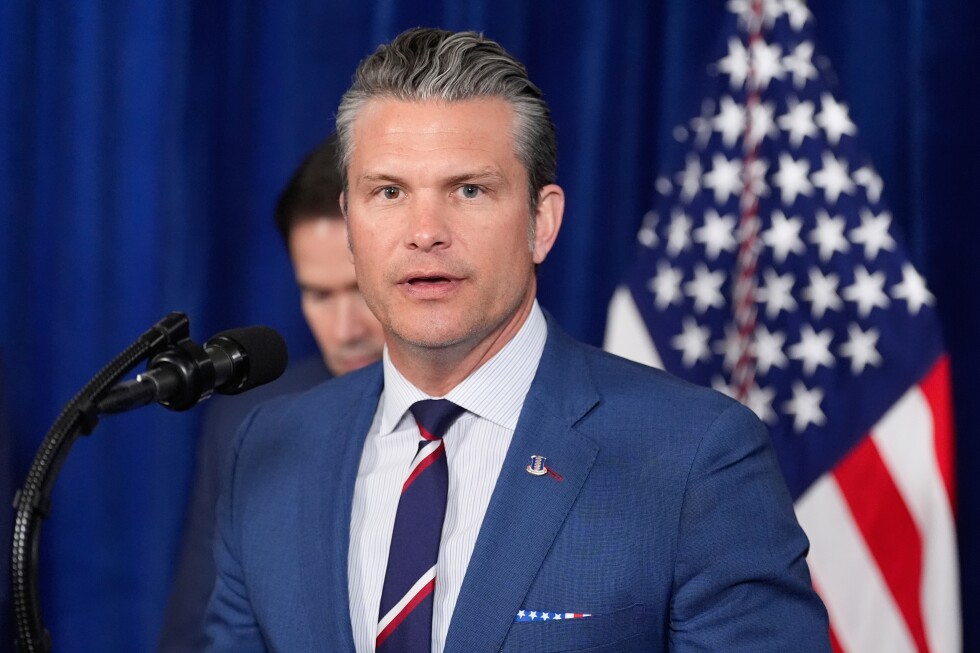
Defense Secretary Pete Hegseth, who made the announcement in a social media video, claimed these institutions have become “factories of anti-American resentment” and “breeding grounds of toxic indoctrination” that undermine military values. He did not provide specific evidence to support these assertions.
“For decades, the Ivy League and similar institutions have gorged themselves on a trust fund of American taxpayer dollars, only to become factories of anti-American resentment and military disdain,” Hegseth stated in the video. “They’ve replaced the study of victory and pragmatic realism with the promotion of wokeness and weakness.”
While Hegseth mentioned Columbia, Princeton, Brown, Yale, MIT, and “many others,” he did not provide a comprehensive list of affected institutions. The exact scope of the ban remains unclear, as the Pentagon did not immediately respond to requests for additional details.
The Pentagon’s Tuition Assistance program, which currently covers full tuition costs for active-duty personnel at eligible institutions, still listed Columbia, Brown, MIT, and Harvard in its database as of Friday. According to the most recent data available, Harvard had 39 military participants in 2023, Columbia had nine, and MIT had two.
The initial action against Harvard was aimed at blocking military members from attending graduate-level professional military education, fellowships, and certificate programs. Questions remain about whether the ban extends to programs such as Harvard’s Reserve Officers’ Training Corps (ROTC).
Harvard has developed several professional development programs specifically tailored for Pentagon personnel, including a recently created master’s degree in public administration designed for active-duty military members and veterans. Ironically, Hegseth himself holds a master’s degree from Harvard, though he symbolically returned his diploma during a Fox News segment in 2022.
The U.S. military traditionally offers its officers various opportunities for graduate-level education, both at military-run war colleges and prestigious civilian institutions like those now being targeted.
These actions align with broader efforts by the Trump administration, which has frequently criticized Ivy League institutions for allegedly promoting “woke” ideology. The administration has cut billions in research funding and imposed various sanctions on universities, often linked to investigations into alleged antisemitism on campus.
The Pentagon’s announcement represents a significant setback for universities that appeared to have reached accommodations with the administration in recent months. Columbia and Brown were among the first to sign agreements with the White House, acceding to various demands to have their federal funding restored.
Harvard has taken a different approach, filing lawsuits alleging the government is illegally retaliating against the university for refusing to comply with ideological demands. Despite reports last summer that Harvard was close to reaching a deal with President Trump, negotiations seem to have collapsed. Earlier this month, Trump increased his demands, saying Harvard must pay $1 billion to the government as part of any agreement, double his previous figure.
This growing rift between the military and elite academic institutions marks a significant shift in a relationship that has historically benefited both sides through research partnerships, officer education programs, and recruitment pathways.
Fact Checker
Verify the accuracy of this article using The Disinformation Commission analysis and real-time sources.

7 Comments
The lack of specifics around the rationale is troubling. I hope the Pentagon provides a clear, evidence-based justification for this decision, as it could have far-reaching implications for military education and research.
This decision by the Pentagon seems quite drastic. While concerns about ‘wokeness’ in academia are valid, cutting ties entirely with top universities raises questions about the implications for military education and research.
The potential impact on the military’s access to top talent and research capabilities is concerning. I hope this decision is carefully considered and not just a political response to perceived ideological differences.
It’s an interesting move, though I’m curious to see the specific evidence that these universities have become ‘factories of anti-American resentment’. Transparency around the rationale would help understand the Pentagon’s perspective.
Cutting ties with prestigious universities is a bold step. I wonder if there are alternative ways to address any issues without resorting to an outright ban. Open dialogue and finding common ground may be a wiser approach.
This seems like a politically charged move that could backfire if not handled properly. The Pentagon should tread carefully and focus on practical concerns rather than ideology when it comes to partnerships with academia.
This seems like a politically motivated move that could undermine the military’s access to top talent and research capabilities. I hope the Pentagon reconsiders and finds a more constructive way to address any concerns.