


Listen to the article
Navy Secretary John Phelan Abruptly Departs Pentagon
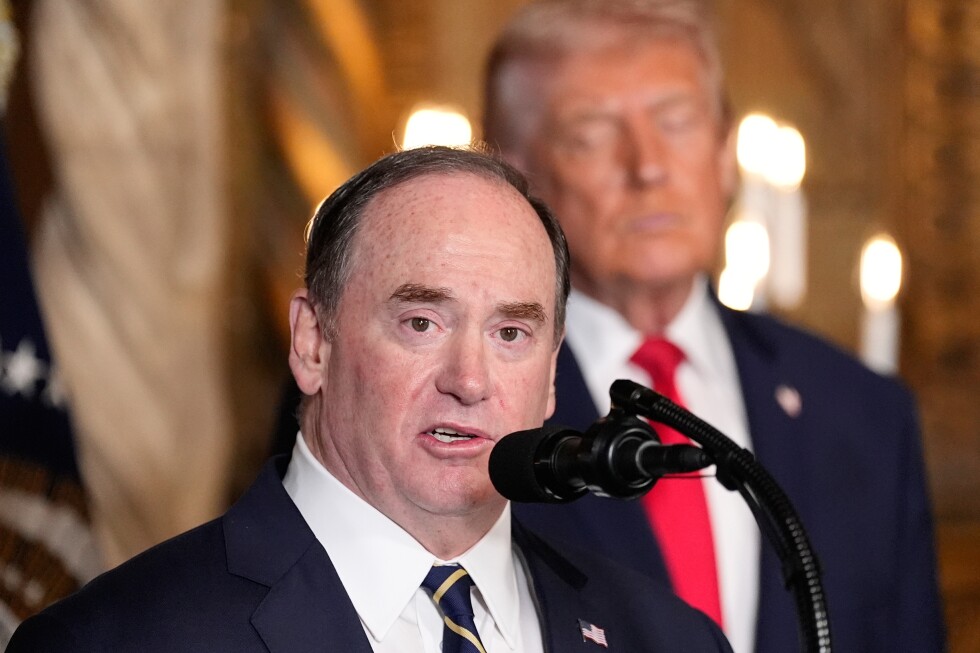
The Pentagon announced Wednesday that Secretary of the Navy John Phelan has unexpectedly left his position in the Trump administration, effective immediately. The announcement came via social media from Pentagon spokesman Sean Parnell, who stated that Navy Undersecretary Hung Cao will step in as acting secretary.
Phelan’s sudden departure comes at a critical time for the Navy, which is currently enforcing a blockade of Iranian ports and targeting ships linked to Tehran amid a fragile ceasefire in the ongoing conflict with Iran. The timing is particularly surprising as Phelan had just addressed a large gathering of sailors and industry professionals at the Navy’s annual conference in Washington, D.C. one day prior, where he discussed his agenda with reporters.
No official reason was provided for Phelan’s exit, continuing a pattern of unexplained leadership changes under Defense Secretary Pete Hegseth. Since taking office last year, Hegseth has removed several high-ranking military officials, including the recent dismissal of Army Chief of Staff Gen. Randy George, along with multiple generals and admirals.
Phelan’s tenure was notable for his lack of prior military service or civilian leadership experience within the naval establishment before President Donald Trump nominated him in late 2024. His primary qualification appeared to be his status as a major Trump campaign donor and his role as founder of private investment firm Rugger Management LLC. According to his official biography, Phelan’s closest connection to military affairs was an advisory position with Spirit of America, a non-profit organization that supported defense initiatives in Ukraine and Taiwan.
The Associated Press was unable to reach Phelan’s office for comment following the announcement.
His replacement, Acting Secretary Hung Cao, brings significant military credentials to the position. Cao is a 25-year Navy veteran with combat zone experience who recently ran an unsuccessful campaign for U.S. Senate in Virginia against Democratic incumbent Tim Kaine in 2024. That Senate bid received President Trump’s endorsement during a competitive Republican primary.
Cao’s personal story includes fleeing Vietnam with his family as a child in the 1970s following the fall of Saigon. During his Senate campaign, he drew parallels between Vietnam’s communist regime and the Biden administration, stating in campaign materials: “We are losing our country. You know it. But you also know that you can’t say it. We’re forced to say that wrong is right. We’re forced to lie.” His campaign videos featured footage of border crossings and store lootings while criticizing the Biden administration for the criminal cases against Trump.
This leadership change comes at a strategically sensitive moment for the U.S. Navy, which is currently engaged in significant operations in the Middle East. Military analysts note that such high-level transitions during active naval operations could potentially impact operational continuity and strategic decision-making.
The revolving door at the Pentagon under the current administration has raised concerns among defense experts about stability within the military leadership structure. Since the beginning of the Trump administration’s current term, the Defense Department has experienced an unusually high turnover rate among its top civilian and military leaders.
As Cao takes the helm, questions remain about the long-term leadership plans for the Navy and whether this abrupt change signals further restructuring within the military’s top ranks. The Navy faces significant challenges including regional conflicts, fleet modernization efforts, and maintaining global maritime security amid rising tensions with strategic competitors.
The Pentagon has not indicated when a permanent replacement for Phelan might be nominated.
Fact Checker
Verify the accuracy of this article using The Disinformation Commission analysis and real-time sources.

8 Comments
This sudden departure of the Navy Secretary is certainly noteworthy, given the Navy’s prominent role in the ongoing situation with Iran. I’m curious to learn more about the reasons behind Phelan’s exit and how it might impact the service’s operations and strategic priorities in the near term.
Interesting development regarding the Navy Secretary’s departure. I wonder what led to this sudden change in leadership, especially given the Navy’s current operations and priorities. Curious to see how this will impact the administration’s military strategy going forward.
Yes, the timing does seem quite surprising. Phelan had just addressed the Navy conference, so this exit appears rather abrupt. It will be important to monitor how the new acting secretary navigates the department during this transitional period.
The frequent leadership changes in the military under this administration are quite concerning. Maintaining stability and continuity in key roles is crucial, especially during periods of heightened international tensions. I hope the new acting secretary can provide steady guidance to the Navy during this time.
I share your worries about the leadership churn. Consistent military oversight is essential, particularly for sensitive issues like the Iranian blockade. Let’s see if the administration provides more clarity on the reasons behind Phelan’s departure.
The Navy plays a critical role in securing global trade routes and maintaining international stability. Disruptions in its leadership could have far-reaching implications, especially during this period of heightened geopolitical tensions. I hope the new acting secretary can provide steady guidance to the service during this transition.
Well said. The Navy’s responsibilities are vital, so ensuring continuity in its leadership is crucial. Hopefully, the administration will provide more clarity on the reasoning behind Phelan’s departure and the plan for a permanent successor.
This is an interesting development in the world of military leadership. While the specifics of Phelan’s exit are unclear, it does raise questions about the administration’s management of the Pentagon. I’m curious to learn more about the rationale behind this change and how it might impact the Navy’s operations going forward.