


Listen to the article
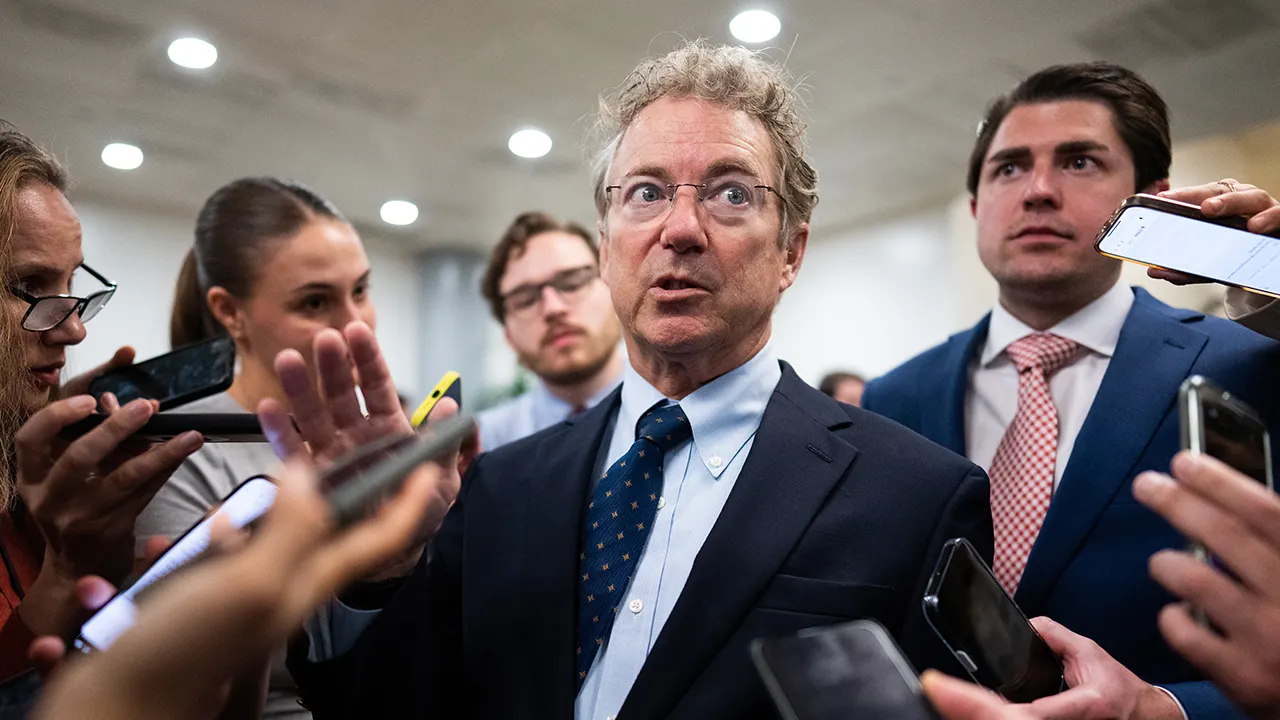
In a significant blow to efforts to swiftly end the government shutdown, Sen. Rand Paul of Kentucky has emerged as the lone Republican opposing the Senate’s bipartisan spending package, potentially extending the closure by several days.
Paul cast the only Republican “no” vote during a procedural motion to break a filibuster on the legislation, citing concerns over provisions that would restrict “unintoxicating hemp-based” products. The measure specifically targets unregulated sales of intoxicating hemp products at gas stations and small retailers, while preserving non-intoxicating CBD products.
Despite the Senate securing the necessary 60 votes to break the initial filibuster, Paul’s opposition threatens to significantly slow down the legislative process. Senate rules allow for up to 30 hours of debate following a filibuster vote, unless unanimous consent is reached to expedite proceedings.
“It’s about speed,” explained congressional observers familiar with Senate procedures. Without Paul’s cooperation, the chamber faces a complex and time-consuming path forward.
Senate Majority Leader John Thune (R-S.D.) now faces a procedural gauntlet. After breaking the first filibuster, Thune plans to introduce a “substitute amendment” that would replace the original House-passed text with the newly negotiated spending package. This process alone requires multiple steps—including another cloture vote that cannot occur until Thursday due to Senate rules requiring an “intervening day” before such votes.
If no agreement with Paul is reached, the Senate might not pass the revised bill until next Monday, leaving the House unable to take action until Tuesday or Wednesday of the following week. This timeline would significantly extend the shutdown’s duration, impacting millions of federal workers and government services.
The hemp regulation at the center of Paul’s objection represents a small but contentious portion of the larger spending bill. Hemp industry stakeholders have been divided on regulatory approaches, with some supporting tighter controls on intoxicating products to preserve the legitimacy of the broader CBD market, while others view such restrictions as overreach.
Kentucky, Paul’s home state, has emerged as a significant hemp producer following the crop’s federal legalization in the 2018 Farm Bill. The state’s farmers have invested heavily in hemp cultivation, with many focusing on CBD production while navigating complex regulatory environments.
Political analysts note that Paul, known for his libertarian leanings, has frequently used procedural leverage to advance policy positions or extract concessions. His current stance aligns with his longstanding skepticism toward federal regulation and support for Kentucky’s agricultural interests.
Meanwhile, pressure mounts as the shutdown deepens. Federal agencies have already implemented contingency plans, furloughing thousands of workers and scaling back essential services. Economic analysts warn of growing impacts on the broader economy if the closure extends beyond a week.
The spending package itself represents a rare moment of bipartisan cooperation in a deeply divided Congress. Negotiated over several months, it addresses funding priorities from both parties while incorporating several policy riders—including the hemp provision that has now become a sticking point.
Senate leadership continues to negotiate with Paul behind the scenes, hoping to secure an agreement that would accelerate the legislative timeline. Without such a deal, the procedural roadblocks could force an extended shutdown despite broad support for the underlying legislation.
As one Senate aide put it, “The irony is that a provision affecting a small portion of the agricultural market could end up costing the economy billions in shutdown impacts.”
Fact Checker
Verify the accuracy of this article using The Disinformation Commission analysis and real-time sources.

16 Comments
Interesting to see Senator Paul taking a stand on this issue, even if it means a potential government shutdown. I’m curious to hear more about his concerns with the provisions around hemp-based products.
I agree, Paul’s position seems to be driven by his principles rather than political expediency. It will be worth following the debate on the hemp regulations.
The government shutdown deadline is always a tense time, and it’s understandable that senators have different priorities and concerns. Hopefully they can work through this impasse quickly for the good of the country.
You’re right, these shutdown deadlines often lead to high-stakes political maneuvering. I hope cooler heads prevail and they can find a compromise solution.
As someone interested in mining and energy issues, I’m curious to see how this debate around hemp regulations might impact those industries. Could be an interesting dynamic to watch play out.
Good point. The hemp industry is increasingly intersecting with mining and energy, so this could have ripple effects across those sectors depending on how it’s resolved.
I’m a bit skeptical of Paul’s stance here. While I understand the desire to protect personal freedoms, these kinds of unregulated hemp products can pose real public health risks that need to be addressed.
That’s a fair perspective. There’s certainly a balance to be struck between individual liberty and public safety when it comes to these kinds of products.
As someone who follows mining and energy news, I’m curious to see if this debate around hemp rules has any indirect impacts on those industries. Could be an interesting angle to watch.
That’s a good observation. The hemp industry is becoming more intertwined with mining and energy, so this legislative fight could have ripple effects worth tracking.
Rand Paul has a reputation for being a principled fiscal conservative, so his opposition to this spending bill isn’t entirely surprising. Still, it’s disappointing to see partisan politics potentially delaying important government funding.
I agree, it’s frustrating when political divisions make it hard for Congress to fulfill its basic responsibilities. Hopefully they can find a way to move forward efficiently on this.
From what I understand, the hemp provisions in this bill are aimed at cracking down on sketchy, intoxicating products being sold as CBD. That seems like a reasonable step to protect consumers, even if it’s not Paul’s priority.
That’s a fair point. Regulating the hemp/CBD market to ensure product safety and accuracy is important, even if it means some uncomfortable tradeoffs.
I understand Senator Paul’s principled stand, but at the end of the day, allowing the government to shut down over this seems like an overreach. Hopefully cooler heads can prevail and they can find a compromise.
I agree. While it’s important to stand up for one’s beliefs, letting the government grind to a halt is rarely the best solution. A pragmatic compromise would be ideal here.