


Listen to the article
Public Voices Strong Opposition to Trump’s White House Ballroom Project
Critics slammed President Donald Trump’s proposed White House ballroom as “ugly,” “grossly out of scale” and a “gold gilded edifice to one man’s ego” during a public comment session Thursday before a federal panel reviewing the controversial project.
The National Capital Planning Commission, one of two federal bodies with oversight of the 90,000-square-foot addition, heard more than two hours of overwhelmingly negative feedback from citizens concerned about the aesthetic, ethical, and historical implications of the construction.
Despite the criticism, commissioners showed little sign the approval process might be delayed, with a final vote scheduled for April 2. The U.S. Commission of Fine Arts has already approved the project, and the National Trust for Historic Preservation recently lost a federal court bid to temporarily halt construction.
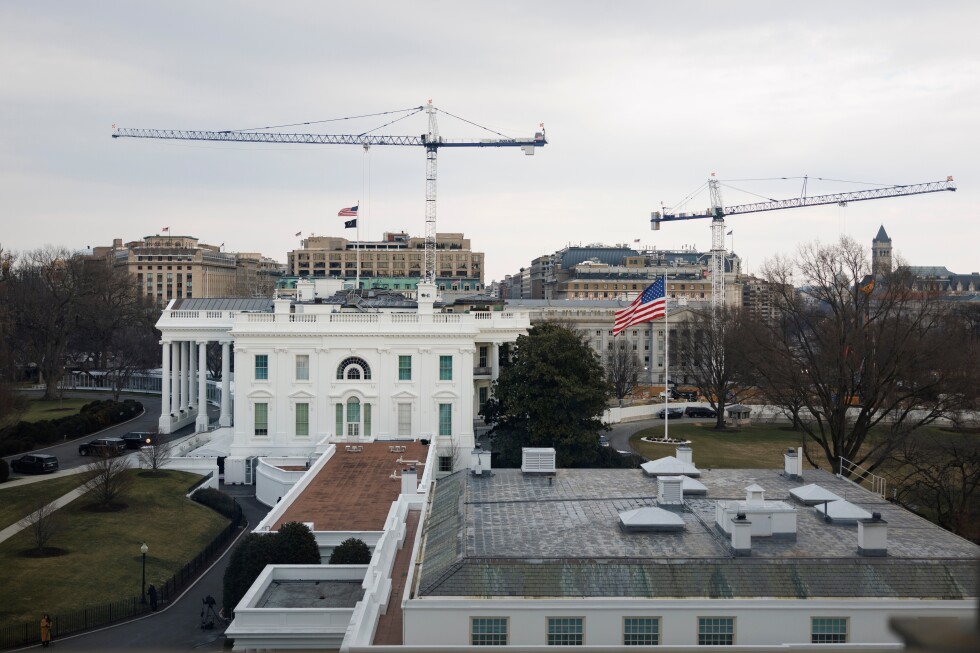
Trump ordered the demolition of the East Wing last October to make way for the new structure, estimated to cost around $400 million. The president has pledged to fund the project through donations from wealthy individuals and corporations, an arrangement that drew sharp criticism during the hearing.
“I urge you to send this back to the drawing board,” said Diane Marlin, recently retired mayor of Urbana, Illinois. “Take the time to get this right.”
Abigail Bellows, senior policy director for anti-corruption and accountability at Common Cause, a nonpartisan grassroots group, called the funding plan a “golden invitation for corruption,” suggesting it could create conflicts of interest with donors who have business before the federal government.
Will Scharf, a top White House aide named by Trump to chair the commission, noted such concerns were beyond the panel’s scope of review.
Of the 31 speakers who addressed the commission, only one voiced support for the project. Tara Brown said the public should be “thankful and blessed” that the president decided to build the ballroom, citing security benefits and Trump’s construction background.
Several citizens suggested alternatives, including building the ballroom underground to preserve the White House’s historic character or utilizing existing government facilities like the nearby Mellon Auditorium, which can accommodate 2,500 people.
Jon Golinger, an attorney representing Public Citizen, challenged the credentials of Scharf and two other White House officials Trump appointed to the commission last year. He called on all three to recuse themselves from voting on the ballroom and to resign from the panel, suggesting they were appointed to “rubber stamp” the president’s pet projects.
Scharf rejected the accusation as “frankly, insulting,” citing his experience in real estate law and work on historic preservation issues during his time with the Missouri governor.
While more than 100 people had registered to speak at the virtual meeting, about two-thirds did not appear. The commission has also received written comments from more than 35,000 people, with the majority opposed to Trump’s plans.
The National Trust for Historic Preservation plans to file an amended lawsuit after U.S. District Judge Richard Leon rejected their initial request to pause construction until the White House completes all required approvals, including congressional review.
As construction continues at the site where the East Wing once stood, the controversy highlights tensions between presidential prerogatives and the preservation of one of America’s most iconic historic landmarks. Critics worry the massive addition will permanently alter the character of the White House complex, while supporters argue the ballroom will enhance the president’s ability to host large diplomatic and ceremonial functions.
Fact Checker
Verify the accuracy of this article using The Disinformation Commission analysis and real-time sources.

9 Comments
Interesting to see such strong public opposition to this project. I wonder if there’s a way to modernize the White House’s facilities in a more tasteful, historically-sensitive manner. Perhaps the commission could explore alternative proposals that address the president’s needs while preserving the building’s iconic architecture.
The public’s concerns about the ethical and historical implications of this project seem well-founded. I’m curious to hear the commission’s rationale for moving forward despite the overwhelmingly negative feedback. Balancing the needs of the presidency with preserving the integrity of the White House is a delicate challenge.
The public’s strong opposition to this project is understandable. Preserving the historical and architectural integrity of the White House should be a top priority. I hope the commission will carefully weigh the long-term implications before approving such a dramatic and potentially controversial addition.
A $400 million ballroom addition is a staggering sum, especially when funded through private donations. I worry this could set a troubling precedent and lead to further commercialization of the White House. The public deserves a transparent process and thorough consideration of alternatives.
I’m glad to see the public actively engaged in this process and voicing their opposition. The White House is a national landmark, and major renovations should be undertaken with great care and consideration for the building’s history and symbolic significance.
Agreed. The public has a right to be heard on decisions that will impact such an important national institution.
This seems like a high-stakes issue with valid arguments on both sides. While the president’s needs should be accommodated, a $400 million ballroom addition funded by private donors raises serious ethical concerns. I hope the commission can find a balanced solution that addresses the president’s requirements without compromising the White House’s legacy.
This seems like a highly controversial and divisive proposal. I can understand the public’s concerns about the cost, aesthetics, and historical implications. It’s important to balance the needs of the presidency with preserving the integrity of the White House.
While I understand the desire to upgrade the White House’s amenities, a 90,000-square-foot ballroom seems excessive and out of place. I hope the commission carefully weighs the public’s feedback before approving such a dramatic and potentially divisive addition.