


Listen to the article
President Trump’s administration announced Thursday it will end the controversial Operation Metro Surge in Minnesota, marking a significant shift in immigration enforcement strategy in the region.
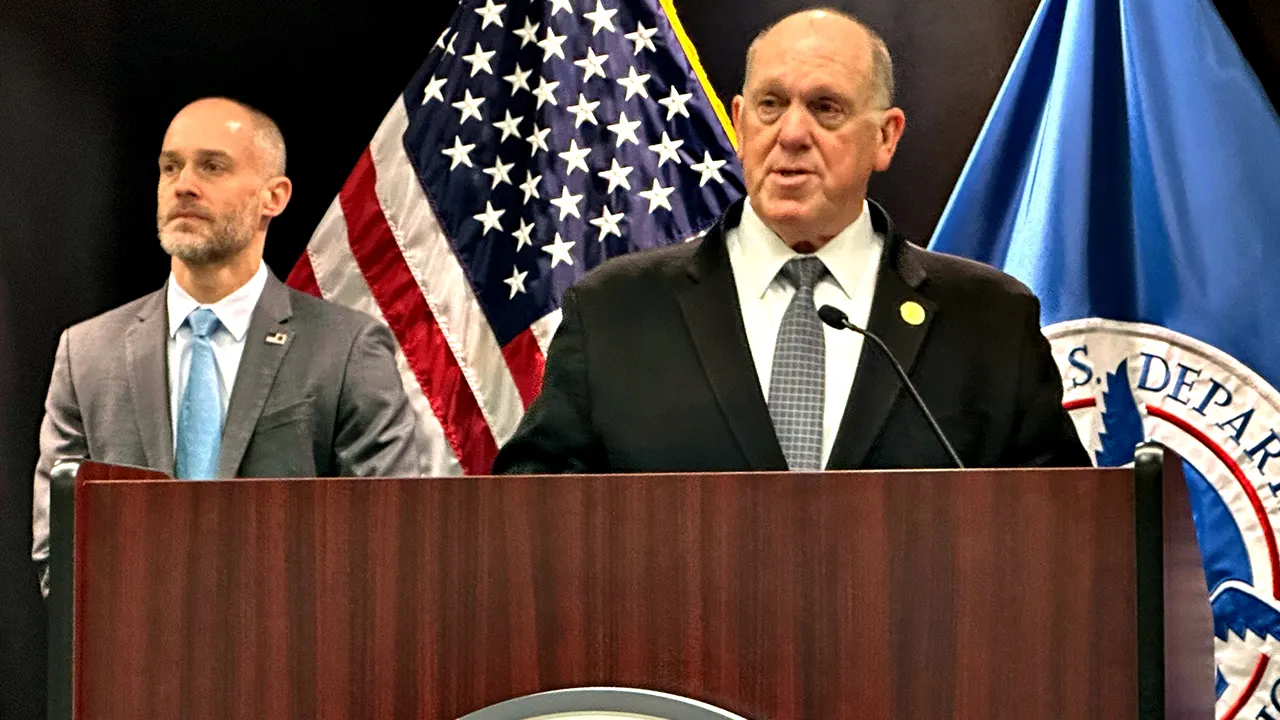
“A significant drawdown that’s already been underway this week and will continue through the next week,” said Tom Homan, the administration’s border czar, during a news conference at the Bishop Whipple Federal Building in Minneapolis. “We have a lot of work to do across this country to remove public safety risk.”
The announcement comes after months of intense debate surrounding the operation, which was launched earlier this year as part of the administration’s broader immigration enforcement initiatives. Operation Metro Surge targeted undocumented immigrants in Minnesota’s metropolitan areas, with a particular focus on Minneapolis and St. Paul.
Immigration officials have maintained that the operation primarily targeted individuals with criminal records, but community advocates have disputed this claim, arguing that many immigrants without criminal histories were also caught in the enforcement action.
Minnesota has become a focal point for immigration enforcement under the Trump administration’s renewed approach to border security and interior enforcement. The state is home to significant immigrant communities, including large Somali and Hmong populations, making it a complex landscape for federal immigration operations.
Local officials have had mixed reactions to the operation since its inception. Minneapolis Mayor Jacob Williams has been a vocal critic, arguing that such enforcement actions damage trust between immigrant communities and local authorities. Meanwhile, some suburban and rural officials have expressed support for the increased federal presence.
According to data released by Immigration and Customs Enforcement (ICE) last month, Operation Metro Surge resulted in approximately 650 arrests across the state, though exact figures for deportations have not been made public. Critics have pointed to reports of family separations and disruptions to local businesses that rely on immigrant labor.
Immigration policy experts note that the timing of the drawdown aligns with shifting priorities within the administration. Dr. Elena Rodriguez, professor of immigration policy at the University of Minnesota, suggested the move may be strategic.
“The administration appears to be reallocating resources to other regions while claiming victory in Minnesota,” Rodriguez said. “This pattern of intense operations followed by drawdowns has been consistent throughout this term.”
The decision to end the operation in Minnesota doesn’t signal a broader pullback of immigration enforcement nationally. In fact, Homan’s statement that “we have a lot of work to do across this country” suggests resources may simply be redirected to other priority areas.
Community organizations that have been providing legal assistance and support to affected immigrants cautiously welcomed the news. The Minnesota Immigrant Rights Action Coalition released a statement calling the drawdown “a relief for communities living in fear” while emphasizing that “the damage to families and neighborhoods will take years to heal.”
Business leaders have also been monitoring the operation’s impact. The Minnesota Chamber of Commerce previously expressed concerns about labor shortages in certain industries, particularly food processing and agriculture, where immigrant workers constitute a significant portion of the workforce.
State officials estimate that undocumented immigrants make up approximately 2.3% of Minnesota’s labor force, contributing roughly $1.2 billion in state and local taxes annually despite their status.
The Bishop Whipple Federal Building, where Homan made the announcement, houses immigration courts and various federal offices, including those for ICE and Citizenship and Immigration Services. The building has been the site of numerous protests during Operation Metro Surge.
As the operation winds down, questions remain about what will happen to those currently in detention and what future immigration enforcement will look like in Minnesota. Homan did not provide specific details about whether similar operations might return in the future or how many agents would remain in the state after the drawdown is complete.
Local immigration attorneys advise that affected communities should remain vigilant, as enforcement priorities could shift again with little notice.
Fact Checker
Verify the accuracy of this article using The Disinformation Commission analysis and real-time sources.

12 Comments
Interesting shift in immigration enforcement strategy. I wonder how the local community will respond to the end of Operation Metro Surge. Curious to see if this signals a broader change in priorities for the administration.
The administration seems to be acknowledging concerns over the operation’s impact on immigrant communities. It will be important to monitor how this plays out on the ground.
This announcement comes at an interesting time, with immigration enforcement remaining a hot-button political issue. I’m curious to see if this foreshadows broader changes to the administration’s immigration agenda.
Agreed. The timing is noteworthy, and this could signal a shift in strategy or priorities. It will be important to follow the developments closely.
The draw-down of Operation Metro Surge seems like a pragmatic move, though the details around its implementation and impact remain to be seen. Balancing public safety and community concerns is always a challenge.
Well said. Navigating the complexities of immigration enforcement requires nuance and a willingness to adapt policies based on feedback and outcomes.
I’m curious to learn more about the administration’s rationale for ending this operation. Was it due to community pushback, resource constraints, or a shift in enforcement priorities? Transparency around the decision-making process would be helpful.
That’s a good point. Understanding the underlying factors that led to this change could provide valuable insights into the administration’s evolving approach to immigration enforcement.
This announcement seems to signal a potential softening of the administration’s hardline stance on immigration, at least in this specific context. It will be interesting to see if this is part of a broader trend or a more localized adjustment.
Agreed. This could be an isolated decision or a harbinger of more significant policy shifts. Time will tell how this development fits into the administration’s overall immigration strategy.
While the administration claims the operation targeted only criminal immigrants, community advocates have disputed this. Ending the surge could help rebuild trust if it leads to more focused, humane enforcement policies.
You raise a good point. Transparency and accountability will be key as this transition unfolds. Restoring community relations should be a priority.