


Listen to the article
Federal Judge Allows Offshore Wind Project to Resume, Challenging Trump’s Opposition
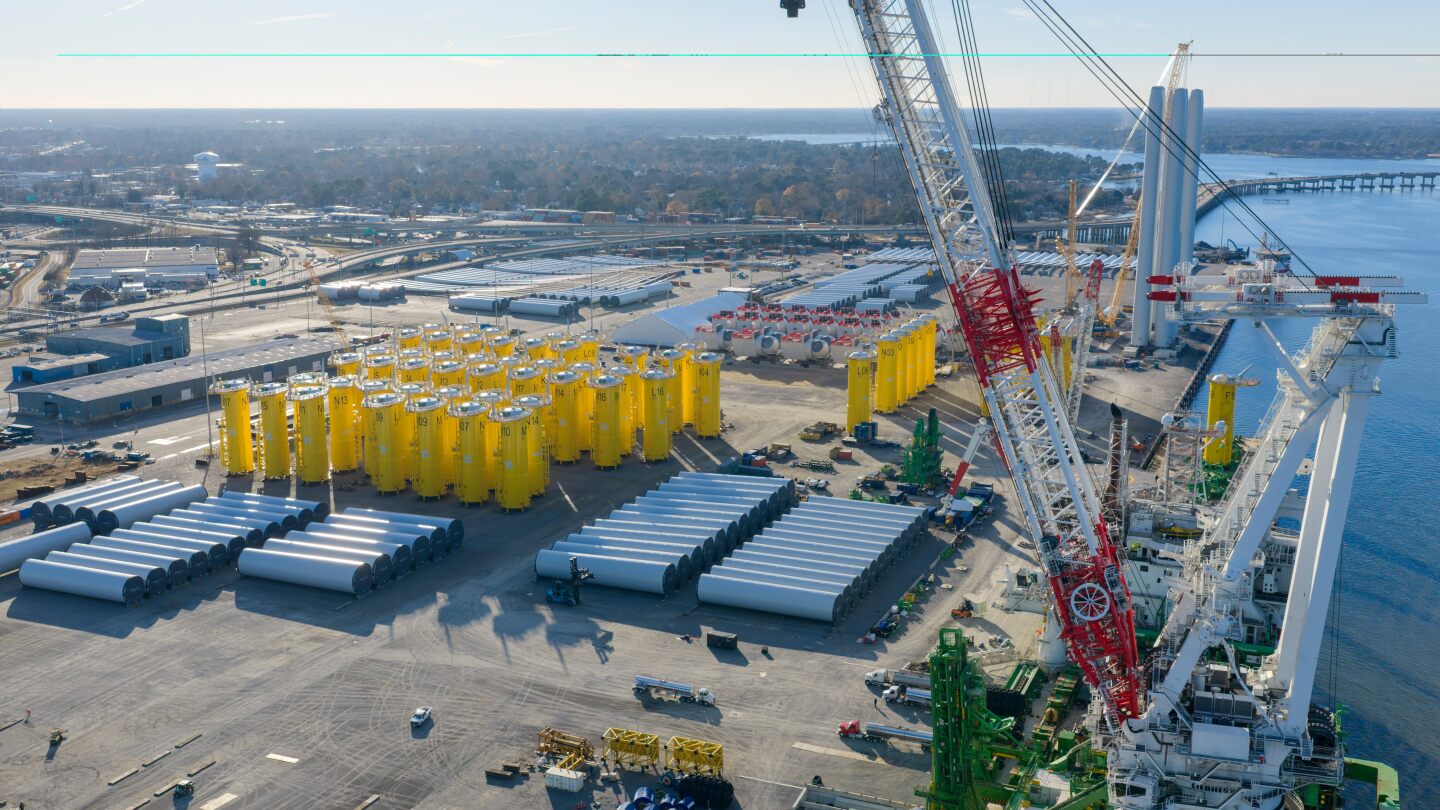
A federal judge ruled Monday that construction on the Revolution Wind project, a major offshore wind farm serving Rhode Island and Connecticut, can resume despite the Trump administration’s efforts to halt it. Senior Judge Royce Lamberth of the U.S. District Court for the District of Columbia found that the government failed to adequately explain why it couldn’t implement less severe measures than a complete construction stoppage.
The nearly 90% complete Revolution Wind project had received all required federal permits before the administration’s intervention. The ruling represents a significant setback to President Donald Trump’s stated intention to block offshore wind development in the United States.
“I’ve told my people we will not approve windmills,” Trump declared during a recent meeting with oil industry executives. “Maybe we get forced to do something because some stupid person in the Biden administration agreed to do something years ago. We will not approve any windmills in this country.”
Danish energy company Orsted, which is developing Revolution Wind with Skyborn Renewables, welcomed the decision. The company stated it would “soon resume construction to deliver affordable, reliable power to the Northeast.” Orsted is one of three energy developers challenging the administration’s freeze on offshore wind projects in federal courts this week.
The administration’s December 22 order had halted five major East Coast wind projects, citing unspecified national security concerns. Besides Revolution Wind, the affected projects include Vineyard Wind in Massachusetts, Coastal Virginia Offshore Wind, and two New York projects: Sunrise Wind and Empire Wind.
At Monday’s hearing, Revolution Wind’s attorney Janice Schneider emphasized the financial impact of the construction delay, estimating costs at more than $1.4 million per day. She noted that a specialized vessel has limited time to install the remaining turbines before its contract expires in February.
“We do think that this court should be very skeptical of the government’s true motives here,” Schneider argued, referencing Trump’s recent comments disparaging wind energy.
Department of Justice attorney Peter Torstensen countered that national security concerns outweighed any alleged harm to the developers, though specific security issues remain classified.
This isn’t the first time Revolution Wind has faced administrative hurdles. The Bureau of Ocean Energy Management previously paused the project on August 22, also citing national security concerns. Judge Lamberth allowed construction to resume a month later, noting the irreparable harm to developers and their likelihood of success in court.
The Biden administration had prioritized offshore wind development as part of its climate strategy, a sharp contrast to Trump’s energy policies which favor fossil fuel expansion. In a separate ruling Monday, a federal judge determined that the Trump administration acted illegally when it canceled $7.6 billion in clean energy grants for projects in states that voted for Kamala Harris in the 2024 election.
Other legal challenges to the wind farm freeze continue to unfold. New York’s attorney general sued the Trump administration Friday over the Empire Wind and Sunrise Wind projects. Rhode Island and Connecticut filed their own court request supporting Revolution Wind.
“The law takes precedent over the political whims of one man, and we will continue to fight to make sure that remains the case,” Rhode Island Attorney General Peter Neronha said in a statement.
Equinor, which owns Empire Wind, warned that its project faces “likely termination” if construction cannot resume by Friday due to disruption of carefully scheduled construction involving vessels with limited availability. Its court hearing is scheduled for Wednesday.
“I would like to think that offshore wind is, and will continue to be, part of an all-of-the-above energy solution, which our country desperately needs,” said Molly Morris, Equinor’s senior vice president overseeing the project.
Dominion Energy Virginia, developer of Coastal Virginia Offshore Wind, filed the first lawsuit challenging the order, calling it “arbitrary and capricious” and unconstitutional. That hearing is set for Friday.
Hillary Bright, executive director of offshore wind advocacy group Turn Forward, expressed hope that the remaining stalled projects would also prevail in court, allowing the administration to recognize “the immense benefits that these nearly complete power sources can bring to our nation’s energy and national security.”
Fact Checker
Verify the accuracy of this article using The Disinformation Commission analysis and real-time sources.

17 Comments
While the President may have expressed a desire to block offshore wind, the courts have rightly determined that the existing approvals and permits should be upheld. This is an important victory for renewable energy development.
Exactly. The courts are serving as an important check on the administration’s efforts to undermine clean energy projects, which is crucial for advancing the energy transition.
This ruling is a significant win for the offshore wind industry and a testament to the importance of the legal system in protecting important energy projects. While the administration may have opposed these developments, the courts have rightly upheld the existing approvals and permits. It will be interesting to see how this plays out going forward.
Agreed. The courts’ impartial, evidence-based approach is crucial for ensuring that renewable energy projects can move forward despite political opposition. This ruling is an important step in the right direction.
The offshore wind industry has faced significant political headwinds, but this ruling demonstrates the courts’ commitment to upholding the rule of law and protecting the necessary approvals and permits. It’s an important victory for renewable energy development and the fight against climate change.
This ruling is a significant setback for the administration’s efforts to block offshore wind development. While the President may have expressed a desire to halt these projects, the courts have rightly determined that the existing approvals should be upheld. It will be interesting to see how this plays out going forward.
Absolutely. The courts’ impartial, evidence-based approach is crucial for protecting renewable energy projects from political interference. This ruling is an important step forward for the clean energy transition.
Interesting to see the legal battle over offshore wind development. While the President may oppose it, the courts seem to be upholding the existing permits and approvals. It will be fascinating to see how this plays out going forward.
Yes, this ruling is a significant setback for the administration’s efforts to block offshore wind. The courts appear to be taking a more impartial, evidence-based approach.
The offshore wind industry has faced significant headwinds, but this ruling is a positive sign that the legal system can still function independently and uphold the necessary approvals and permits. It’s an important victory for renewable energy development.
The offshore wind industry has faced significant challenges, but this ruling demonstrates the importance of the rule of law and independent decision-making by the courts. It’s an important victory for renewable energy development and the fight against climate change.
The offshore wind industry has faced significant political headwinds, but this ruling demonstrates the importance of the rule of law and independent decision-making by the courts. It’s a positive step forward for the clean energy sector.
The offshore wind industry has gained a lot of momentum in recent years, and it’s encouraging to see the legal system protecting these projects despite political opposition. Renewable energy is critical for a sustainable future.
Absolutely. Offshore wind is an important part of the clean energy transition, and it’s good to see the courts upholding the necessary approvals and permits.
This is an important development in the ongoing battle over offshore wind development in the US. While the President may have strong views on the issue, the courts have rightly upheld the existing approvals and permits. It will be interesting to see how this plays out going forward.
Agreed. The courts’ impartial, evidence-based approach is crucial for protecting renewable energy projects from political interference. This ruling is a win for the clean energy transition.
This ruling is a win for the clean energy sector and a sign that the legal system can still function independently, even in the face of political pressure. It will be interesting to see how the administration responds.