


Listen to the article
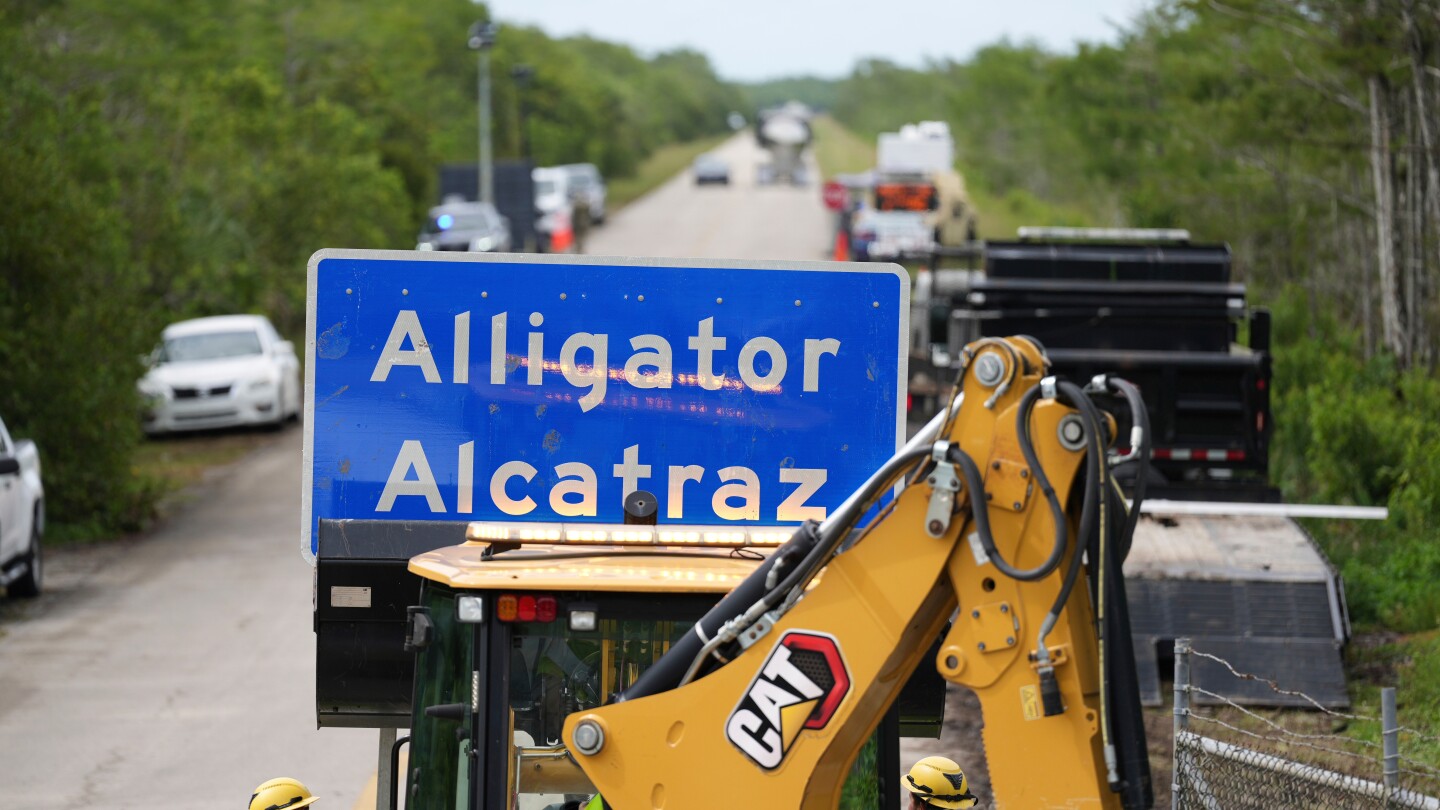
Federal and state officials withheld critical evidence regarding federal funding for Florida’s controversial immigration detention facility in the Everglades, according to environmental groups fighting to close the center.
New documents obtained through public records requests show that the Department of Homeland Security had agreed to reimburse Florida for some construction costs of the facility nicknamed “Alligator Alcatraz,” contradicting arguments previously made in court.
The revelation comes after an appellate court in early September temporarily allowed the detention center to remain open. That decision relied heavily on assertions by Florida officials and the Trump administration that the state hadn’t yet applied for federal reimbursement, which would have triggered mandatory federal environmental reviews.
“We now know that the federal and state government had records confirming that they closely partnered on this facility from the beginning but failed to disclose them to the district court,” said Tania Galloni, an attorney representing the environmental groups.
The newly uncovered evidence includes emails and documents showing discussions about federal reimbursement dating back to June. Records also confirm that the Federal Emergency Management Agency (FEMA) received a grant application from Florida officials in early August. By late September, Florida had been notified that FEMA approved $608 million in federal funding to support the center’s construction and operation.
This timeline contradicts the narrative presented in court. A panel of judges in Atlanta had placed a temporary hold on a lower court’s ruling that would have shuttered the state-built facility. Now, Friends of the Everglades and the Center for Biological Diversity are asking the court to consider this new evidence as they determine the facility’s permanent fate.
The environmental groups filed court papers on Wednesday arguing that these documents should be considered in the ongoing legal battle. The facility currently remains operational and continues to hold immigration detainees.
The controversy began when a federal judge in Miami ordered the facility to wind down operations over a two-month period in mid-August. That judge concluded Florida officials had failed to conduct the required environmental impact review under federal law, specifically determining that a reimbursement decision had already been made at that time.
The Florida Department of Emergency Management, which spearheaded the construction of the Everglades facility, did not respond to requests for comment on the newly revealed documents.
The detention center represents part of Florida’s broader efforts to support immigration enforcement. Under Governor Ron DeSantis, Florida has emerged as a leader among states constructing facilities to support hardline immigration policies. The Everglades facility, which began receiving detainees in July, is one of multiple detention centers the state has developed.
Florida has also opened another immigration detention center in northeast Florida and is exploring the possibility of establishing a third facility in the Florida Panhandle. This aggressive approach aligns with the stricter immigration enforcement advocated by former President Donald Trump.
Beyond the environmental lawsuit, the Everglades facility faces two other federal court challenges. In separate legal actions, detainees have argued that Florida agencies and private contractors hired by the state lack the authority to operate such centers under federal law. Additionally, they are seeking guarantees of access to confidential communications with their attorneys.
The environmental concerns stem from the facility’s location in the sensitive Everglades ecosystem, a unique wetland environment that serves as habitat for numerous endangered and threatened species. Environmental groups contend that proper federal reviews would have identified significant ecological risks that should have prevented the facility’s construction in this location.
As the legal battles continue, the fate of “Alligator Alcatraz” remains uncertain, caught between state immigration enforcement ambitions and federal environmental protection requirements.
Fact Checker
Verify the accuracy of this article using The Disinformation Commission analysis and real-time sources.

14 Comments
The revelation of undisclosed federal involvement in funding this facility is troubling. It undermines confidence in the integrity of the approval process and raises doubts about the stated rationale.
Agreed, transparency is paramount when it comes to the use of public funds and the potential environmental impact of government projects.
The ‘Alligator Alcatraz’ nickname underscores the sensitive environmental location of this facility. Allegations of withheld evidence are serious and warrant further investigation to understand the full context.
Absolutely. The Everglades are a unique and precious ecosystem – any development there needs the utmost care and transparency.
The ‘Alligator Alcatraz’ facility seems to be a lightning rod for controversy. The new evidence of undisclosed federal funding raises serious questions that deserve thorough examination.
Agreed. This case exemplifies the need for rigorous oversight and public accountability, especially when it comes to government projects with potential environmental impacts.
Interesting case of alleged withholding of evidence regarding funding for this controversial detention facility in the Everglades. It raises concerns about transparency and accountability in government decision-making, especially on sensitive environmental issues.
Definitely concerning if true. The public deserves full disclosure, especially when taxpayer funds are involved and environmental impacts are at stake.
This detention center has been a contentious issue, pitting immigration enforcement against environmental protection. The new revelations about federal involvement in funding raise further questions about the process and decision-making.
Agreed, the public deserves a clear and transparent accounting of how this facility was planned, approved, and funded. Proper environmental review is critical.
Federal reimbursement for the detention center’s construction costs, if true, seems like a significant detail that should have been disclosed. This raises red flags about the decision-making process.
Yes, it’s crucial that the public has access to the full record, especially on contentious issues involving both immigration enforcement and environmental protection.
This case highlights the often complex and contentious intersection of immigration policy, environmental protection, and government accountability. The allegations warrant careful investigation to uncover the full truth.
Absolutely. These issues require nuanced, evidence-based decision-making that balances various public interests. Lack of transparency erodes public trust.