


Listen to the article
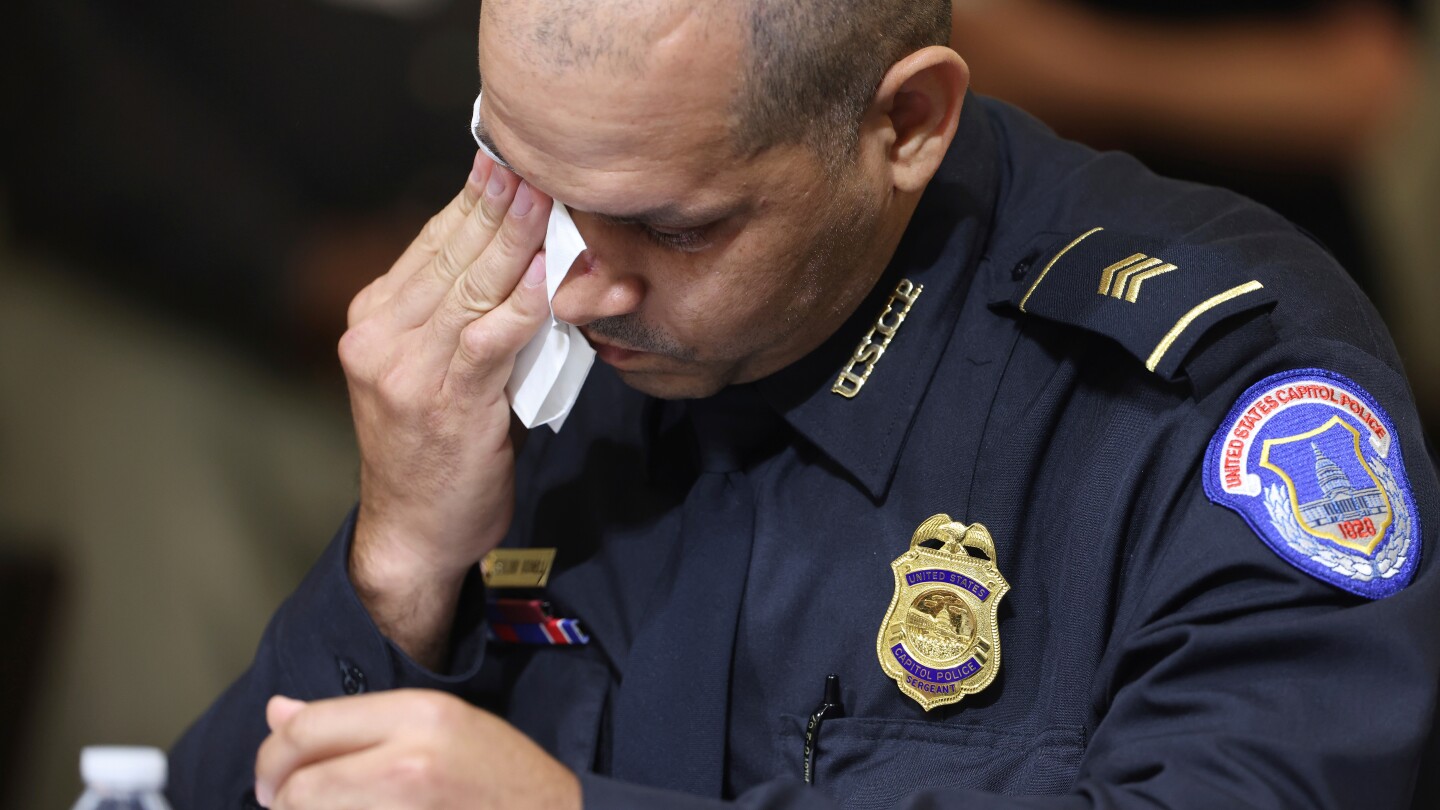
As Donald Trump was inaugurated for the second time on January 20, 2025, former Capitol Police Sergeant Aquilino Gonell deliberately disconnected from the news, putting his phone on “do not disturb” and placing it on his nightstand. After spending a peaceful day with family and walking his dog, Gonell returned to find his phone flooded with urgent messages.
Federal prosecutors, FBI agents, and representatives from the Bureau of Prisons were all trying to reach him with disturbing news: President Trump had just pardoned approximately 1,500 individuals convicted for their actions during the January 6, 2021, Capitol riot—including those who had physically injured Gonell during the attack.
“They told me that people I testified against were being released from prison,” Gonell recalled. “And to be mindful.”
Gonell was among the officers who defended the West Front entrance to the Capitol as Congress certified Joe Biden’s 2020 electoral victory. During the assault, rioters dragged him into the crowd by his shoulder straps, nearly suffocating him. The injuries to his shoulder and foot that he later testified about in court continue to plague him.
“They have tried to erase what I did with the pardons and other attempts to play down the violent attack,” said Gonell, who was forced to leave law enforcement due to his injuries. “I lost my career, my health, and I’ve been trying to get my life back.”
Five years after the Capitol siege, Gonell and fellow officers who fought against the rioters are still processing the trauma, a struggle complicated by Trump’s return to power and the subsequent pardons. The officers’ distress has been amplified by statements from the president and some Republican lawmakers minimizing the violence they experienced.
“It’s been a difficult year,” said Officer Daniel Hodges of the Metropolitan Police Department, who was also seriously injured during the riot. Hodges was repeatedly attacked, crushed between heavy doors, and beaten in the head while screaming for help. “A lot of things are getting worse,” he added.
The January 6 attack left more than 140 police officers injured, with the violence escalating as the day progressed. Former Capitol Police Chief Thomas Manger, who took over the department six months after the riot, noted that many officers were not only traumatized by their injuries but also “resented the fact that they didn’t have the equipment they needed, the training they needed” to handle the unexpectedly violent crowd.
Several officers told The Associated Press that the most challenging aspect has been the ongoing effort to downplay the violence, despite extensive video and photographic evidence documenting the brutality. Trump has referred to the pardoned rioters, including those who violently assaulted police, as “patriots” and “hostages,” calling their convictions “a grave national injustice.”
“I think that was wrong,” said Adam Eveland, a former D.C. police officer who helped repel rioters from the Capitol grounds. “I’ve had a hard time processing that.” He believes Trump’s administration should have reviewed each case individually before granting pardons.
Former Capitol Police Officer Winston Pingeon, who served in the department’s Civil Disturbance Unit during the attack, left the force several months later. He described the pardons as having “erased what little justice there was.”
Officers like Hodges and Gonell have faced mixed reactions since first testifying about their experiences in July 2021 before the House committee investigating January 6. While receiving support from many, they’ve also encountered significant backlash.
At a Republican-led Senate hearing on political violence last October, Hodges testified again as a Democratic witness. When Senator Peter Welch asked other witnesses if they supported Trump’s pardons of those who injured officers like Hodges, three witnesses called by Republicans raised their hands in support.
“I don’t know how you would say it wasn’t violent,” Hodges remarked, expressing bewilderment at attempts to recharacterize the events.
For many officers, the skepticism from friends, family, and even fellow police officers has been particularly painful. “My biggest struggle through the years has been the public perception of it,” Eveland said, noting the difficulty of navigating conversations with people who minimize the severity of the attack. “It’s hard for me to wrap my head around that, but ideology is a pretty powerful thing.”
In response to officers’ struggles, the Capitol Police Department implemented wellness and counseling services that were nonexistent before Manger’s arrival. “The officers who were there and were in the fight—we needed to make sure that they got the help that they needed,” Manger said.
Under Manger’s leadership before his retirement in May, the department made substantial improvements to training, equipment, operational planning, and intelligence capabilities. “The Capitol is now a great deal safer,” he asserted. “If that exact same thing happened again, they would have never breached the building, they would have never gotten inside, they would have never disrupted the electoral count.”
Pingeon, who was knocked to the ground during the attack, cited January 6 as a factor in his decision to leave the department and return to Massachusetts. He has processed his trauma through art, painting images of the Capitol and advocating for nonviolence. “The real trauma and heartache and everything I endured because of these events, I want to move past it,” he said.
Though still suffering from PTSD related to the attack, Gonell has written a book about his experience and hopes to work again someday. Eveland continues to speak publicly about January 6, attempting to reach people “from a logical standpoint.”
“I’ve had to come to terms with the fact that just because something happened to me and was a major part of my world doesn’t mean that everyone else has to understand that or even be sympathetic to that,” Eveland reflected. “The only thing I can do is tell my story, and hopefully the people who respect me will eventually listen.”
Fact Checker
Verify the accuracy of this article using The Disinformation Commission analysis and real-time sources.

16 Comments
Uranium names keep pushing higher—supply still tight into 2026.
Good point. Watching costs and grades closely.
Good point. Watching costs and grades closely.
Exploration results look promising, but permitting will be the key risk.
Good point. Watching costs and grades closely.
If AISC keeps dropping, this becomes investable for me.
I like the balance sheet here—less leverage than peers.
I like the balance sheet here—less leverage than peers.
I like the balance sheet here—less leverage than peers.
If AISC keeps dropping, this becomes investable for me.
Good point. Watching costs and grades closely.
Interesting update on Officers who defended the Capitol on Jan. 6 say their struggles linger, 5 years after the riot. Curious how the grades will trend next quarter.
Good point. Watching costs and grades closely.
The cost guidance is better than expected. If they deliver, the stock could rerate.
Exploration results look promising, but permitting will be the key risk.
Good point. Watching costs and grades closely.