


Listen to the article
California Governor Proposes Major Overhaul of State Education Governance
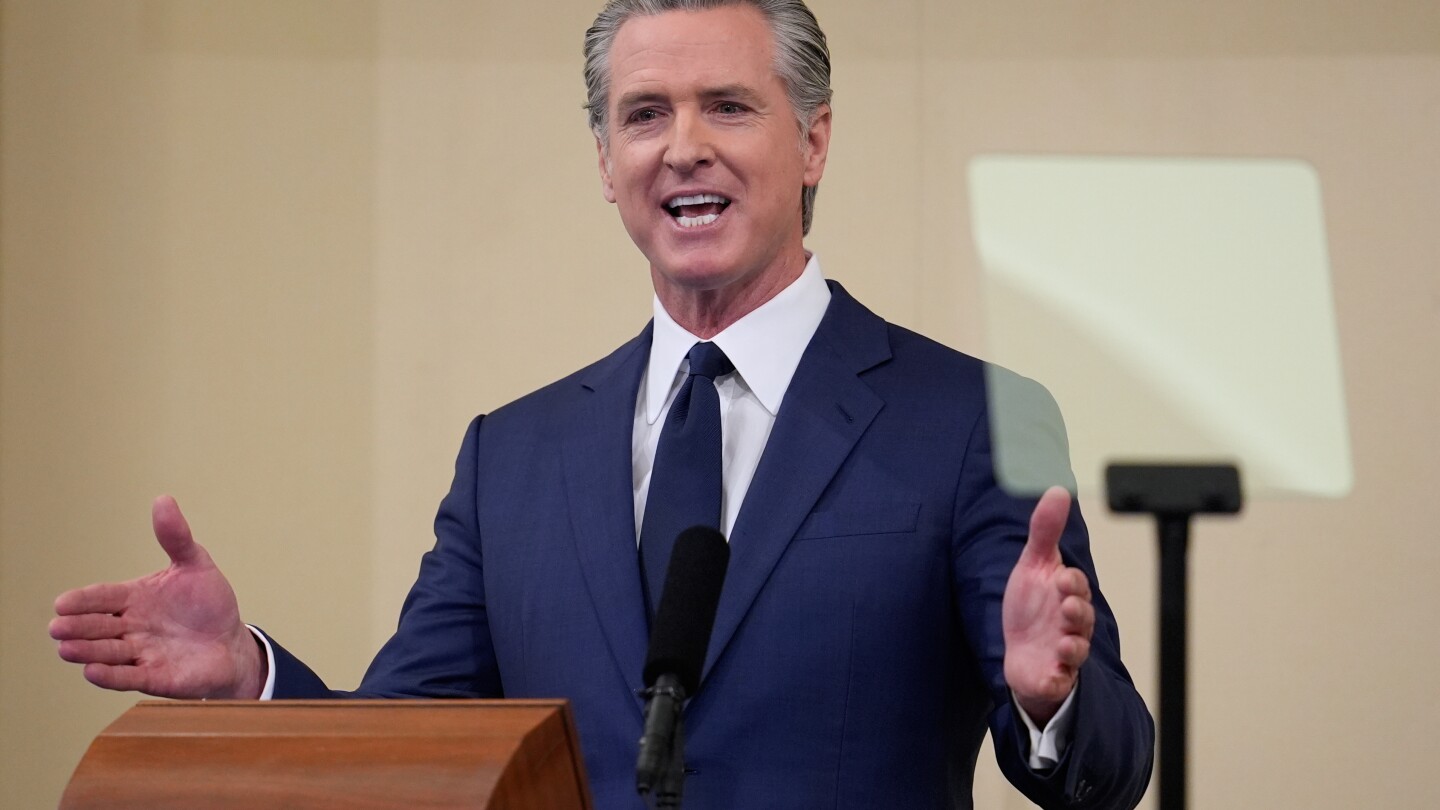
Governor Gavin Newsom unveiled a sweeping proposal Thursday to restructure California’s education governance system, aiming to shift significant power from the elected State Superintendent of Public Instruction to the governor-appointed State Board of Education.
“California can no longer postpone reforms that have been recommended regularly for a century,” Newsom said, referencing numerous past reports that have suggested streamlining the state’s complex K-12 school governance structure. “These critical reforms will bring greater accountability, clarity and coherence to how we serve our students and schools.”
Under the proposed changes, the 11-member State Board of Education would assume control of the California Department of Education, while the State Superintendent would take on a broader coordinating role across the education spectrum from early childhood through post-secondary education.
The initiative targets what policy analysts have long criticized as California’s convoluted education governance system, which currently divides authority among multiple entities at both state and local levels. For more than a century, the state’s public K-12 schools have operated under a web of overlapping authorities, with the governor, state superintendent, State Board of Education, and Legislature all sharing policy-making responsibilities in Sacramento.
This diffuse power structure often shifts with political winds, creating inefficiencies and sometimes working at cross purposes. Meanwhile, at the local level, school boards and county offices of education exercise considerable influence, particularly since California transitioned to a funding system about a decade ago that grants more flexibility to school districts.
California’s approach to school governance is relatively unusual nationally. It is one of only nine states that elects its schools chief rather than having the position appointed by the governor or board of education, according to research by the Education Commission of the States.
Newsom’s proposal aligns closely with recommendations from a December report by Policy Analysis for California Education (PACE), which called for a comprehensive overhaul of the state’s educational governance structure.
“The need for stronger, more coherent governance has never been greater. Schools are grappling with fiscal challenges alongside deepening inequities, persistent opportunity gaps, and the lasting impacts of the COVID-19 pandemic on student learning and well-being,” the PACE report stated.
The timing of the proposed changes is particularly significant as the federal government reduces its involvement in K-12 education. President Donald Trump has begun the process of dismantling the federal Department of Education, delegating its responsibilities to states and other federal agencies. With federal education funding becoming increasingly uncertain, states face greater direct responsibility for educational outcomes.
PACE’s recommendations included the structure Newsom is now proposing. Under this framework, the Department of Education would be managed by an administrator appointed by the State Board of Education, while the superintendent would serve as an independent advocate focused on accountability. The governor would hold primary power and responsibility for schools.
This is not California’s first attempt at education governance reform. Several unsuccessful ballot measures over the years have sought to modify the state superintendent’s role. As recently as 2023, former Assemblyman Kevin McCarty introduced a constitutional amendment that would have made the position gubernatorial-appointed rather than elected. McCarty ultimately withdrew the proposal amid opposition from powerful education stakeholders, including the California Teachers Association and the California School Boards Association.
The state’s current superintendent, Tony Thurmond, is serving his second term and will term out in 2026. His tenure has seen expanded initiatives in literacy, community schools, and student wellness programs. However, he has also faced criticism over alleged side jobs and creating what some described as a “toxic workplace.” Thurmond is currently running for governor.
Newsom’s proposal has garnered support from diverse education organizations, including the Association of California School Administrators, California Association of School Business Officials, Californians Together (which advocates for English learners), and EdTrust-West, an equity-focused research and advocacy organization.
Christopher Nellum, executive director of EdTrust-West, praised the initiative, stating, “For far too long, California’s fractured education governance system has contributed to persistent inequities disproportionately impacting low-income students, students of color and multilingual learners. EdTrust-West commends Governor Newsom for championing these essential reforms.”
The proposal represents one of the most significant attempted restructurings of California’s education system in decades, with potentially far-reaching consequences for the state’s six million public school students.
Fact Checker
Verify the accuracy of this article using The Disinformation Commission analysis and real-time sources.

11 Comments
Consolidating control under the governor-appointed state board could improve coordination, but it raises questions about democratic oversight. Thoughtful implementation will be key to ensuring the changes benefit students rather than just centralizing power.
Good point. Ensuring adequate checks and public input will be crucial as this proposal moves forward.
This proposal to shift more power to the governor and state board of education is an interesting move. It seems aimed at streamlining the education system, though some may have concerns about checks and balances. I’m curious to see how this plays out.
Agreed, governance reforms can be tricky. Hopefully they find a balance that maintains accountability and gives the state board the right level of authority.
This seems like a major overhaul of California’s education governance. While the goal of improving coherence is understandable, I have concerns about the shift toward gubernatorial control. Preserving independent oversight and local/community input will be important.
Agreed, the balance between centralized oversight and local autonomy is delicate. Careful implementation and transparency will be key.
Restructuring education governance is a complex undertaking. While the goals of improved coherence and accountability are understandable, the shift toward greater gubernatorial control raises valid concerns that will need to be carefully addressed.
Centralizing power over education under the governor-appointed state board raises valid concerns about democratic accountability. However, the current system does seem overly complex. Hopefully a thoughtful compromise can be reached that maintains necessary checks and balances.
Giving the state board more control over the education department makes sense to streamline decision-making. But the role of the elected state superintendent should still be meaningful, not just a ‘coordinating’ one. Finding the right balance is critical.
Interesting proposal to overhaul California’s education governance. Streamlining decision-making could improve efficiency, but concentrating power with the governor-appointed board raises questions about preserving independent oversight. Nuanced implementation will be crucial.
Well said. Finding the right balance between centralized coordination and distributed accountability will be critical in how this plays out.