


Listen to the article
California’s Newsom Highlights Legal Battles with Trump Administration in Final State Address
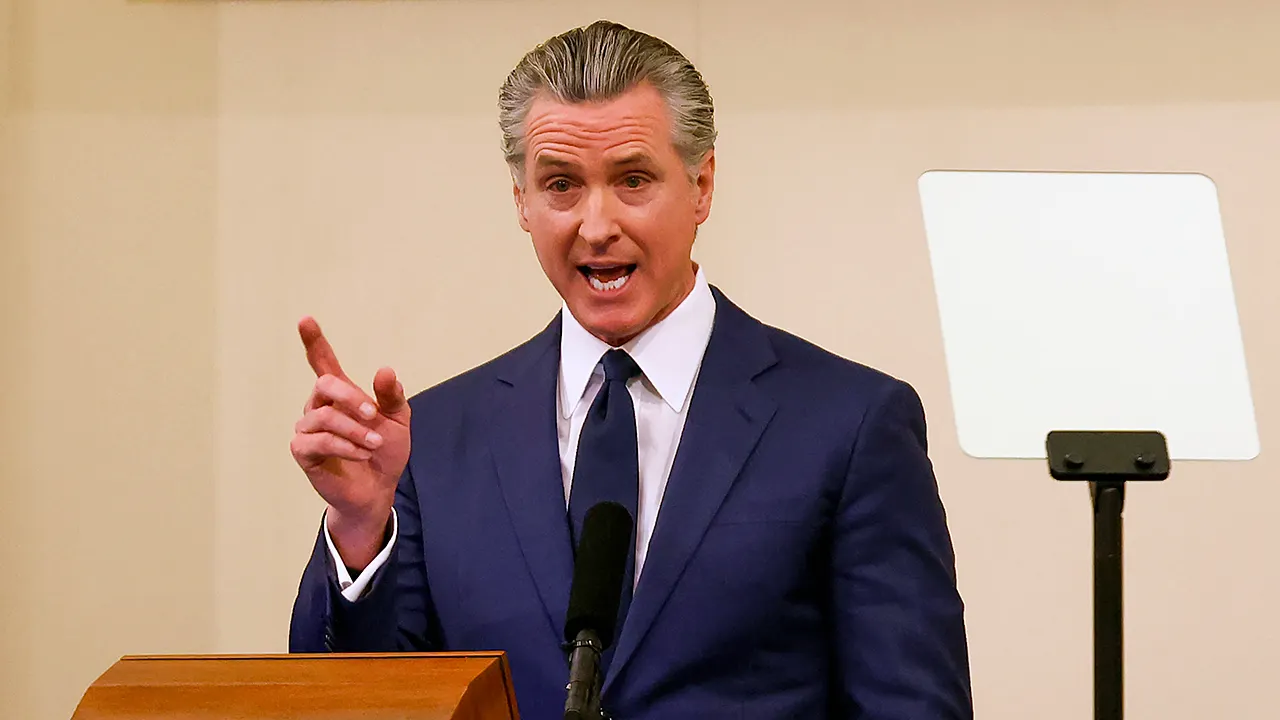
California Governor Gavin Newsom used his final State of the State address to emphasize the ongoing legal disputes between California and the federal government, revealing that the state has filed 52 lawsuits against the Trump administration. The Democratic governor framed these legal battles as a fundamental dispute over presidential authority and constitutional limits.
“No one, particularly the president of the United States, stands above the law,” Newsom told lawmakers and attendees at the California State Capitol in Sacramento. “We’ve gone to court and, of course, protect our people, pushing back against this executive overreach.”
The governor explained that these lawsuits, funded through a special legislative session, involve approximately $168 billion in what he described as “illegally frozen federal resources” designated for schools, hospitals, and senior services. Newsom claimed the court strategy is already yielding results, noting that California has “won the request for emergency relief” and “affirmed the Constitution of the United States as the supreme law of the land.”
In direct criticism of President Donald Trump, Newsom declared, “You can’t cut off critical food assistance for millions of people. You can’t send the military into American cities without justification, and you cannot cruelly and illegally cut off funding for medical research, homeland security, or disaster response.”
The governor’s focus on legal challenges comes amid heightened tensions between California and the federal government. The Trump administration has recently launched a federal investigation into alleged fraud in California programs, particularly regarding homelessness spending. A top federal prosecutor has publicly criticized the state’s oversight practices, allegations that Newsom’s office has firmly rejected, maintaining that the governor has implemented measures to block fraud and protect taxpayer resources.
Beyond federal relations, Newsom addressed several pressing state issues, including homelessness. He urged county governments to take more decisive action, stating, “So I say this with love and respect to the counties — no more excuses. It’s time to bring people off the streets and out of encampments.”
The governor also defended California’s ambitious high-speed rail project, describing it as “the nation’s first high speed rail system.” He highlighted progress, saying, “Full environmental clearance is done,” and claiming that “more than 60 miles of guideway have been completed ready for immediate track lane in the Central Valley.”
On the critical issue of housing affordability, Newsom took aim at institutional investors, warning about large investment firms “snatching up homes by the hundreds and thousands at a time.” He characterized these practices as “crushing the dream of homeownership,” adding, “I think it’s shameful that we allow private equity firms… become some of the biggest landlords here in our cities.”
Republican leaders were quick to criticize Newsom’s address. California Senate Minority Leader Brian Jones dismissed it as an “airbrushed spin job,” accusing the governor of “working hard to pull the wool over the eyes of the nation.” Assemblyman James Gallagher echoed this sentiment, characterizing the speech as “more of the same” and calling for bipartisan collaboration to address the state’s challenges.
Newsom, who is term-limited, will leave office after the November 2026 statewide election. His administration did not provide additional comment beyond clarifying the number of lawsuits mentioned in Thursday’s address.
The speech underscores the increasingly adversarial relationship between California, the nation’s most populous state, and the federal government—a dynamic that has defined much of Newsom’s tenure and shaped policy approaches on issues ranging from immigration to environmental protection and healthcare access.
Fact Checker
Verify the accuracy of this article using The Disinformation Commission analysis and real-time sources.

27 Comments
The cost guidance is better than expected. If they deliver, the stock could rerate.
Good point. Watching costs and grades closely.
The cost guidance is better than expected. If they deliver, the stock could rerate.
Good point. Watching costs and grades closely.
Uranium names keep pushing higher—supply still tight into 2026.
Good point. Watching costs and grades closely.
Nice to see insider buying—usually a good signal in this space.
Good point. Watching costs and grades closely.
Good point. Watching costs and grades closely.
Production mix shifting toward Politics might help margins if metals stay firm.
Good point. Watching costs and grades closely.
Good point. Watching costs and grades closely.
The cost guidance is better than expected. If they deliver, the stock could rerate.
Good point. Watching costs and grades closely.
Nice to see insider buying—usually a good signal in this space.
Uranium names keep pushing higher—supply still tight into 2026.
The cost guidance is better than expected. If they deliver, the stock could rerate.
Good point. Watching costs and grades closely.
Good point. Watching costs and grades closely.
Silver leverage is strong here; beta cuts both ways though.
Good point. Watching costs and grades closely.
Good point. Watching costs and grades closely.
Silver leverage is strong here; beta cuts both ways though.
Good point. Watching costs and grades closely.
Good point. Watching costs and grades closely.
The cost guidance is better than expected. If they deliver, the stock could rerate.
Good point. Watching costs and grades closely.