


Listen to the article
New US Dietary Guidelines Emphasize Whole Foods, Discourage Processed Items
Americans should focus on consuming more whole foods and protein while reducing their intake of highly processed foods and added sugars, according to the latest edition of federal nutrition advice released Wednesday by the Trump administration.
Health Secretary Robert F. Kennedy Jr. and Agriculture Secretary Brooke Rollins unveiled the 2025-2030 U.S. Dietary Guidelines for Americans, which provide updated recommendations for healthy eating and serve as the foundation for federal nutrition programs and policies. The release aligns with Kennedy’s months-long emphasis on overhauling the U.S. food supply as part of his Make America Healthy Again agenda.
“My message is clear: Eat real food,” Kennedy stated during a White House briefing.
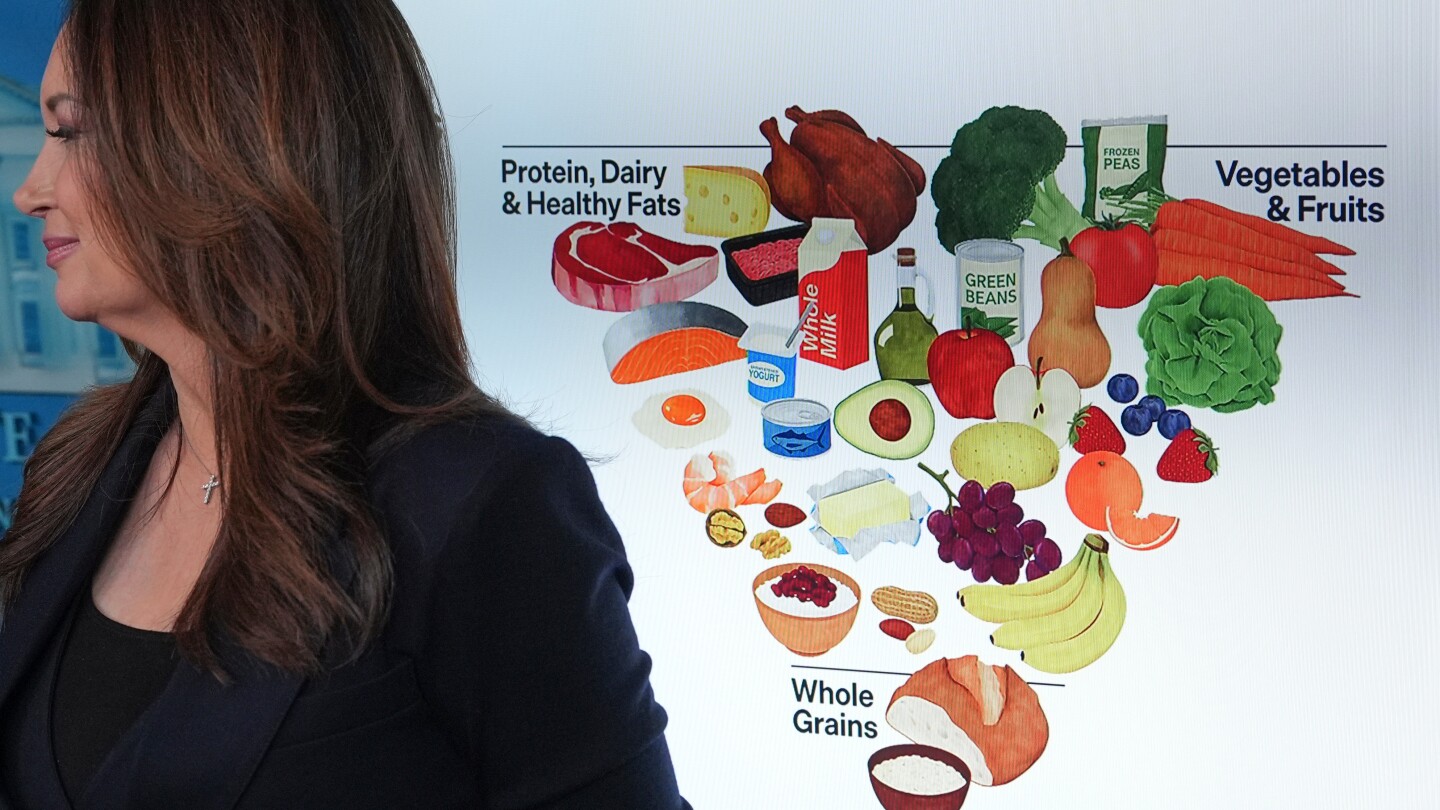
The guidelines promote consumption of fresh vegetables, whole grains, and dairy products, elements long advised in healthy eating plans. Officials also introduced a new graphic depicting an inverted version of the long-abandoned food pyramid, with protein, dairy, healthy fats, fruits, and vegetables at the top and whole grains at the bottom.
A significant shift in the new guidelines is their stance on “highly processed” foods and refined carbohydrates, urging consumers to avoid “packaged, prepared, ready-to-eat or other foods that are salty or sweet, such as chips, cookies and candy.” This terminology refers to ultraprocessed foods, which account for more than half the calories in the typical American diet and have been linked to chronic diseases like diabetes and obesity.
Despite earlier signals that the administration would push for increased consumption of animal fats to end what Kennedy and FDA Commissioner Marty Makary called the “war” on saturated fats, the new guidance takes a more measured approach. It suggests Americans should choose whole-food sources of saturated fat—such as meat, whole-fat dairy, or avocados—while continuing to limit saturated fat consumption to no more than 10% of daily calories. The guidance mentions that “other options can include butter or beef tallow,” despite previous recommendations to avoid those fats.
At just 10 pages, the document fulfills Kennedy’s promise to create simple, understandable guidelines. This represents a dramatic reduction from the 164-page document issued in 2020, which included a four-page executive summary.
The guidance will have its most significant impact on the federally funded National School Lunch Program, which must follow these guidelines to feed nearly 30 million U.S. children daily. However, as Diane Pratt-Heavner, spokesperson for the School Nutrition Association noted, translating the recommendations into specific requirements for school meals could take years.
The new guidelines largely rejected the advice of a 20-member panel of nutrition experts convened by the Biden administration, who had spent nearly two years reviewing the latest scientific evidence on diet and health. Instead, the guidance relied on a new set of experts revealed Wednesday in supporting documents. Of the 10 experts who led the new scientific review under Kennedy, five reported financial ties to beef, pork or dairy industries or to makers of infant formula or supplements.
The guidelines also made notable changes to protein recommendations, potentially doubling suggested intake. While the previous recommended dietary allowance called for 0.8 grams of protein per kilogram of body weight—about 54 grams daily for a 150-pound person—the new recommendation is 1.2 to 1.6 grams per kilogram of body weight.
Regarding sugar, the guidelines advise avoiding or sharply limiting added sugars or non-nutritive sweeteners, stating that “no amount” is considered part of a healthy diet. They recommend no single meal should contain more than 10 grams of added sugars, or about 2 teaspoons. This is significantly lower than previous guidelines, which recommended limiting added sugars to less than 10% of daily calories for people older than 2—approximately 12 teaspoons a day in a 2,000-calorie diet.
The new guidelines also roll back previous specific recommendations on alcohol consumption, simply advising Americans to “consume less alcohol for better health” rather than limiting intake to one drink or less per day for women and two drinks or less per day for men.
The recommendations have drawn mixed reactions from nutrition and medical experts. Some praise the focus on whole foods and reducing processed carbohydrates, while others express concern about the emphasis on animal-based proteins over plant-based alternatives.
Fact Checker
Verify the accuracy of this article using The Disinformation Commission analysis and real-time sources.

10 Comments
Interesting to see the new dietary guidelines emphasize whole foods over processed items. Reducing added sugars is certainly a positive step for public health. I’m curious to see how this impacts the food industry and consumer habits moving forward.
Agreed, it will be interesting to see how these new guidelines are implemented and whether they lead to meaningful change in the food supply and consumer choices.
The new food pyramid graphic is an interesting visual approach. I wonder how effective it will be at communicating the recommended proportions of different food groups. Clear, accessible nutrition guidance is so important.
Agreed, the visual representation could be a helpful tool. Simplifying complex nutritional advice into an easy-to-understand format is key for driving behavior change.
I’m a bit skeptical about the government’s ability to effectively overhaul the food system, but the emphasis on whole foods is a step in the right direction. Curious to see what specific policies or incentives they propose to drive this change.
Valid concern. Regulatory reform and public-private partnerships will likely be needed to shift production and distribution toward healthier options at scale.
This seems like a common-sense approach to nutrition that aligns with broader health trends. It will be important to ensure these guidelines are accessible and practical for all Americans, not just the most health-conscious.
Good point. Making healthy eating affordable and convenient for lower-income households will be crucial for these guidelines to have a meaningful impact.
As someone with a background in nutrition, I appreciate the scientific basis behind these new guidelines. Reducing added sugars and prioritizing whole, nutrient-dense foods is crucial for addressing diet-related diseases.
That’s a good point. Evidence-based policymaking is important, especially when it comes to public health. Hopefully these guidelines will help educate consumers as well.