


Listen to the article
NASA Unveils Ambitious Timeline for Multiple Artemis Moon Missions by 2028
NASA Administrator Jared Isaacman has revealed an accelerated timeline for the Artemis program, announcing that Artemis III, IV, and V missions will all be launched before the end of President Donald Trump’s second term. In an exclusive interview with Fox News Digital, Isaacman emphasized that multiple lunar surface missions are now planned for 2027 and 2028.
“To be overwhelmingly clear, we did not stretch out our timeline or delay anything. What we did is insert additional missions, standardized, so we can actually achieve the national policy that President Trump set out to return American astronauts to the Moon, and build an enduring presence to stay,” Isaacman explained.
The administrator outlined a comprehensive strategy, beginning with Artemis II’s upcoming launch in early April. This mission will carry astronauts around the Moon before returning to Earth. Following this, Artemis III will launch by mid-2027 “with the aim to buy down risk and low Earth orbit for subsequent Moon landing attempts in 2028.”
This announcement marks a significant shift in NASA’s approach to lunar exploration. The Artemis program was initially established by President Trump during his first term in December 2017, but progress stalled in recent years. Isaacman aims to complete four Artemis missions during the current administration, contrasting with the Biden administration’s single non-manned test flight in 2022.
Isaacman was critical of the previous administration’s handling of the program, telling Fox News Digital that “the previous administration didn’t make any decisions over the last four years that need to be done.” He added, “That’s being corrected now. You need to standardize, you need to launch with cadence. That’s how you get back to the moon. That’s how you stay.”
The immediate focus remains on Artemis II, which was originally scheduled for early February but has been delayed due to technical issues. The Space Launch System (SLS) rocket was returned to the Vehicle Assembly Building to repair a helium leak last Wednesday. Isaacman defended this delay, pointing to the three-year gap between Artemis missions as a fundamental problem.
“You can’t launch a rocket this complex and important every three years, and expect to get it right,” Isaacman noted. “There’s just no muscle memory there. There’s going to be mistakes.” He emphasized that safety remains paramount: “We’re not going to rush this, because, clearly, we’re relearning the same lessons, which means we didn’t get the technical root cause last time, three years ago.”
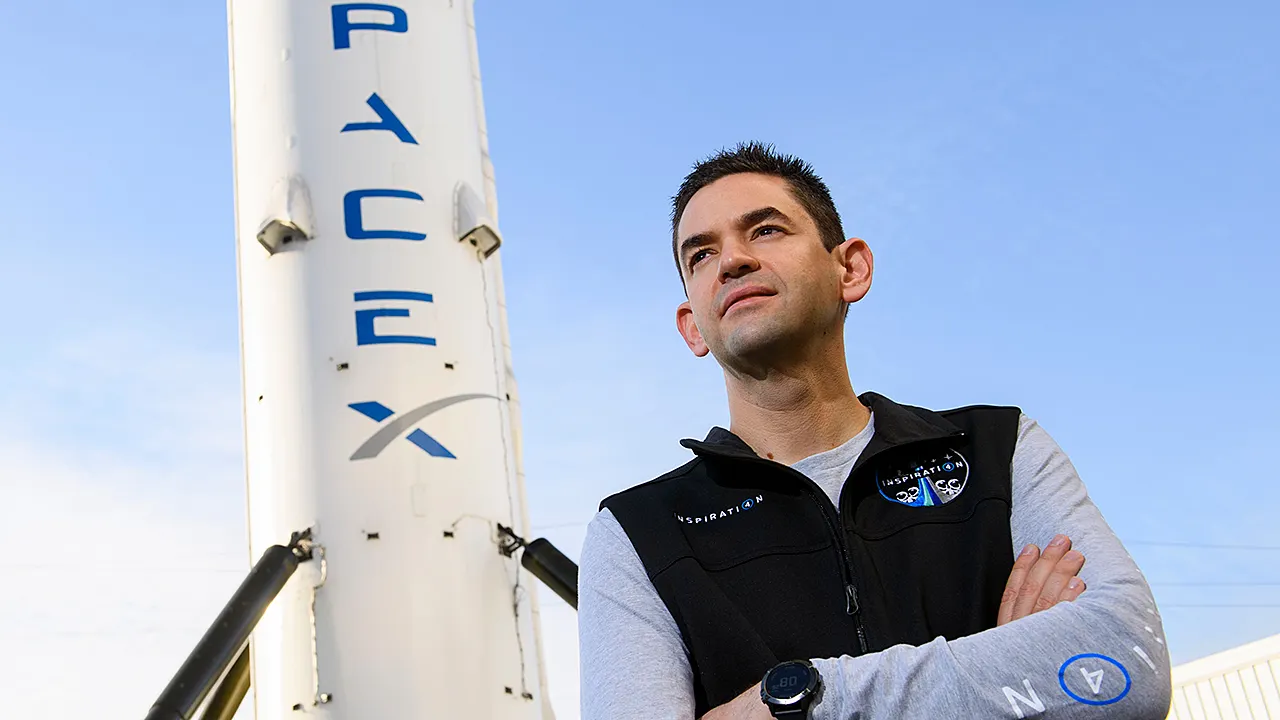
The 43-year-old billionaire administrator, who was sworn in last December, brings unique personal experience to the role. Isaacman himself commanded the first-ever commercial spacewalk in September 2024. In less than 100 days as administrator, he has vocally committed to returning Americans to the lunar surface – a feat not accomplished since Apollo 17 in 1972.
Isaacman drew parallels to NASA’s earlier successes, noting that “NASA, throughout our history, has launched, on average, every three months, our design vehicles from Mercury, Gemini, Apollo, through space shuttle. Apollo 8 launched less than two months after Apollo 7’s splashdown. This is how you get back to the Moon and be able to stay.”
Addressing organizational challenges, Isaacman also highlighted his intention to rebuild NASA’s core competencies by transitioning certain contractor roles to civil servant positions. “One of the first observations I had in the job after visiting every one of the NASA centers is all of the core competencies that we either outsourced or lost over the years,” he said.
While acknowledging contractors’ value, he emphasized that certain functions should remain in-house: “When we’re talking about launchpad, launch control, mission control in Houston, those should be civil servants. That should be a core competency in NASA.”
According to Isaacman, major aerospace contractors including Boeing, SpaceX, and Blue Origin have expressed support for the accelerated timeline. “We have universal support in this,” he stated. “Support from every one of the prime contractors in this program. Lockheed, Boeing, ULA, SpaceX, Blue Origin and all of the congressional leaders that have space equities understand that this is the way back to the Moon.”
With funding and resources reportedly already in place, NASA appears positioned to pursue this ambitious lunar return strategy, marking America’s first human presence on the Moon in over five decades.
Fact Checker
Verify the accuracy of this article using The Disinformation Commission analysis and real-time sources.

11 Comments
I’m curious to see how the Artemis missions will advance lunar science and technology. Gathering more data and testing new capabilities on the Moon could have significant benefits for future space endeavors.
Kudos to NASA for pushing forward with its Artemis program. Establishing a sustained human presence on the Moon is a critical step towards future deep space exploration and potential resource utilization.
While I’m enthusiastic about the prospect of more Artemis Moon missions, I hope NASA maintains a careful, safety-first approach. The risks of space travel shouldn’t be underestimated, even with experienced astronauts.
Absolutely. Safety and mission success should always be the top priorities, even if it means adjusting timelines if necessary. No one wants to see another Challenger-like disaster.
Exciting news! Accelerating the Artemis program to get boots on the Moon again before the end of the decade is ambitious but necessary. Establishing a sustainable presence there will be a major milestone for space exploration.
I agree, this is an important goal that will enable further advancements in lunar science and technology. Curious to see how the mission timelines and objectives evolve over the coming years.
While the goal of returning to the Moon by 2028 is admirable, I’m a bit skeptical about the feasibility of that timeline. NASA has faced delays in the past with major programs like this. Hopefully the new Artemis missions can stay on schedule.
That’s a fair point. Ambitious timelines often come with risks. NASA will need to carefully manage the program and mitigate potential issues to keep things on track.
It’s great to see NASA doubling down on its Artemis program and committing to a more aggressive lunar exploration schedule. The Moon is a critical stepping stone for future deep space missions.
The prospect of 4 Artemis Moon missions by 2028 is exciting for the future of space exploration. However, I wonder about the costs and budgetary implications. Lunar activities can be quite resource-intensive.
That’s a valid concern. NASA will need to ensure adequate funding and resources are in place to support this accelerated Artemis timeline. Balancing scientific priorities with budgetary constraints will be key.