


Listen to the article
Mystery Surrounds Disappearance of Former Air Force General and Other Scientists
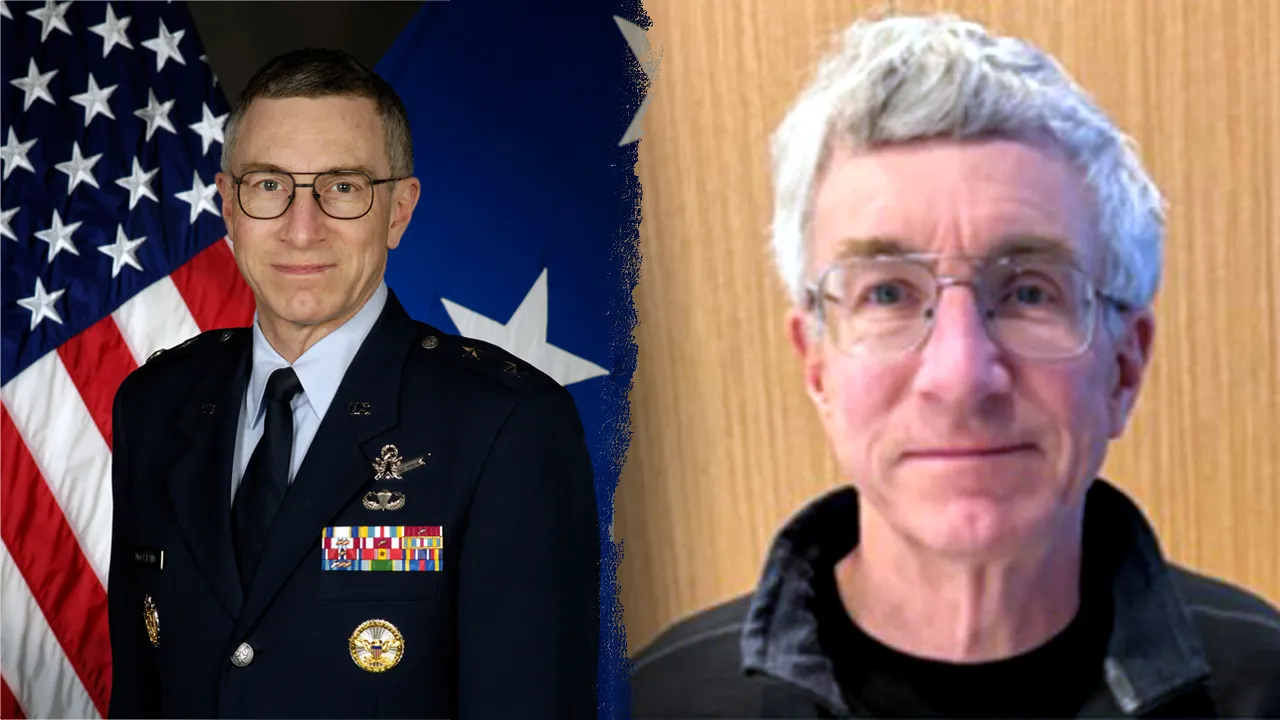
Susan Wilkerson was gone for just over an hour when her husband, retired Air Force Maj. Gen. William “Neil” McCasland — who once oversaw some of the military’s most advanced and highly classified research programs — vanished from their Albuquerque home.
McCasland, 68, left his phone behind, but his wallet and a .38-caliber revolver were missing, according to the Bernalillo County Sheriff’s Office. The general had previously mentioned experiencing what he described as a “mental fog,” investigators said, though authorities stressed there was no indication he was disoriented when he disappeared.
“Arguably, he would still be the most intelligent person in the room,” Albuquerque police Lt. Kyle Wood told reporters on March 16.
McCasland’s disappearance is one of 10 recent cases involving scientists tied to U.S. military and government research that have drawn high-level attention. White House officials confirmed they are investigating the matter after being questioned about a potential pattern.
“I hope it’s random, but we’re going to know in the next week and a half,” former President Trump told reporters Thursday. “I just left a meeting on that subject.”
Pattern of Disappearances Raises Questions
McCasland disappeared on February 27, 2026. His prescription glasses and wearable devices were found at home, while his hiking boots were among the items missing. His distinguished career included senior roles in space research and acquisition, leadership positions at the Air Force Research Laboratory and the National Reconnaissance Office, and command of research facilities at Kirtland Air Force Base in New Mexico and Wright-Patterson Air Force Base in Ohio.
The general’s name had surfaced years earlier in the 2016 WikiLeaks release of emails from Hillary Clinton campaign chairman John Podesta. In those messages, musician and UFO enthusiast Tom DeLonge described working with McCasland on discussions related to unidentified aerial phenomena.
His wife quickly dismissed speculation about potential connections to UFO research, writing on Facebook: “Neil does not have any special knowledge about the ET bodies and debris from the Roswell crash stored at Wright-Patt.” She noted that her husband retired in 2013, adding, “It seems quite unlikely that he was taken to extract very dated secrets from him.”
Scientists Vanish Without a Trace
Monica Jacinto Reza, a 60-year-old aerospace engineer who co-created a specialized nickel-based alloy for rocket engines, disappeared on June 22, 2025, while hiking in Angeles National Forest near Los Angeles. She was briefly separated from her hiking companion, and when he looked back, she had vanished completely. At the time, Reza was serving as Director of Materials Processing at NASA’s Jet Propulsion Laboratory (JPL).
Steven Garcia, a 48-year-old government contractor with ties to the Kansas City National Security Campus, disappeared on August 28, 2025, after leaving his Albuquerque home on foot while carrying a handgun. He left behind his phone, wallet, keys and car. The facility where Garcia worked is responsible for producing most non-nuclear components used in the U.S. nuclear weapons arsenal, giving him high-level security clearance.
Melissa Casias, a 53-year-old administrative employee with security clearance at Los Alamos National Laboratory, was last seen on June 26, 2025, walking alone on State Road 518 near Talpa, New Mexico. Her car, purse, keys and phones were found at her home, with both phones factory reset. Her family has strongly rejected suggestions that she left voluntarily.
Anthony Chavez, a 78-year-old retired Los Alamos National Laboratory employee, was reported missing on May 8, 2025. His wallet, keys and personal items were found at his home, while his car remained locked in the driveway with no signs of forced entry or struggle.
Scientists Lost to Violence and Unexplained Deaths
The pattern extends beyond disappearances. Carl Grillmair, a 67-year-old Caltech astrophysicist known for his work on exoplanets, was shot and killed outside his Llano, California home on February 16, 2026. A 29-year-old suspect was later arrested and charged with murder.
Nuno Loureiro, a 47-year-old MIT physicist and director of the university’s Plasma Science and Fusion Center, was shot at his home in Brookline, Massachusetts on December 15, 2025, and died from his injuries the following day. Authorities linked his killing to a suspect connected to a separate mass shooting at Brown University who later died by suicide.
Frank Maiwald, a 61-year-old engineer at NASA’s Jet Propulsion Laboratory who developed advanced instruments to study Earth and planetary environments, died in Los Angeles on July 4, 2024. No cause of death has been publicly disclosed, and reports indicate no autopsy was performed.
Jason Thomas, a 45-year-old associate director of chemical biology at Novartis, went missing on December 13, 2025, after leaving his home in Wakefield, Massachusetts, late at night. His body was recovered from Lake Quannapowitt on March 17, 2026, after ice thawed. Officials said no foul play was suspected.
Investigation Ongoing as Questions Mount
The geographical clustering of several cases in New Mexico, particularly around facilities like Los Alamos and Kirtland Air Force Base, has fueled speculation about potential connections. Both McCasland and Garcia disappeared from the Albuquerque area, which serves as a hub for U.S. nuclear and defense research.
Despite growing public concern about these cases, investigators have not publicly identified evidence of a coordinated pattern. The diverse circumstances—ranging from confirmed homicides to unexplained disappearances to apparent accidents—point in different directions, complicating efforts to establish clear links.
As federal officials continue their investigation, the scientific community waits anxiously for answers about whether these incidents represent tragic coincidences or something more concerning regarding the safety of America’s top researchers.
Fact Checker
Verify the accuracy of this article using The Disinformation Commission analysis and real-time sources.

23 Comments
I like the balance sheet here—less leverage than peers.
Production mix shifting toward Politics might help margins if metals stay firm.
Good point. Watching costs and grades closely.
Good point. Watching costs and grades closely.
Uranium names keep pushing higher—supply still tight into 2026.
Good point. Watching costs and grades closely.
Good point. Watching costs and grades closely.
The cost guidance is better than expected. If they deliver, the stock could rerate.
Good point. Watching costs and grades closely.
Good point. Watching costs and grades closely.
Nice to see insider buying—usually a good signal in this space.
Good point. Watching costs and grades closely.
Good point. Watching costs and grades closely.
I like the balance sheet here—less leverage than peers.
Good point. Watching costs and grades closely.
The cost guidance is better than expected. If they deliver, the stock could rerate.
Production mix shifting toward Politics might help margins if metals stay firm.
Good point. Watching costs and grades closely.
The cost guidance is better than expected. If they deliver, the stock could rerate.
Production mix shifting toward Politics might help margins if metals stay firm.
Nice to see insider buying—usually a good signal in this space.
If AISC keeps dropping, this becomes investable for me.
Interesting update on Missing General and Scientist Deaths Linked to Secret US Work Prompt White House Investigation. Curious how the grades will trend next quarter.