


Listen to the article
A federal judge has modified his ruling on President Donald Trump’s controversial White House ballroom project, allowing underground security construction to proceed while maintaining restrictions on the ballroom itself.
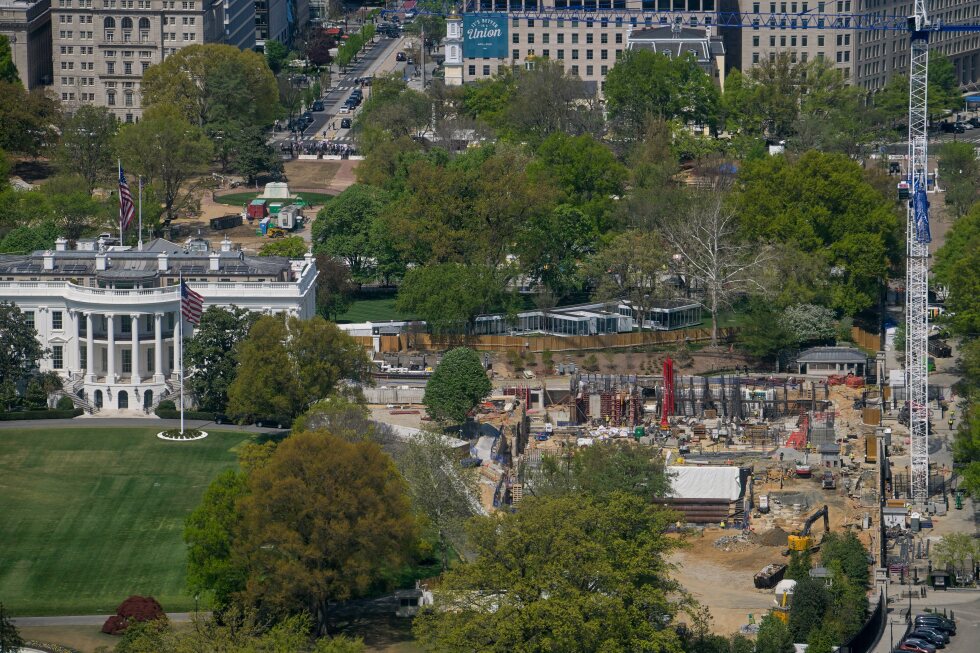
U.S. District Judge Richard Leon clarified Thursday that while his previous order halts the above-ground construction of the $400 million ballroom, the administration may continue with below-ground elements including a bunker and other national security facilities at the site.
The clarification comes after the U.S. Court of Appeals for the District of Columbia Circuit instructed Leon to reconsider the potential national security implications of his original construction halt. Government attorneys had argued that the project incorporates critical security features designed to protect against various threats, including drones, ballistic missiles, and biological hazards.
“Defendants argue that the entire ballroom construction project, from tip to tail, falls within the safety-and-security exception and therefore may proceed unabated,” Leon wrote in his ruling. “That is neither a reasonable nor a correct reading of my Order!”
Leon’s revised order permits the Trump administration to continue with excavations, bunker construction, military installations, and medical facilities below the planned ballroom. However, work on the ballroom structure itself remains suspended pending congressional approval.
The judge, who was appointed by Republican President George W. Bush, emphasized that while he recognizes the safety implications, “national security is not a blank check to proceed with otherwise unlawful activity.” He also noted that he has “no desire or intention to be dragooned into the role of construction manager.”
Leon stayed his latest decision for another week, providing the administration additional time to potentially seek Supreme Court review of the matter.
The legal battle over the ballroom began last December when the National Trust for Historic Preservation filed a lawsuit just one week after the White House completed demolition of the East Wing to make way for the new 90,000-square-foot facility. According to Trump, the ballroom would accommodate up to 999 people.
The administration had previously indicated that above-ground construction on the ballroom would begin in April, following the April 2 approval from the 12-member National Capital Planning Commission, which oversees construction on federal property throughout the Washington region. That approval came just two days after Leon’s initial ruling.
The ballroom project has generated controversy not only for its scale and historical implications but also for its funding structure. While President Trump has stated that the ballroom itself is being funded through private donations, taxpayer money is being used to finance the bunker construction and security upgrades integrated into the project.
The case highlights the tension between presidential prerogatives regarding White House modifications and the oversight role of Congress and historic preservation concerns. The White House complex, which has undergone numerous renovations and additions throughout its history, is subject to both security considerations and historic preservation requirements.
The three-judge appeals court panel noted in its Saturday ruling that it lacked sufficient information to determine precisely how much of the project could be suspended without compromising the safety of the president, his family, or White House staff—a concern that Leon’s clarified ruling attempts to address by distinguishing between security elements and the ballroom itself.
As the legal challenges continue, the fate of what would be one of the most significant structural changes to the White House in decades remains uncertain, caught between national security interests, historical preservation concerns, and questions about presidential authority over modifications to the executive residence.
Fact Checker
Verify the accuracy of this article using The Disinformation Commission analysis and real-time sources.

8 Comments
This is a delicate situation where security needs have to be weighed against other concerns. I’m glad the judge is trying to find a middle ground, but it will be important to ensure the national security work is truly necessary.
Oversight and transparency around the national security aspects of this project will be crucial going forward.
Seems like a pragmatic compromise, allowing critical security features to move forward while still maintaining limits on the controversial ballroom portion. It will be worth following how this unfolds.
I hope the judge’s revised order strikes the right balance and that the national security claims are well-justified.
This is a complex issue with competing priorities. I appreciate the judge’s attempt to find a reasonable middle ground by allowing the national security work to proceed while still restricting the ballroom construction.
It will be important to closely monitor the national security aspects to ensure they are truly necessary and not being abused for other purposes.
Interesting case – it’s good the judge is trying to balance national security needs with the controversial ballroom project. I’m curious to see how this plays out and what the ultimate resolution will be.
The judge’s decision to allow the national security work while maintaining restrictions on the ballroom seems reasonable, given the competing interests at play. It will be worth following how this unfolds and whether the national security claims are fully justified.