


Listen to the article
Justice Jackson Criticizes Supreme Court’s Emergency Docket as Favoring Trump Administration
Justice Ketanji Brown Jackson has delivered a pointed critique of the Supreme Court’s use of emergency orders, arguing that the practice unfairly benefits the Trump administration while undermining public confidence in the judiciary.
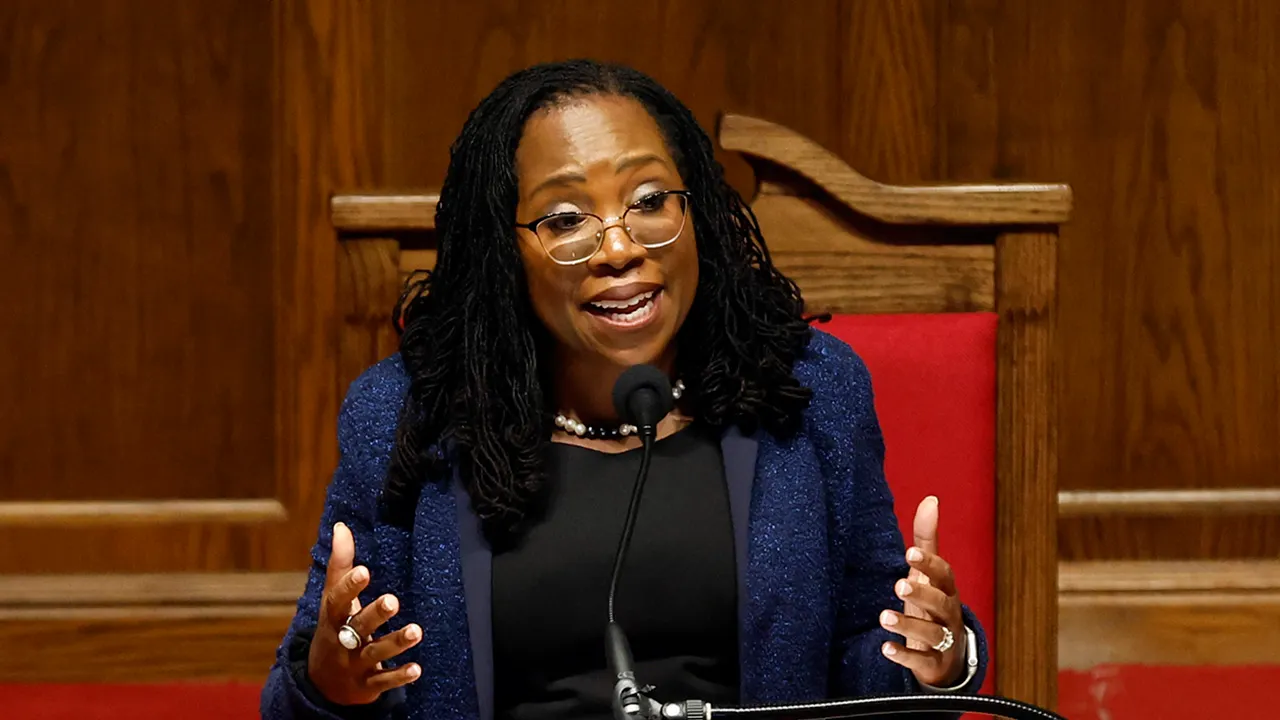
In a speech at Yale Law School made public Wednesday, Jackson characterized the high court’s handling of its emergency docket as “problematic” and suggested that some of the conservative majority’s decisions appear “utterly irrational” to observers.
“We cannot expect the public to have faith in our judicial system if, without clear explanation, we consistently greenlight harmful acts,” Jackson said, addressing what critics often call the “shadow docket.”
The emergency docket allows litigants to seek immediate relief from the Supreme Court, bypassing the typical lengthy court proceedings when faced with restraining orders and injunctions from lower courts. While Jackson emphasized she wasn’t trying to “praise” or “bury” the emergency docket, she warned that its current application strays significantly from its more limited historical role.
“There is a serious concern that the Supreme Court’s modern stay practices are having an enormously disruptive and potentially corrosive effect on the functioning of the federal judiciary’s usual decision-making process,” Jackson stated, though she did not explicitly name Trump in her remarks.
The Biden appointee, who frequently dissents on emergency rulings, raised particular concern about equity in the judicial process. She argued that “savvy parties” with resources and legal sophistication can strategically navigate around standard court procedures by applying directly for emergency stays, creating an imbalance in access to justice.
“If we are not careful, the emergency docket can and will become an end-run around the standard review process, a special avenue that certain privileged litigants can utilize selectively,” she cautioned.
Jackson also contended that the practice “disrespects” lower court judges by allowing the Supreme Court to “routinely interfere with lower court cases.” This criticism comes as the Trump administration has frequently characterized district court judges who rule against presidential policies as “rogue” actors.
“A one-line stay grant that overturns a lower court’s contrary conclusion suggests that the judgment call was so easy that no deliberation or explanation is required, and that suggestion casts aspersions on the tedious work that our colleagues have done,” Jackson explained.
The Trump administration has faced hundreds of lawsuits and adverse rulings in lower courts since taking office. While the Justice Department’s solicitor general’s office often chooses not to seek emergency interventions from the Supreme Court, when it has done so, it has secured victories in most instances.
Through the emergency docket, the Supreme Court has permitted Trump to implement mass firings, limited nationwide injunctions against administration policies, cleared paths for deportations, approved controversial immigration enforcement tactics, and temporarily allowed the discharge of transgender service members from the military.
However, the administration has not prevailed in every case. The justices have required the government to provide more notice to alleged undocumented immigrants facing deportation under the Alien Enemies Act and agreed with a lower court ruling that the president improperly federalized the National Guard as part of immigration enforcement efforts in Chicago.
This isn’t the first time Jackson has expressed frustration with the court’s emergency rulings. In August, she issued a scathing dissent when the majority temporarily allowed the National Institutes of Health to cancel approximately $738 million in grant funding.
“This is Calvinball jurisprudence with a twist. Calvinball has only one rule: There are no fixed rules. We seem to have two: that one, and this Administration always wins,” Jackson wrote in that dissent.
Legal scholars note that the increasing use of the emergency docket represents a significant shift in how the Supreme Court exercises its power, raising questions about transparency and consistency in the judicial process. The trend has intensified scrutiny over the court’s decision-making patterns, particularly in politically sensitive cases involving executive branch policies.
The White House and the Supreme Court’s public affairs team have not yet responded to requests for comment on Jackson’s remarks.
Fact Checker
Verify the accuracy of this article using The Disinformation Commission analysis and real-time sources.

18 Comments
Jackson raises some thought-provoking points about the Supreme Court’s emergency docket. Upholding the integrity of the judicial system should be a top priority, even when dealing with time-sensitive matters.
Agreed. The emergency docket is a critical tool, but its application must be transparent and consistent to avoid the appearance of bias or overreach.
Justice Jackson’s critique of the Supreme Court’s emergency docket highlights an important issue worth further examination. The court must balance efficiency and fairness, and ensure its actions do not undermine its own credibility and the rule of law.
Justice Jackson is right to be concerned about the Supreme Court’s use of the emergency docket. Bypassing normal procedures risks undermining the court’s legitimacy in the eyes of the public. Striking the right balance is crucial for maintaining trust in the judicial system.
The tension between judicial independence and public accountability is an age-old challenge. Jackson highlights valid concerns about the Supreme Court’s emergency powers, but reasonable people may disagree on the solutions.
Well said. These are complex issues without easy answers. An open and informed public debate is important for maintaining trust in the judiciary.
This critique from Justice Jackson highlights the delicate balance the Supreme Court must strike between efficiency and fairness. The emergency docket can be a useful tool, but it requires careful application to avoid the perception of partisan bias.
Well said. The Supreme Court must uphold the highest standards of impartiality, even when dealing with time-sensitive matters. Justice Jackson’s speech raises important questions worth further public discourse.
Justice Jackson raises some important points about the potential for abuse of the Supreme Court’s emergency powers. Judicial decisions should be well-reasoned and not appear ‘utterly irrational’ to the public.
Thoughtful commentary from Jackson. The emergency docket is a powerful tool that requires careful oversight to ensure it’s not exploited for political gain.
This is a complex issue without easy answers. While the emergency docket can serve a purpose, Justice Jackson raises valid concerns about its potential for abuse. Transparent and consistent application of the rules is essential to uphold the integrity of the Supreme Court.
Agreed. The Supreme Court must be exceptionally cautious in its use of the emergency docket to avoid even the appearance of partiality. Rigorous scrutiny and clear justification are needed to maintain public confidence.
Interesting perspective from Justice Jackson on the Supreme Court’s use of the emergency docket. Seems like there are valid concerns about transparency and impartiality, even if the process has its place in urgent cases.
I agree, the emergency docket process needs more clarity and consistency to maintain public trust in the judiciary.
I’m curious to learn more about the Supreme Court’s use of the emergency docket and how it has evolved over time. Jackson’s critique seems warranted, but I’d want to understand the full context before drawing conclusions.
Agreed, this is a nuanced issue that deserves deeper examination. Jackson’s perspective as a sitting justice carries a lot of weight.
Justice Jackson makes a fair point about the Supreme Court’s use of the emergency docket. Bypassing normal court proceedings can undermine public trust in the judicial system, especially if the rulings seem arbitrary or favor a particular administration. It’s an important issue worth deeper examination.
I agree. The emergency docket should be used judiciously and with clear justification to maintain the court’s credibility. Transparency around the reasoning is key.