


Listen to the article
Rep. Ilhan Omar’s Somalia Stance Draws Scrutiny Amid Minnesota Fraud Investigations
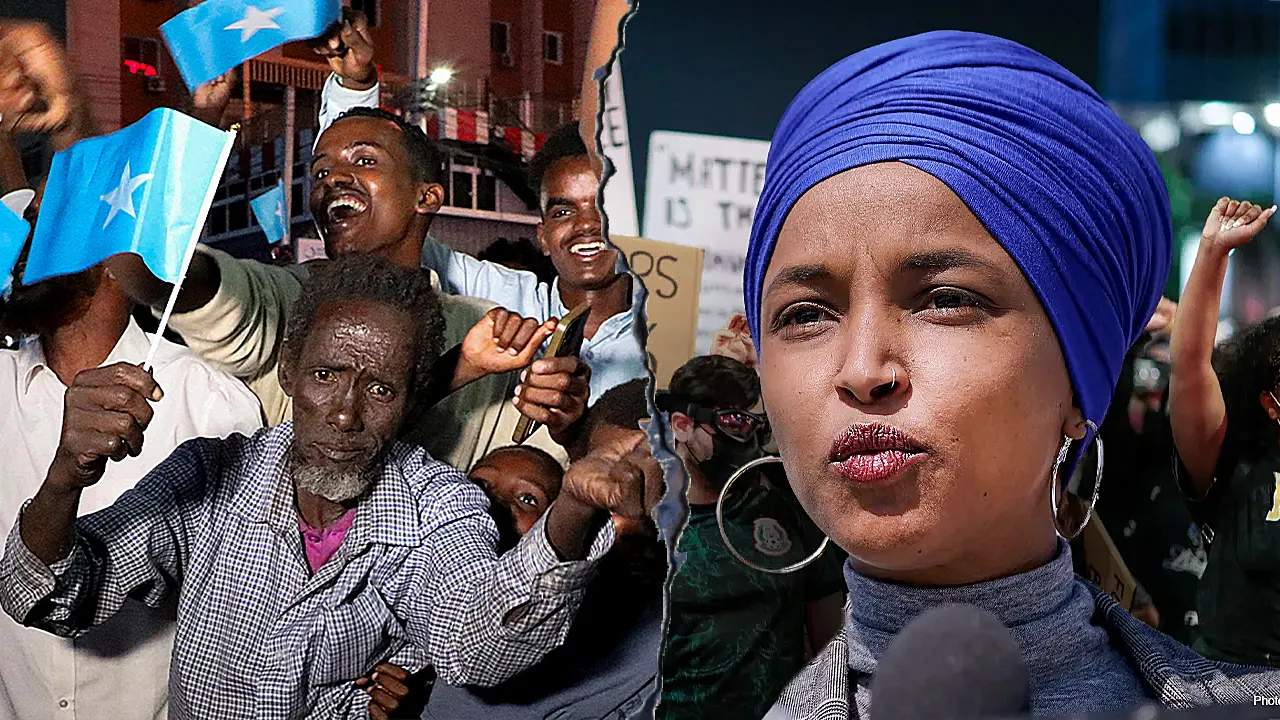
Rep. Ilhan Omar faces mounting criticism over her defense of Somalia’s territorial claims and opposition to recognizing Somaliland as an independent state, particularly as authorities intensify investigations into alleged widespread fraud schemes in Minnesota involving Somali communities.
Michael Rubin, a senior fellow at the American Enterprise Institute, argues that the corruption scandals unfolding in Minnesota mirror long-standing governance problems in Somalia, creating a relevant contrast with the relative stability of Somaliland.
“The corruption exposed in Minnesota mirrors the governance failures that have plagued Somalia for decades,” Rubin told Fox News Digital. “Somaliland has charted a different course entirely, relying on internal accountability rather than international assistance and that distinction matters right now.”
The fraud controversy in Minnesota has escalated dramatically in recent weeks. According to Wall Street Journal reporting, fraud losses across multiple government programs since 2018 could total billions of dollars. Federal authorities have already dismantled a $250 million scheme tied to the “Feeding Our Future” case, resulting in 78 indictments and dozens of convictions.
FBI Director Kash Patel described the case as merely “the tip of a very large iceberg.” The scandal gained renewed attention after independent commentator Nick Shirley posted viral footage showing shuttered daycare centers that had billed the government millions while apparently serving few, if any, children.
Omar has defended her support for the MEALS Act, legislation that critics claim weakened oversight safeguards later exploited by fraudulent operators. But Rubin suggests Omar’s positions reflect deeper concerns about her priorities.
“Ilhan Omar left Somalia, but Somalia never left her,” Rubin said. “In her Somali-language speeches, she refers to Somalia as her home, not America and so it is clear she appears to seek to advance Somalia’s interests on the global stage.”
Rubin contends that Omar’s opposition to recognizing Somaliland is driven more by internal Somali politics than U.S. strategic interests. “Clan dynamics shape Somali politics, and that same lens appears to inform her position on Somaliland,” he said, arguing that American interests “don’t appear to factor prominently into that calculation.”
Meanwhile, Somaliland has been steadily gaining international attention. After maintaining de facto independence for more than three decades, the self-governing territory has established internal security, developed democratic institutions, and fostered closer diplomatic engagement with Israel.
In a significant diplomatic development, Israeli Prime Minister Benjamin Netanyahu recently announced that Israel had established full diplomatic relations with Somaliland, making Israel the first UN member state to officially recognize the self-declared state. Netanyahu described the move as being in the spirit of the United States-brokered Abraham Accords.
Somaliland has also signaled interest in joining the Abraham Accords, positioning itself as a potential partner for U.S. and Israeli interests in the strategically important Horn of Africa region.
“The more people learn about Somaliland’s record, the more they will question why the U.S. continues to send billions to Somalia’s internationally recognized government while overlooking a more reliable partner,” Rubin added.
President Trump has indicated he is “looking into” the recognition of Somaliland. When asked about Netanyahu’s outreach on the matter, Trump told the New York Post he would need to “study” the proposal.
“We’ll study it. I study a lot of things and always make great decisions, and they turn out to be correct,” Trump said.
The issue could gain more momentum as Netanyahu is expected to discuss regional security matters with Trump in the coming week. Rubin noted that recognizing Somaliland would align with Trump’s broader foreign policy approach.
“It is business-friendly, security-focused, and takes responsibility for its own territory. It wants partnerships, not perpetual aid. By any reasonable metric, recognizing Somaliland makes sense,” Rubin concluded.
Fact Checker
Verify the accuracy of this article using The Disinformation Commission analysis and real-time sources.

10 Comments
While the fraud allegations are deeply concerning, it’s important to remember that the investigation is still ongoing. I hope the authorities can provide clarity and transparency as they work to uncover the full extent of the wrongdoing and hold the responsible parties accountable.
Allegations of widespread fraud are always concerning, especially when they involve the misuse of public funds. While the details are still unfolding, it’s critical that the investigation is conducted thoroughly and impartially to ensure accountability and restore public trust.
The potential scale of the fraud losses is staggering, and it’s important that the authorities pursue all leads and hold those responsible accountable. At the same time, I’m curious to learn more about the underlying factors that may have contributed to the alleged schemes, in order to inform more effective prevention strategies going forward.
The contrast between the governance challenges in Somalia and the relative stability of Somaliland raises important questions about self-determination, development, and effective institutions. I’m curious to learn more about the nuances of this complex geopolitical dynamic.
You make a good point. The differences in governance and outcomes between Somalia and Somaliland highlight the importance of local context and the need for tailored solutions, rather than one-size-fits-all approaches.
Rep. Omar’s position on Somaliland’s status is certainly a relevant factor in this discussion, as it speaks to the broader geopolitical context. However, it’s important to avoid conflating the political and corruption-related issues, and to focus on the facts and evidence at hand.
This case underscores the challenges of addressing corruption and ensuring the proper management of government programs, particularly when they involve diverse communities. I hope the authorities can find ways to strengthen oversight and transparency without unfairly targeting or stigmatizing any group.
The contrast between Somaliland’s relative stability and the governance challenges in Somalia raises important questions about the role of self-determination and the factors that contribute to effective, accountable institutions. It will be interesting to see how this dynamic plays out in the context of the Minnesota fraud investigation.
This case highlights the importance of robust oversight and accountability measures for government programs, especially those involving significant public funds. I’m curious to learn more about the specific steps being taken to strengthen controls and prevent future instances of fraud.
This is a concerning situation that deserves careful examination. While the allegations of fraud are serious, it’s important to avoid overgeneralizations or scapegoating of entire communities. Fact-finding and accountability should be the priority.