


Listen to the article
The fatal shooting of a woman by a federal immigration officer in Minneapolis has reignited national debate over when law enforcement can justifiably use lethal force against a person in a moving vehicle. The incident, captured on cellphone video and widely shared, has created a stark divide between federal authorities defending the agent’s actions and local leaders condemning what they view as an unjustified shooting.
At issue are long-established policies that restrict when officers may fire at vehicles. These guidelines, adopted by many police departments nationwide, generally prohibit shooting at moving vehicles unless the driver presents an imminent deadly threat beyond the vehicle itself. Such policies were designed to reduce risks to bystanders and prevent accidents caused by drivers losing control after being shot.
While Homeland Security Secretary Kristi Noem characterized the shooting as “an act of domestic terrorism” and claimed self-defense, the incident adds to a troubling pattern of violent encounters between Immigration and Customs Enforcement (ICE) agents and community members amid intensified immigration enforcement operations in Minnesota.
The New York Police Department pioneered restrictions on shooting at moving vehicles after a 1972 incident where a 10-year-old passenger in a stolen car was killed, triggering widespread protests. Research in subsequent years demonstrated that such policies, along with other use-of-force limitations, significantly reduced bystander injuries and fatalities from police gunfire.
Federal law enforcement follows similar guidelines. The Department of Justice’s manual explicitly states that firearms should not be used simply to disable vehicles. It permits deadly force only in narrow circumstances, such as when someone in the vehicle threatens deadly force against another person, or when the vehicle itself poses an imminent risk with no reasonable alternative available.
In Wednesday’s incident, video shows the vehicle crashing into parked cars before stopping. It remains unclear whether the vehicle contacted the officer before he stepped aside and fired. The woman killed has been identified by family members as Renee Nicole Good, 37.
“Our officer followed his training, did exactly what he’s been taught to do in that situation, and took actions to defend himself and defend his fellow law enforcement officers,” Noem stated at a news conference, alleging that Good had been harassing officers throughout the day, blocked them, and “attempted to run a law enforcement officer over” before being shot.
Geoffrey Alpert, criminology professor at the University of South Carolina, urged caution before drawing conclusions. “There needs to be two thorough parallel investigations,” he said. “First ICE officials should investigate administratively whether this agent violated policy or training. And then state officials should be conducting a thorough criminal investigation as well.”
This Minneapolis shooting is at least the fifth fatality in encounters with ICE agents. A similar incident occurred in October when Marimar Martinez was shot five times by a Border Patrol agent in Chicago. Initially branded a “domestic terrorist” by Homeland Security officials for allegedly “ramming” agents with her vehicle, Martinez survived, and prosecutors later dismissed assault charges after video evidence showed a Border Patrol agent had steered into her truck.
John P. Gross, professor at the University of Wisconsin School of Law and expert on use-of-force cases involving vehicles, emphasized the need for improved training beyond mere policy changes. “If this woman was blocking the street and a law enforcement operation, they are entitled to arrest her. What they are not entitled to do is to use deadly force to arrest her,” Gross said. “From just watching the video, this seems like an egregious example.”
Minnesota recently revised its use-of-force statutes to require clearly identified and immediate threats, making it easier for prosecutors to pursue excessive force charges at the state level.
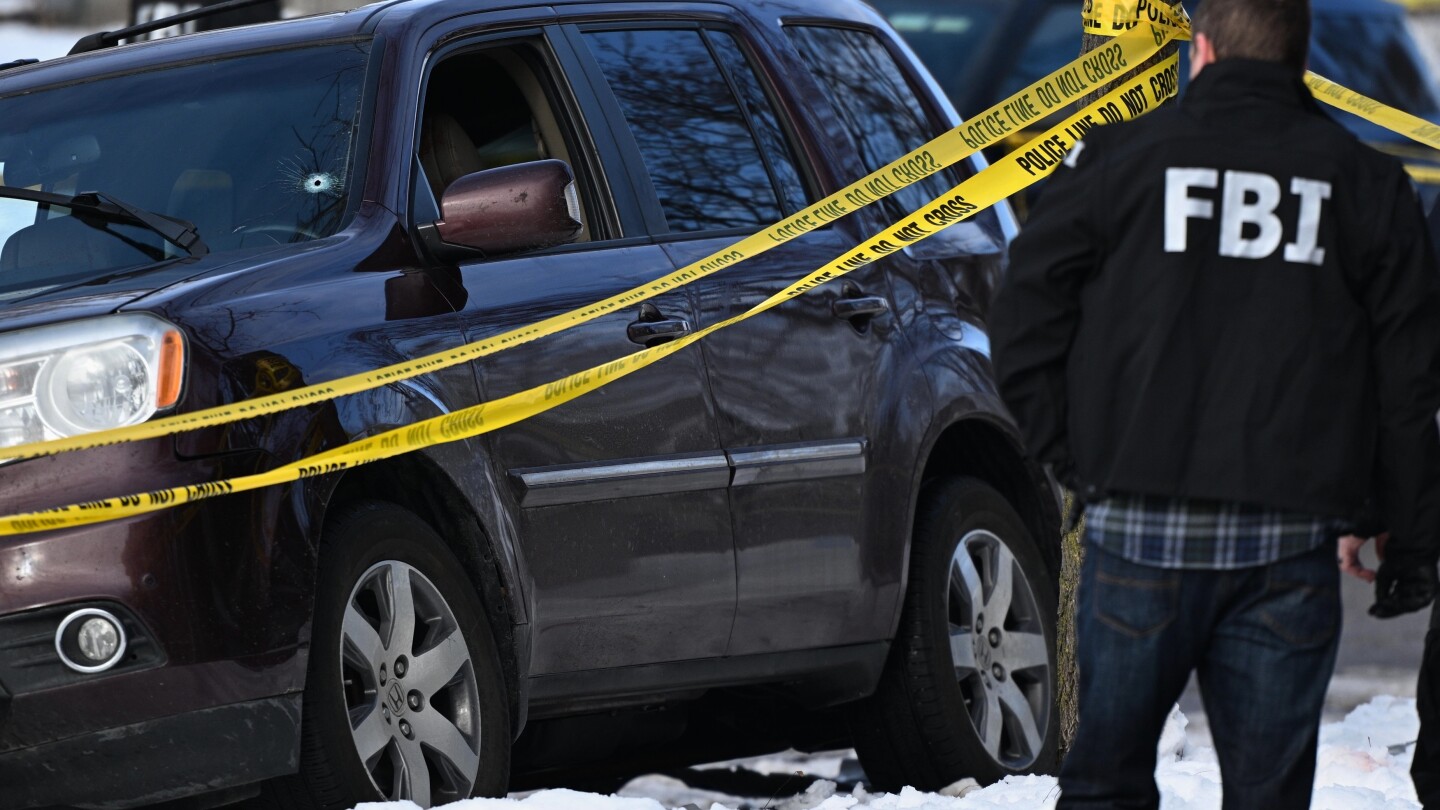
Whether the ICE officer faces criminal charges remains uncertain as multiple investigations proceed, including one by the FBI. Federal officers enjoy substantial legal protections when acting officially, with the Justice Department strongly opposing state attempts to prosecute federal agents. Last year, Deputy Attorney General Todd Blanche stated that arresting federal officers performing their duties would be “illegal and futile,” citing constitutional protections.
Nevertheless, these protections are not absolute. The Hennepin County Attorney’s Office has affirmed its jurisdiction while acknowledging that charging decisions will follow the completion of ongoing investigations. “The bottom line is yes, we have jurisdiction,” said spokesperson Daniel Borgertpoepping.
As these investigations unfold, the Minneapolis shooting continues to highlight tensions between federal immigration enforcement actions and local communities, while raising critical questions about the appropriate use of lethal force in encounters with moving vehicles.
Fact Checker
Verify the accuracy of this article using The Disinformation Commission analysis and real-time sources.

9 Comments
This is a complex and troubling incident that highlights the ongoing debates around police use of force, especially in volatile situations involving vehicles. It’s critical that law enforcement policies and training emphasize de-escalation and proportionality to minimize harm to all parties involved.
Agreed. Transparency and thorough investigations are essential to rebuild public trust and ensure accountability for any unjustified use of lethal force by authorities.
This is a tragic and complex situation that highlights the ongoing challenges in balancing public safety, civil liberties, and law enforcement accountability. It’s crucial that all parties involved engage in constructive dialogue to find solutions that uphold the rule of law while protecting the sanctity of human life.
This is a concerning development in the ongoing tensions around immigration enforcement. Establishing clear, consistent national standards for when lethal force can be used, especially against civilians in vehicles, should be a priority to uphold public trust and the rule of law.
Well said. Robust oversight and accountability mechanisms are critical to ensure federal agents operate within appropriate bounds and respect local jurisdictions and community concerns.
The fatal shooting of a civilian by a federal agent is a grave matter that warrants a thorough, impartial investigation. Maintaining public confidence in law enforcement requires transparency and a commitment to de-escalation tactics that prioritize the sanctity of human life.
Agreed. Polarizing incidents like this underscore the need for continuous review and refinement of use-of-force policies to prevent unnecessary loss of life and promote greater trust between authorities and the communities they serve.
The video footage appears to raise serious questions about whether the agent’s actions were truly necessary and justified to prevent an imminent threat. Rigorous scrutiny of the incident and its policies is warranted to prevent further tragedies.
Absolutely. Maintaining the integrity of use-of-force protocols is crucial, especially for federal agencies operating in local communities. Striking the right balance between public safety and civil liberties is an ongoing challenge.