


Listen to the article
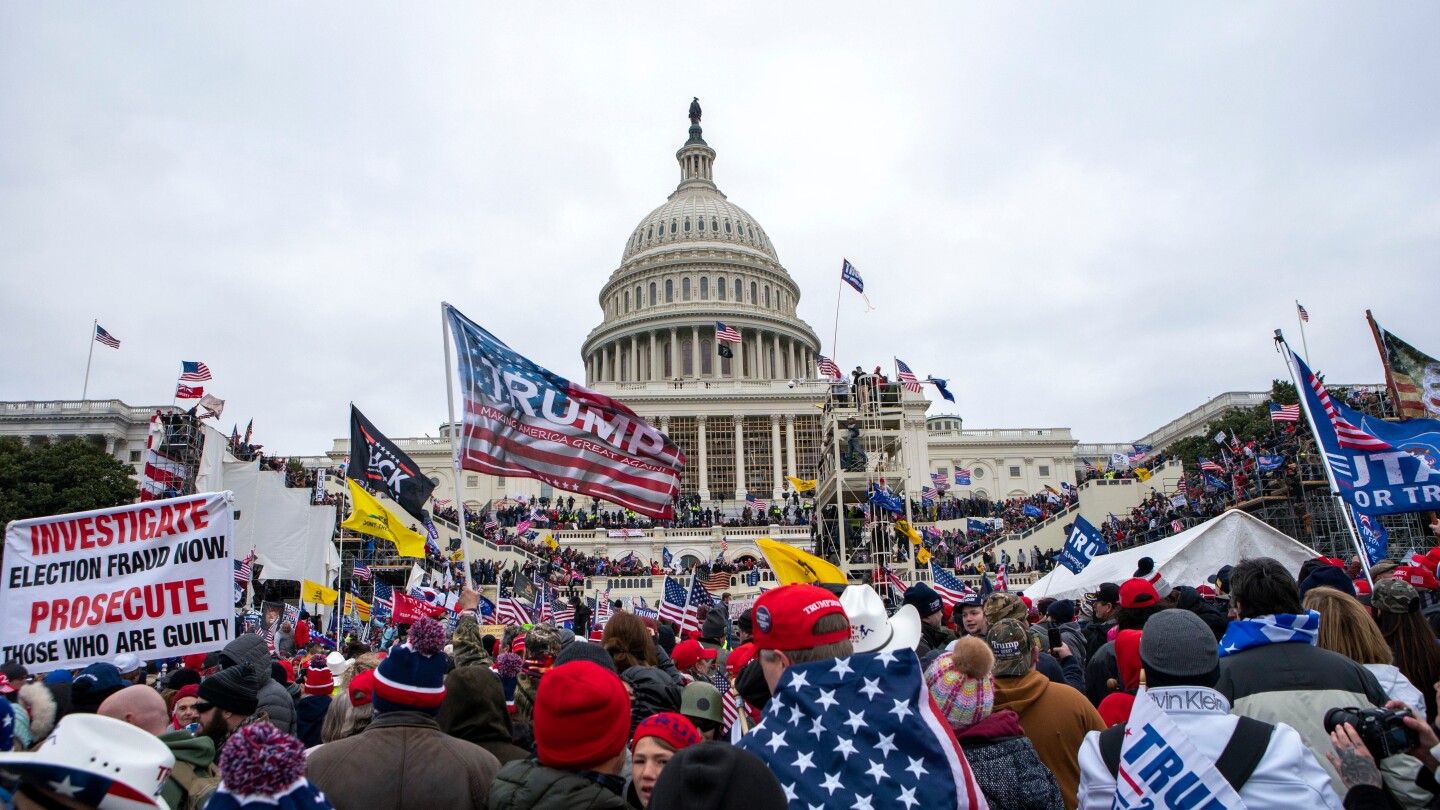
As January 6 Capitol Riot Marks Five Years, Michigan Teachers Connect Past to Present
Ask any history teacher in Michigan how their lessons could be better and they will tell you that they need to incorporate more current events into the curriculum, according to East Kentwood High School history teacher Matt Vreisman.
State standards require social studies teachers to cover pre-Columbian history to the present, making the integration of modern historical events like the January 6, 2021 Capitol riot a significant challenge, explains Whitehall High School history teacher Brian Milliron.
Despite these challenges, educators like Vriesman and Milliron have found creative ways to incorporate the insurrection into their advanced placement history courses. Rather than treating it as an isolated event, they weave it into broader historical contexts about the American Revolution, the establishment of the Constitution, and the contentious presidential election of 1800.
The election of 1800 provides a particularly powerful teaching moment. When John Adams, the nation’s second president and a Federalist, lost to Thomas Jefferson, a Democratic-Republican, it marked America’s first exchange of presidential power between rival political parties. This peaceful transition established a crucial precedent that had remained unbroken until the aftermath of the 2020 election.
“By connecting the present-day event that kids literally saw to the stuff in their curriculum, it helps them understand why we have a peaceful transfer of power and the negative effects when we don’t,” Milliron explained.
Vriesman, who was named the 2023 National History Teacher of the Year, employs a multi-faceted approach to teaching about January 6. He begins by assessing students’ existing knowledge, shows them a PBS documentary about the events, discusses historical examples of failed democracies, and asks students to reflect on why peaceful transitions are essential to democratic systems.
“Connecting historical content to current events gives students authentic practice evaluating evidence, recognizing different viewpoints, and disagreeing respectfully about the most relevant issues of today,” said Vriesman. “Our goal as social studies is to create informed citizens who are ready to engage in matters of substance. And current events hook students so much more.”
Michigan’s curriculum standards, updated in 2019-20, have become less prescriptive about specific topics teachers must cover. This flexibility allows many history and government teachers to incorporate contemporary events like January 6 into their lessons, according to Nick Orlowski, executive director of the Michigan Council for History Education. However, the broad scope of required historical coverage still presents challenges for educators.
The American Historical Association recently published a report examining how politics influences history instruction. “It showed that teachers are teaching from a neutral stance,” Orlowski noted, adding that many educators build inquiry into their lessons by presenting students with historical questions and guiding them to gather sources and reach their own conclusions. “They are not bringing their own politics into the classroom.”
To support fellow educators in this work, Vriesman launched a nonprofit called Empowering Histories in November. The organization provides free, inquiry-based history lessons to teachers nationwide, addressing a growing concern about political pressures in history education.
This support comes at a critical time. Vriesman points out that long-settled scholarship about how race, racism, and slavery shaped American institutions is increasingly being reframed as “opinions” or “one side of the story.” He notes that 20 states have passed laws restricting classroom discussions of race or history, and many teachers report modifying their lessons due to political pressures.
“Historians and the public are not having the same conversation,” said Vriesman. “Within the academic field, certain truths about the past are not up for debate. But in many communities, those same truths are framed as controversial. That disconnect has real consequences in classrooms. It leaves teachers without support, and students without the tools they need to analyze evidence, evaluate claims, and make informed contributions to our democracy.”
As the January 6 Capitol riot reaches its five-year anniversary, these Michigan educators demonstrate how connecting historical precedents to contemporary events can deepen student understanding and foster the critical thinking skills essential for informed citizenship.
Fact Checker
Verify the accuracy of this article using The Disinformation Commission analysis and real-time sources.

10 Comments
Teaching about the Capitol riot within a broader historical framework is a thoughtful approach. It allows students to critically analyze the event rather than just memorizing facts.
Absolutely. Weaving it into lessons on the Constitution and pivotal elections shows how current issues are rooted in longstanding debates about the nature of American democracy.
Connecting the Capitol riot to foundational moments like the 1800 election shows how political conflicts have long been part of the American experience. It’s a thoughtful way to provide historical context.
Absolutely. Examining these events through a broader lens helps students develop a more nuanced understanding of the dynamics that have shaped US democracy over time.
The decision to weave the Capitol riot into history lessons reflects an understanding that students need to grapple with contemporary issues, not just memorize textbook narratives.
Incorporating recent events like the Capitol riot into history lessons is an important way to connect the past to the present. It helps students understand how democracy has evolved and the ongoing challenges it faces.
Agreed. Examining historical precedents like the contentious election of 1800 provides useful context for understanding modern political divisions and the peaceful transfer of power.
I’m curious to learn more about how teachers are approaching this sensitive topic. Balancing objectivity and relevance must be challenging, but it’s important students understand these events in historical perspective.
Integrating the Capitol riot into the curriculum is a smart move. It demonstrates the ongoing importance of civic education and helps students make connections between past and present.
Agreed. Examining events like this through the lens of earlier pivotal elections reinforces how democracy is an evolving, sometimes contentious process.