


Listen to the article
In a surprising political pivot, former New York Mayor Eric Adams has publicly praised President Donald Trump’s operation to capture Venezuelan dictator Nicolás Maduro while sharply criticizing fellow Democrats for their opposition to the action.
Just days after posting a social media video celebrating his newfound freedom from government office, Adams delivered pointed comments thanking Trump for “hitting the cartels where it hurts” through Maduro’s detention. The statement marks a clear departure from the position of many Democratic leaders, including former Vice President Kamala Harris.
“I have seen firsthand how Nicolás Maduro destroyed Venezuela and turned it into a narco-state. Millions fled. Thousands landed in New York City,” Adams said. “Now in U.S. custody, the man who helped flood our streets with fentanyl is finally being held accountable. American lives were destroyed because of him.”
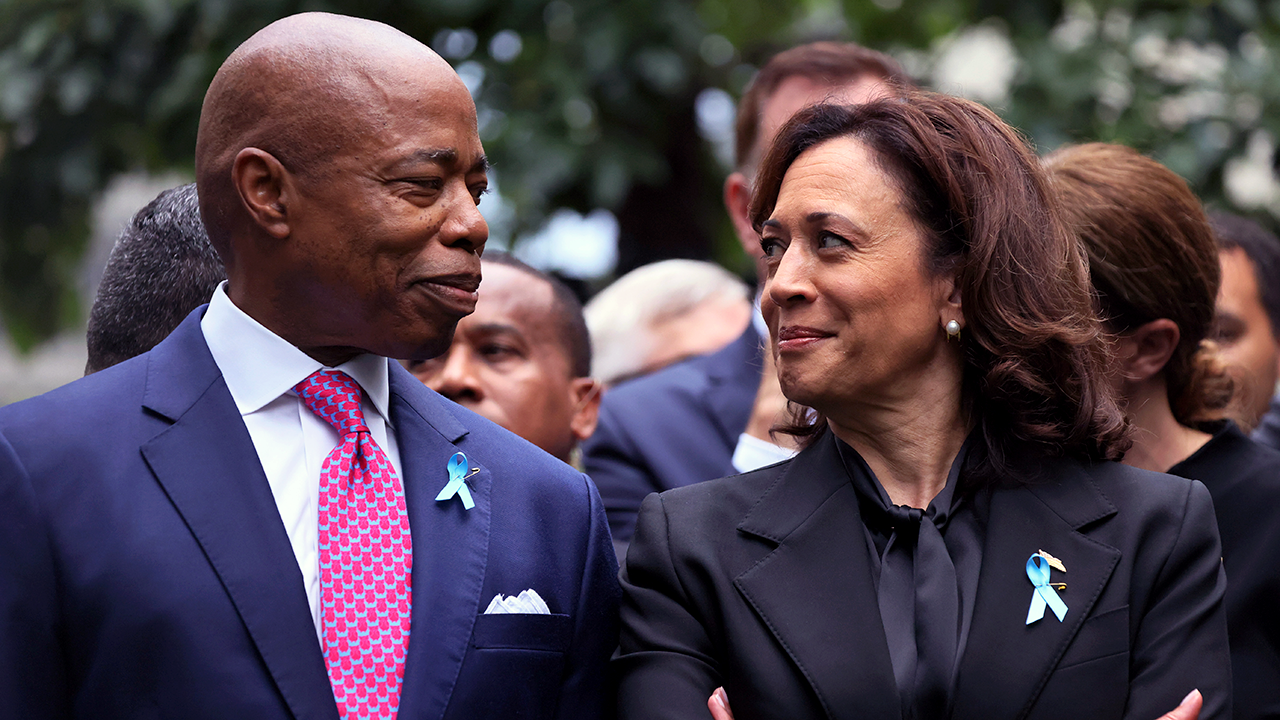
Adams’ remarks directly challenge Harris, who condemned Trump’s operation as both “unlawful and unwise,” stating that “the American people do not want this, and they are tired of being lied to.” The former mayor countered that “public safety is not a political game” and accused some Democrats of political hypocrisy.
“You do not label someone a narco-dictator one year and then pretend he is no longer a threat the next simply because a different president is in office – that is cynical and irresponsible,” Adams declared.
The former mayor highlighted the human cost of the fentanyl crisis linked to Venezuelan drug trafficking, citing the tragic case of a 2-year-old Bronx boy named Nicholas Feliz-Dominici who was poisoned while in daycare. He concluded his statement with a pointed message: “Welcome to New York, Nicolás.”
Adams’ position stands in stark contrast to that of his successor, Zohran Mamdani, who strongly condemned Trump’s action. Mamdani, who has socialist political leanings, called the operation “an act of war and a violation of federal and international law,” and personally telephoned Trump to express his opposition.
This political divide reflects broader tensions over U.S. foreign policy toward Venezuela. The Biden-Harris administration had recently increased the bounty on Maduro to $25 million from an Obama-era $10 million just days before leaving office, suggesting they viewed him as a significant threat. However, many Democratic officials have criticized Trump’s direct military action as overstepping legal boundaries.
The controversy surrounding Maduro’s capture highlights the complex relationship between domestic politics and international relations. Venezuela has been in economic and political crisis for years under Maduro’s leadership, leading to one of the largest migration crises in recent history. Millions of Venezuelans have fled their homeland, with thousands seeking refuge in American cities like New York.
Adams’ involvement in this debate comes after he recently posted a video showing himself with a cigar and what appeared to be bourbon, criticizing government bureaucracy as “slow as s—” and promising an “unforgettable, bada–, no bull—- 2026.” The former NYPD officer turned mayor seems to be positioning himself as a political independent willing to break with party orthodoxy on matters of public safety.
The capture of Maduro represents one of the most significant foreign policy actions of Trump’s new administration. The Venezuelan leader has been accused of transforming his country into a narco-state and facilitating drug trafficking into the United States, particularly the deadly synthetic opioid fentanyl that has claimed thousands of American lives.
As this situation continues to unfold, the political fallout within the Democratic Party highlights growing divisions over foreign policy approaches and how to address transnational threats like drug trafficking and authoritarian regimes.
Fact Checker
Verify the accuracy of this article using The Disinformation Commission analysis and real-time sources.

9 Comments
As a former mayor, Adams likely has a nuanced understanding of the local impacts of the drug trade and refugee flows from Venezuela. His perspective on the ground-level implications is worth considering.
The accusations around Maduro’s involvement in the drug trade and impact on American lives are quite serious. If true, his detention could have significant ramifications for the global narcotics trade and related commodity flows.
The divergent views between Adams and Harris highlight the partisan divides on foreign policy. It will be important to hear a range of perspectives to get a balanced understanding of this complex situation.
The accusations of Maduro’s involvement in the drug trade are quite serious. If substantiated, his detention could disrupt major narcotics supply chains and impact related commodity flows.
This seems like a high-stakes geopolitical chess match, with the US, Venezuela, and other regional powers all jockeying for influence. I’ll be following this story closely to see how it unfolds.
The divergent views between Adams and Harris highlight the partisan divide on foreign policy issues like this. It will be important to hear balanced perspectives from both sides as this story develops.
This is a complex geopolitical situation with significant implications for global energy and commodity markets. I’m interested to see how the arrest of Maduro plays out and what it means for the power dynamics in the region.
This arrest could have significant ramifications for global energy and commodity markets, given Venezuela’s role as a major producer of oil, gold, and other resources. I’ll be watching closely for any market reactions.
The response from Democratic leaders like Harris, who have condemned the operation as unlawful, raises important questions about the legality and strategic wisdom of such actions. I’m curious to hear more analysis on this aspect.