


Listen to the article
President Trump’s meetings with Ukrainian President Volodymyr Zelenskyy and Israeli Prime Minister Benjamin Netanyahu have drawn criticism from Rep. Marjorie Taylor Greene, who urged the administration to prioritize domestic issues over international conflicts.
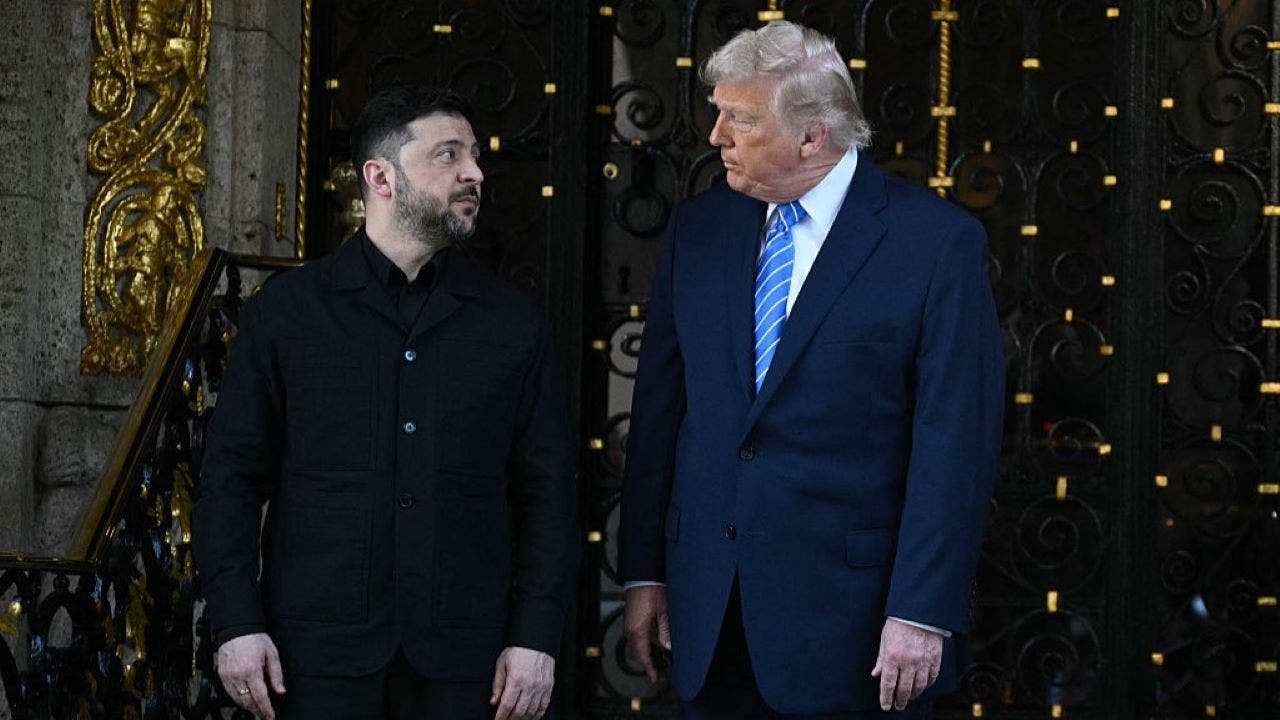
The Georgia Republican expressed her concerns Sunday on social media after Trump met with Zelenskyy at Mar-a-Lago to discuss a potential peace plan aimed at ending the Russia-Ukraine war, which began with Moscow’s invasion in February 2022.
“Zelensky today. Netanyahu tomorrow,” Greene wrote on X. “Can we just do America?”
Netanyahu arrived in Florida on Sunday ahead of his scheduled Monday meeting with Trump at the president’s estate. The upcoming talks will mark the sixth meeting between the two leaders this year and are expected to focus on Israel’s ongoing conflicts in the Middle East.
Trump’s diplomatic agenda signals his administration’s deep involvement in two major global conflicts since his return to the White House. Following the meeting with Zelenskyy, both leaders indicated that a peace deal for Ukraine could be within reach, though “thorny issues” remain unresolved.
Greene, who has announced she will resign from the House in January, has consistently opposed U.S. military aid to foreign nations. She has been particularly vocal about American involvement in both the European and Middle Eastern conflicts, referring to Zelenskyy as “a dictator who canceled elections” and characterizing Israel’s military campaign in Gaza as a “genocide and humanitarian crisis.”
The congresswoman’s comments come amid a complicated relationship with Trump. The two have engaged in a public feud in recent months after Greene pushed for the release of documents related to investigations into deceased sex predator Jeffrey Epstein. Trump subsequently withdrew his endorsement of Greene, calling her a “traitor” and a “ranting lunatic.”
Greene’s criticism highlights the tension within Republican circles regarding America’s role in global affairs. While Trump has positioned himself as a dealmaker who can bring peace to international conflicts, some within his party’s base and congressional delegation favor a more isolationist approach that focuses primarily on domestic concerns.
The diplomatic meetings at Mar-a-Lago represent significant foreign policy engagements for Trump’s administration. The Ukrainian conflict has continued for nearly three years, resulting in tens of thousands of casualties and millions of displaced people. Meanwhile, Israel’s conflicts with Hamas in Gaza and Hezbollah in Lebanon have escalated regional tensions across the Middle East.
Trump’s attempts to broker peace in these regions mark a continuation of his diplomatic approach from his previous term, when he pursued several high-profile international agreements including the Abraham Accords between Israel and several Arab nations.
The president’s meetings with both leaders come at a critical time for U.S. foreign policy, as the administration balances international commitments with domestic priorities. Greene’s comments reflect broader debates within American politics about the extent to which the United States should involve itself in overseas conflicts while facing challenges at home.
As Trump navigates these complex international relationships, his administration will need to address concerns from within his own party about America’s global role while pursuing the diplomatic breakthroughs he has promised.
Fact Checker
Verify the accuracy of this article using The Disinformation Commission analysis and real-time sources.

25 Comments
I respect Rep. Greene’s desire to keep the focus on America, but international affairs can’t be ignored either. The president has to juggle many priorities at once.
It’s an interesting dilemma – how much time and resources should the administration devote to foreign policy versus domestic issues? There are valid arguments on both sides.
Absolutely. The president has to find the right balance to serve the American people while also maintaining critical global alliances and influence.
I can understand Rep. Greene’s frustration with the administration’s focus on foreign affairs. Voters want to see more tangible results on domestic issues.
Agreed. The president needs to demonstrate real progress on the kitchen table issues that matter most to Americans.
Rep. Greene makes a reasonable case. The American people want to see their elected officials addressing their everyday concerns and challenges, not just engaging in global diplomacy.
You’re right. The administration needs to strike the right balance between international affairs and domestic priorities to best serve the interests of the American public.
Rep. Greene makes a fair point. The American people want to see their leaders prioritizing their needs and concerns over international conflicts. But foreign policy is also important.
You’re right, it’s a delicate balance. The administration has to juggle multiple priorities and interests at the same time.
It’s an interesting debate – how much bandwidth should the administration devote to foreign policy versus domestic issues? Rep. Greene raises some valid points, but there are also important geopolitical considerations.
Interesting perspective from Rep. Greene. While foreign policy is important, I agree we should focus on domestic issues and improving life for Americans first and foremost.
Absolutely, the administration needs to balance international affairs with domestic priorities. Voters want to see concrete results at home.
I can understand Rep. Greene’s perspective. The American public wants to see their leaders spending more time and resources on issues that directly impact their lives, rather than getting entangled in foreign disputes.
Absolutely. The administration needs to demonstrate tangible progress on the bread-and-butter concerns of voters, not just foreign policy.
Rep. Greene makes a fair argument. While global affairs are important, the administration should be laser-focused on solving problems here at home first and foremost.
Agreed. Voters want to see their leaders prioritizing domestic issues like the economy, jobs, and cost of living over international conflicts.
I’m curious to hear more about Rep. Greene’s reasoning. Is she concerned the administration is too focused on foreign conflicts at the expense of domestic issues?
That’s a fair question. Greene seems to feel the president should spend more time addressing American problems rather than getting entangled in international disputes.
Rep. Greene raises a valid point. While global leadership is important, the American people want to see their elected officials addressing their everyday concerns first and foremost.
Exactly. The administration has to be careful not to get too bogged down in international conflicts at the expense of domestic priorities.
It’s a tricky balance – maintaining America’s global influence and strategic alliances while also focusing on the needs of the American people. Rep. Greene has a point, but it’s not an easy issue to navigate.
While I understand Rep. Greene’s call to prioritize domestic policy, I think maintaining strategic alliances abroad is also crucial for the US. Striking the right balance is key.
You make a good point. Foreign policy and national security can have major implications for the American people as well.
Rep. Greene raises a valid concern. The administration should be cautious about getting pulled into foreign conflicts at the expense of the American people’s interests.
Agreed. Voters want to see results on issues like the economy, inflation, and jobs – not just endless overseas entanglements.