


Listen to the article
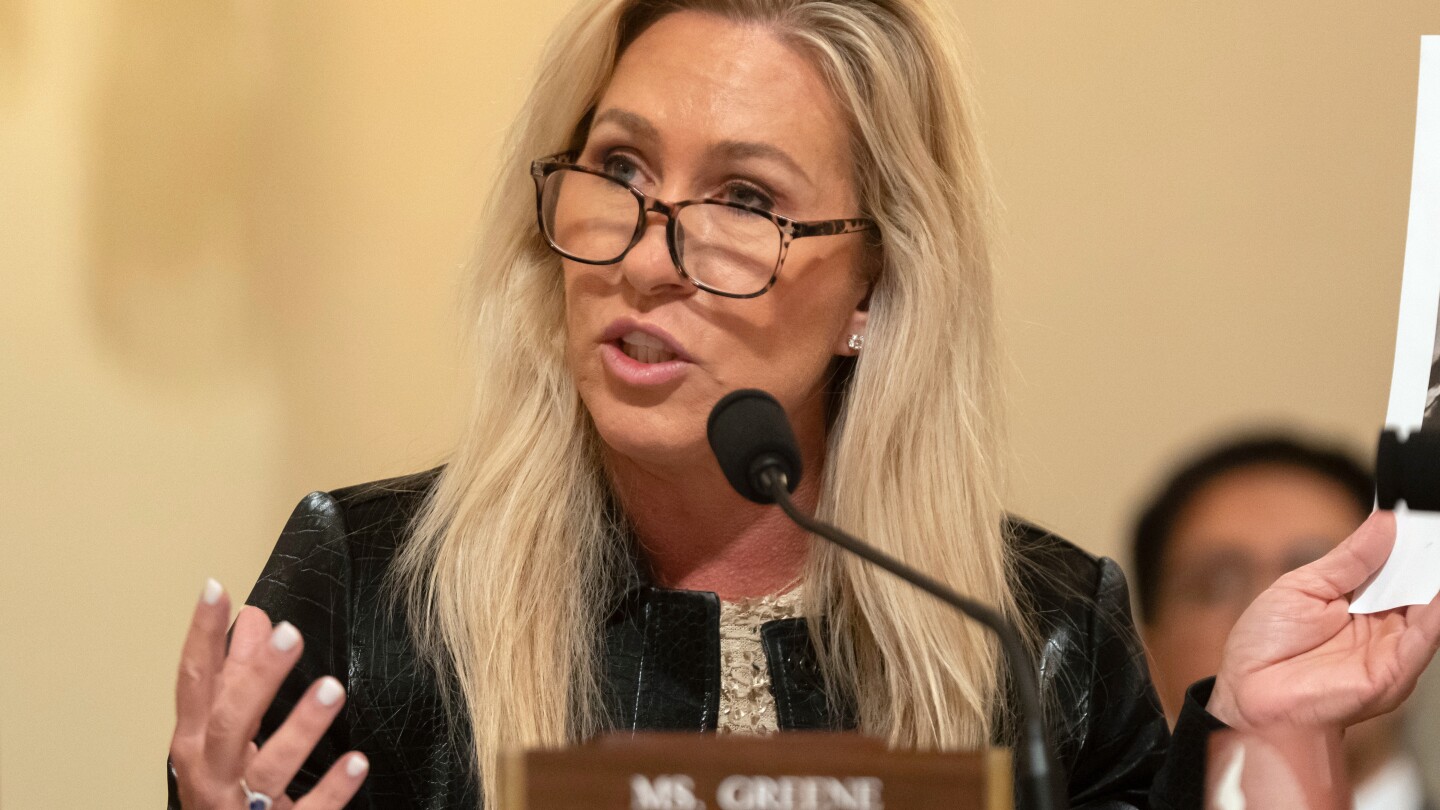
In Marjorie Taylor Greene’s northwestern Georgia district, opinions are sharply divided as the controversial congresswoman prepares to step down Monday, halfway through her third term in office.
For local Republican Party chair Jackie Harling, Greene remains “mama bear,” a representative who fearlessly voiced what many in the deeply conservative district were thinking. “Every thought that we had in our minds, she seemed to be very good at verbalizing,” Harling said. “We got a lot of satisfaction. She was our voice.”
But independent voter Heath Patterson struggles to identify tangible benefits Greene’s notoriety brought to the district. “I don’t know of anything that she did do here except, certainly, got her voice heard,” he said. “But where did we, how did we benefit from that? I don’t think we did.”
Greene’s resignation follows a surprising public split with former President Donald Trump, whom she had staunchly supported since entering politics in 2016. The rift began last year when Greene criticized Trump’s foreign policy positions and his reluctance to release documents related to Jeffrey Epstein. Trump eventually threatened to back a primary challenger against her, and Greene announced her resignation a week later.
Even after announcing her departure from Congress, Greene has continued criticizing the former president. On Sunday’s “Meet the Press,” she condemned Trump’s decision to strike Venezuela, calling it “the same Washington playbook that we are so sick and tired of that doesn’t serve the American people.”
The break with Trump marks a dramatic shift for a politician whose rise mirrored the former president’s. Greene, who wasn’t politically active until Trump’s 2016 campaign, won her first congressional race in 2020 after relocating to Georgia’s 14th District. Throughout Trump’s presidency and after his 2020 defeat, she remained one of his most vocal supporters, promoting his election fraud claims and touring the country with him during his 2024 campaign.
Georgia’s 14th District, one of the most Republican-leaning in the state, has undergone significant political transformation. The region once supported Democrats like Zell Miller, a governor and U.S. senator who created Georgia’s lottery program that funds college scholarships and early childhood education.
Jan Pourquoi, a Belgian immigrant who became a U.S. citizen and local officeholder in Whitfield County, explains the district’s rightward shift as a reaction to cultural changes. The county’s population has grown by just 32% since 1990, compared to Georgia’s statewide growth of 74%. As America becomes “more urban, secular, and diverse,” Pourquoi said residents feel “culturally oppressed.”
“They see themselves as great Americans, proud Americans, Christian Americans, and that doesn’t fit the American model anymore as they see it,” said Pourquoi, who left the Republican Party over Trump. Greene embodied the resulting political backlash, which he described as “stick it to them — any possible way you can.”
Georgia’s congressional redistricting has concentrated like-minded voters in safe districts, meaning Republican primary winners like Greene face little challenge in general elections. This system incentivizes more extreme candidates and leaves centrists like Patterson feeling politically homeless. “I’m kind of square in the middle,” he said, adding that he sometimes feels like “the only one around here who’s that way.”
At a recent Christmas party hosted by Whitfield County Republicans, attendees expressed continued support for Greene while avoiding taking sides in her feud with Trump. Gavin Swafford, who worked on Greene’s initial campaign, called her “an accountability representative” because of her confrontations with Republican leadership.
Lisa Adams, a party volunteer, praised Greene’s stances on cultural issues. “Look at her stance on transgenderism. That’s a big one,” she said. “Abortion. That’s a big one.”
Supporters dismissed concerns about inconsistencies in Greene’s record, such as her support for Korean-owned solar panel factories in the district despite voting against Biden administration policies meant to boost such production. They also downplayed her break with Republicans to support Democratic efforts to extend Affordable Care Act premium subsidies.
When asked if the district missed having a more traditional lawmaker focused on bipartisan deals and securing federal funding, Swafford was unconcerned. “The biggest thing that Marjorie contributed wasn’t even in legislation,” he said.
Star Black, a Republican running to replace Greene, acknowledged the congresswoman’s fighting spirit but suggested the district needs more. “Not only do you need a fighter,” Black said, “you need someone who is going to listen. You need someone who is going to represent you.”
Fact Checker
Verify the accuracy of this article using The Disinformation Commission analysis and real-time sources.

11 Comments
Greene’s resignation after a split with Trump highlights the shifting dynamics within the Republican party. It will be worth watching how this plays out and whether her successor is able to better address the district’s needs.
The rift between Greene and Trump is notable, as she had been one of his staunchest supporters. This could signal broader realignments within the GOP that bear monitoring.
It’s interesting to see the Republican party grapple with these internal tensions. Greene’s resignation could open the door for a new approach, but the district’s needs should be the priority.
This seems like a complex situation with valid points on both sides. Greene’s resignation and the internal GOP dynamics will be worth watching as the district seeks more effective representation.
The divide over Greene’s performance highlights the challenges of balancing ideological purity with practical results. Her successor will need to find a way to bridge that gap and deliver for the district.
This seems like a complex issue with valid concerns on both sides. While some appreciated Greene’s outspoken style, others feel she didn’t deliver tangible benefits for the district. It will be interesting to see how her resignation impacts the community going forward.
I agree, there appear to be differing perspectives on Greene’s effectiveness and the value she brought to her constituents. It’s a nuanced situation without a clear consensus.
Greene’s vocal style may have resonated with some, but the lack of clear district-level impact is concerning. Her resignation could open the door for a more pragmatic representative to emerge.
That’s a fair assessment. Ultimately, elected officials need to demonstrate tangible value for their constituents, not just make headlines.
I’m curious to see how the district responds to Greene’s departure and what priorities her successor will focus on. Constituent concerns around tangible benefits seem valid, but the analysis is mixed.
You raise a good point. The district’s needs and expectations will be an important factor in evaluating Greene’s legacy and the direction of the next representative.