


Listen to the article
Mamdani Launches “Office of Mass Engagement” While Distancing Administration from Adams Era
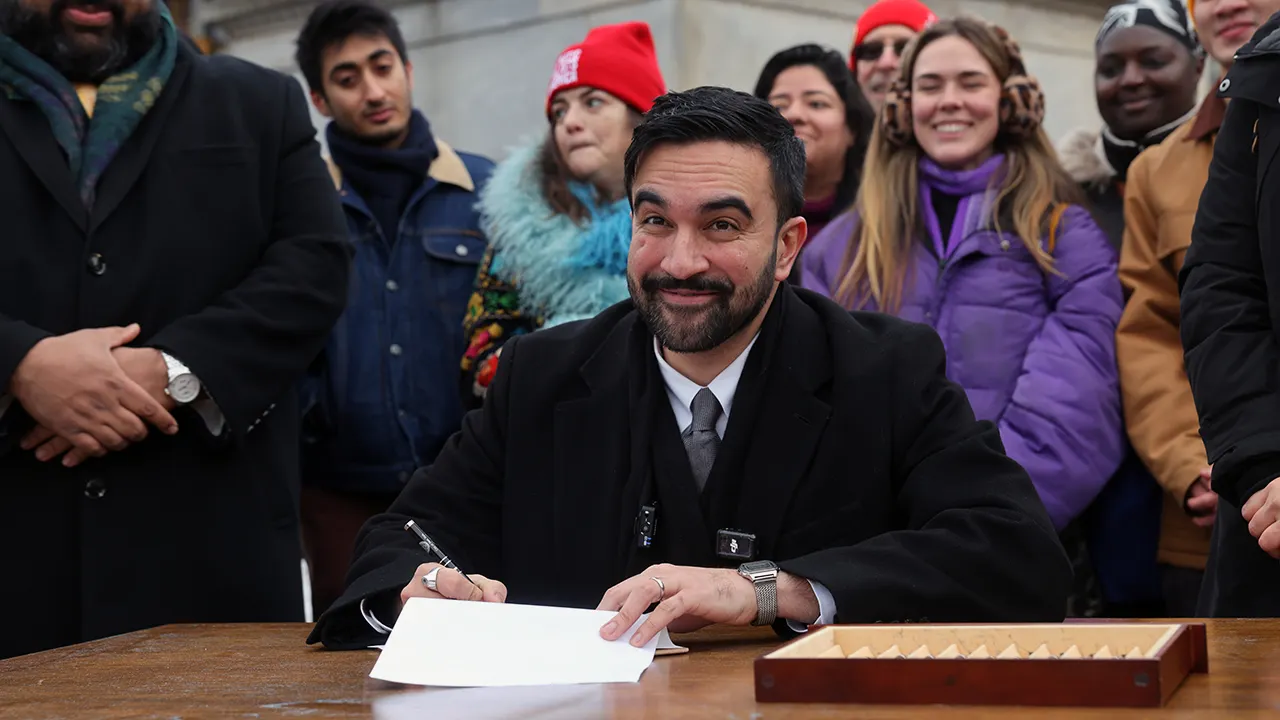
New York City Mayor Zohran Mamdani announced Friday that his first executive order as mayor was designed to mark a clear separation from the administration of former Mayor Eric Adams, while simultaneously establishing a new City Hall office aimed at transforming public involvement in governance.
During a question-and-answer session focused on what he called the city’s revived “Office of Mass Engagement,” Mamdani explained the significance of his initial executive action.
“In the first executive order, you, as the new mayor of a city, have to sign a continuation of all prior executive orders or a revocation or an amendment of all of them,” Mamdani said. His administration chose to continue only those executive orders issued before Adams’ 2024 indictment on federal corruption charges, which were later dropped by the Justice Department and dismissed by a federal judge in April.
The decision was symbolic of a fresh start for city governance. “What we did was to sign an executive order that continued every executive order that predated the moment when our former mayor was indicted,” Mamdani explained, describing it as “a moment when many New Yorkers lost even more faith in New York City politics and the ability of city government to actually prioritize the needs of the public, as opposed to the needs of the person.”
The executive order effectively revoked or required reissuance of all mayoral directives issued after September 26, 2024, giving the Mamdani administration control over which policies would carry forward into the new era.
Beyond this political reset, Mamdani outlined his vision for the newly established Office of Mass Engagement, which will be led by Tascha Van Auken, an experienced organizer whose background spans national Democratic campaigns and New York City’s Democratic Socialists of America.
“Since President Obama’s first campaign in 2008 to her leadership in New York City DSA, Tascha has spent more than a decade organizing at scale,” Mamdani said. He credited Van Auken with building the volunteer operation behind his mayoral campaign, mobilizing more than 100,000 volunteers who knocked on over 3 million doors across the city.
The new office aims to consolidate and enhance civic engagement efforts that have previously been scattered throughout city government.
“The work of civic engagement has existed before today. It has been a part of city government,” Mamdani acknowledged. “However, it has often been siloed in different parts of city government infrastructure, sometimes under different offices, sometimes through different initiatives.”
A key goal of the Office of Mass Engagement is to fundamentally change when public input occurs in the policy process. “Oftentimes, the outreach and engagement of city government is done with an intention to justify a decision that’s already been taken,” Mamdani said. “The point of this office is, however, to make decisions with a large part being what the public actually thinks about those decisions.”
When questioned about the budget and staffing for the new initiative, Mamdani indicated that the office would initially draw from existing city employees, with details about future expansion to be shared later.
Mamdani dismissed suggestions that the office was politically motivated toward his reelection, insisting it was focused on “delivering for New Yorkers today, delivering for New Yorkers every single day.” He emphasized that the current moment represents “an opportunity where New Yorkers are allowing themselves to believe in the possibility of city government once again, that is not a belief that will sustain itself in the absence of action.”
The mayor also highlighted another appointment in line with his civic engagement philosophy, naming Ali Najimy to lead recruitment and outreach for the Mayor’s Advisory Committee on the Judiciary. This move aims to democratize the judicial selection process, ensuring candidates are evaluated “on the merits of their experience, their qualifications, their commitment to public service,” rather than connections.
Looking ahead, Mamdani set clear expectations for how the Office of Mass Engagement should be evaluated. “We should not be measured on the number of meetings we hold, or the number of surveys that are filled out,” he said. “We should, in fact, be measured by the way in which we incorporate that feedback into the decisions that we make.”
This initiative represents one of the first concrete policy moves by the newly inaugurated mayor, who has promised to bring a more inclusive and responsive approach to governing New York City.
Fact Checker
Verify the accuracy of this article using The Disinformation Commission analysis and real-time sources.

14 Comments
Reviving civic engagement in NYC is a worthy goal, but the devil will be in the details. I hope Mamdani can create an office that is truly empowered to give citizens a meaningful voice in local government.
Absolutely. Empowering the public and increasing transparency are critical for restoring faith in the system. Let’s see if the new office can live up to its ambitious mandate.
Distancing from the previous administration’s controversies is a smart move, but the real test will be how effectively the new office functions. Time will tell if this leads to meaningful change.
Well said. Symbolic gestures are one thing, but tangible results in terms of increased civic engagement will be the true measure of success.
Interesting move by Mayor Mamdani to establish an Office of Mass Engagement. Transparency and public involvement are crucial for restoring trust in NYC governance after the Adams scandal.
Agreed. A ‘clean slate’ approach could be what’s needed to rebuild faith in the system. We’ll have to see how the new office works in practice.
I’m curious to learn more about the specifics of this new office and how it will transform public participation. Engaging directly with citizens is an important step for any administration.
Absolutely. Transparency and accountability should be top priorities. Mamdani will need to outline clear goals and processes for the Office of Mass Engagement.
A ‘clean slate’ approach could be promising, but we’ve seen symbolic gestures before that don’t necessarily lead to substantive change. I’ll be watching closely to see if this translates into real improvements.
Agreed. Actions will speak louder than words when it comes to rebuilding public trust. Mamdani will need to deliver tangible results to prove the Office of Mass Engagement is more than just rhetoric.
I’m hopeful that the Office of Mass Engagement can help restore trust and empower New Yorkers to have a greater voice in local governance. Rebuilding from the Adams era won’t be easy, but this seems like a positive first step.
Agreed. Mamdani is taking an important step, but the real challenge will be sustaining momentum and delivering concrete improvements over time.
Establishing a new office focused on public engagement is an interesting move, but I wonder how it will be resourced and structured to be truly effective. The details will be crucial.
Good point. The office’s budget, staffing, and specific responsibilities will determine its ability to meaningfully increase citizen participation.