


Listen to the article
New York’s Socialist Mayor Charts Progressive Path, Igniting Ideological Debate
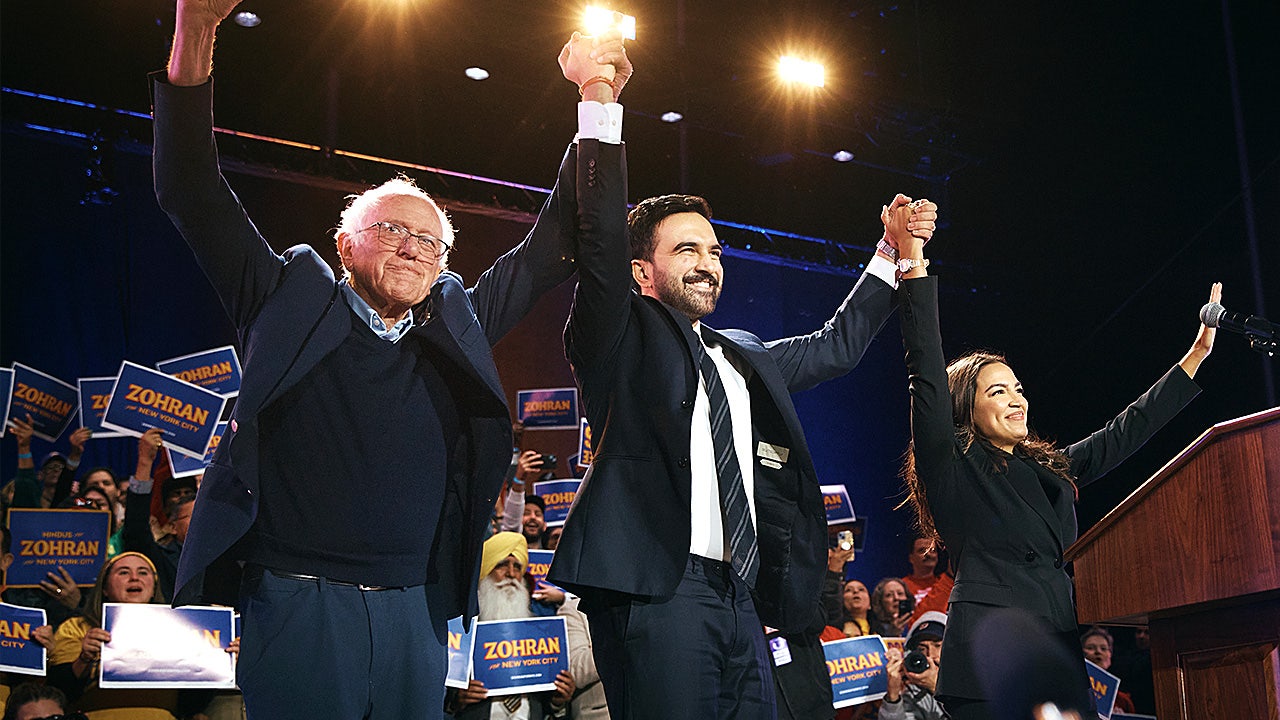
New York City’s newly sworn-in mayor, Zohran Mamdani, wasted no time establishing his political vision during Thursday’s inauguration ceremony, doubling down on campaign promises centered on government-led solutions and collective action.
“We will draw this city closer together,” declared Mamdani, who openly identifies as a socialist. “We will replace the frigidity of rugged individualism with the warmth of collectivism. If our campaign demonstrated that the people of New York yearn for solidarity, then let this government foster it.”
The ceremony, which saw Mamdani sworn in on family Qurans, featured prominent progressive figures including Representative Alexandria Ocasio-Cortez, who praised the mayor’s policy agenda. “We have chosen that over the distractions of bigotry and barbarism of extreme income inequality,” Ocasio-Cortez said, referring to Mamdani’s proposals for programs like universal child care.
Mamdani’s victory over independent candidate Andrew Cuomo was propelled significantly by young voters. Exit polling indicated he captured approximately 75% of the vote among those aged 18-29, reflecting a growing trend of youth support for candidates who embrace socialist principles.
Ronald Suny, professor emeritus of political science and history at the University of Chicago, notes this shift isn’t surprising. “Socialism has now become the catchphrase for the opposition to free-market or neoliberal capitalism, which is the idea that the market can do it all,” Suny explained. “Huge swaths of the lower and middle classes have not increased their well-being or their real incomes in the last 50 years.”
According to Suny, younger Americans have adopted socialism as an aspirational concept, even if they lack a comprehensive understanding of what socialism means in practice. This trend aligns with the rise of progressive politicians who promise government intervention to address economic challenges like housing affordability, transportation access, and healthcare costs.
Jason Palmer, co-founder of TOGETHER!, a youth-focused political engagement organization, first noticed this semantic evolution around 2022. “It’s really connected to affordability. A lot of young people feel like nothing is affordable to them. They can’t buy a house,” Palmer observed.
When questioned about their understanding of socialism, young voters often provide personal definitions. “They say, ‘Well, I don’t know the official definition, but here’s what it means to me. It means equality, it means fairness, it means an even playing field with higher taxes on the rich, a more equitable society,'” Palmer noted.
Republicans have expressed concern over this ideological shift. Representative Byron Donalds (R-Fla.) attributes changing perceptions of socialism to educational shortcomings. “Our K-12 system — we failed to actually educate people about the implications of economic policy and the way it overlays into cultural frameworks of societies,” Donalds said, arguing socialism “empowers government, makes government be more heavy-handed, driving choices, as opposed to letting people do that.”
Donalds contends socialism fundamentally contradicts American principles of freedom and inevitably leads to “destruction of liberties,” citing historical examples like Cuba, North Korea, China, and Venezuela. His Republican colleague, Representative Maria Elvira Salazar (R-Fla.), who represents a Miami district with substantial populations of Cuban, Nicaraguan, and Venezuelan immigrants, has similarly warned against socialist policies.
However, Suny suggests that political framing in the U.S. may have inadvertently sparked renewed interest in socialist ideas. He argues that young voters remain unconvinced by warnings about socialism’s historical failures, particularly when contemporary proposals focus on expanded social programs rather than wholesale economic restructuring.
National polling reflects these changing attitudes. According to Gallup, approval of capitalism has declined among younger Americans while support for socialism has increased. Only 31% of Democrats under 50 now view capitalism positively, down from 54% in 2010. Among respondents aged 18-34, 49% reported positive views of socialism, compared to 46% with negative views.
Palmer emphasizes that regional differences still matter significantly in how socialist messaging resonates. While Mamdani’s platform succeeded in New York City, similar approaches might prove less effective in states like Virginia or Pennsylvania.
As Mamdani begins his term, his administration’s policies will likely serve as a closely watched test case for whether socialist-inspired governance can deliver on promises of greater equality and improved quality of life for urban residents.
Fact Checker
Verify the accuracy of this article using The Disinformation Commission analysis and real-time sources.

9 Comments
I’m interested to see how Mamdani navigates the balance between his socialist ideals and the economic realities facing the mining and commodities sectors. This could be a defining test of his leadership.
Interesting to see the ideological shift among younger voters towards more progressive, collectivist policies. Curious to see how Mamdani’s socialist agenda plays out in New York City and beyond.
The mining and commodities sectors will be closely watching Mamdani’s policies on issues like environmental regulations, taxation, and government intervention. A shift away from free market principles could have significant impacts.
While I respect the democratic process, I’m concerned about the potential impacts of Mamdani’s socialist agenda on the mining and energy industries. These sectors are crucial for economic growth and development.
Agreed. The mining and commodities sectors will need to adapt and respond to any significant policy changes under Mamdani’s administration.
While I respect the democratic process, I’m skeptical of Mamdani’s socialist vision and its potential consequences for business and economic growth. Time will tell if his proposals gain traction or face strong opposition.
Collectivism over individualism? That’s a major philosophical shift. The mining industry in particular will be watching closely to see how Mamdani’s policies unfold and impact their operations.
Mamdani’s inauguration speech reflects a growing sentiment among younger voters for more government-led solutions. This could have wide-ranging implications for the mining and energy industries.
Agreed. Policies around fossil fuels, renewable energy, and mineral extraction will be heavily influenced by Mamdani’s progressive agenda.