


Listen to the article
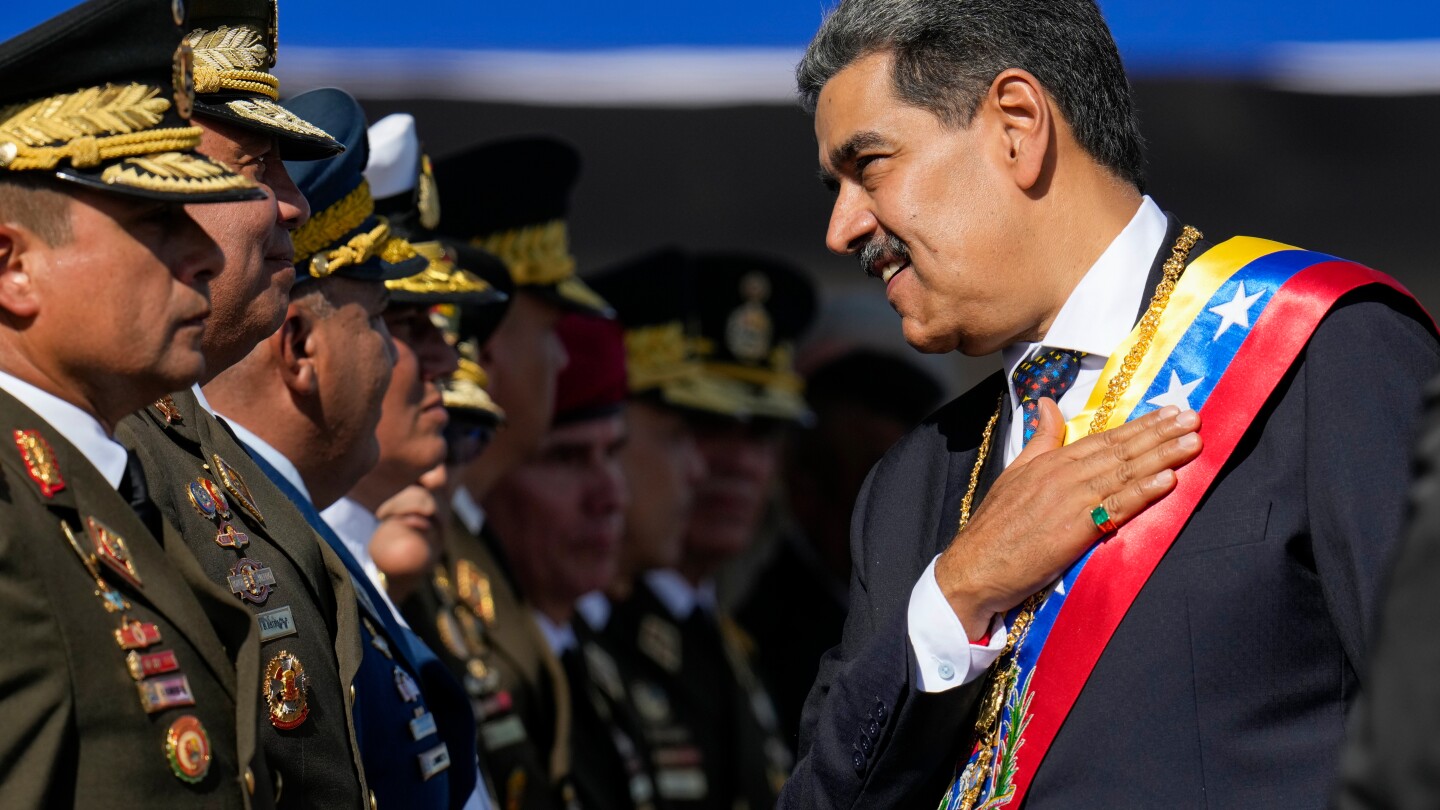
Deposed Venezuelan President Nicolás Maduro is scheduled to make his first appearance in an American courtroom Monday on narco-terrorism charges following his capture by U.S. forces in a dramatic military operation.
Maduro and his wife Cilia Flores are expected to appear at noon before a judge in Manhattan for an initial legal proceeding that marks the beginning of what analysts anticipate will be a protracted legal battle. The couple will be transported from a Brooklyn jail to a courthouse just steps away from where former President Donald Trump was convicted earlier this year of falsifying business records.
As defendants in the U.S. legal system, Maduro and his wife will be afforded the same rights as any other accused person, including the right to trial by jury. However, their case carries exceptional diplomatic and geopolitical implications.
Legal experts expect Maduro’s defense team to challenge the very foundation of the case by arguing he enjoys immunity from prosecution as a sovereign head of state. This defense strategy mirrors that of Panamanian dictator Manuel Noriega, who unsuccessfully made similar arguments after his capture by U.S. forces in 1990. The U.S. position is bolstered by its refusal to recognize Maduro as Venezuela’s legitimate leader, particularly following his disputed 2024 reelection.
Venezuela’s newly installed interim president, Delcy Rodríguez, has demanded Maduro’s immediate return, though she simultaneously signaled openness to cooperation with the Trump administration, inviting “respectful relations” with the United States in a social media statement late Sunday.
Prior to his capture, Maduro and his supporters consistently framed U.S. hostility toward his regime as being motivated by America’s desire to control Venezuela’s vast oil reserves and mineral resources rather than legitimate concerns about narcotics trafficking or human rights abuses.
The operation to seize Maduro occurred Saturday when U.S. forces captured him and his wife at their residence on a military base. While Trump suggested the U.S. would temporarily “run” Venezuela, Secretary of State Marco Rubio clarified Sunday that American involvement would not extend to day-to-day governance beyond enforcing an existing “oil quarantine.”
Trump’s comments aboard Air Force One Sunday indicated potential intentions to extend American influence further in Latin America. He described Colombia’s President Gustavo Petro as “a sick man who likes making cocaine and selling it to the United States,” warning that “he’s not going to be doing it very long.” Trump additionally called on Rodríguez to provide “total access” to Venezuela or face consequences.
A 25-page indictment unsealed Saturday details accusations that Maduro and associates collaborated with drug cartels to facilitate the shipment of thousands of tons of cocaine into the United States. If convicted, they could face life imprisonment. As of Sunday, it remained unclear whether Maduro had secured U.S. legal representation.
Both Maduro and his wife have been subject to U.S. sanctions for years, making it illegal for Americans to accept money from them without securing authorization from the Treasury Department.
The case against Maduro presents some contradictions with previous U.S. intelligence assessments. While the indictment alleges Venezuelan officials worked directly with the Tren de Aragua gang, a U.S. intelligence report from April—incorporating input from 18 intelligence agencies—found no coordination between the gang and Venezuela’s government.
The charges extend beyond drug trafficking. The indictment accuses Maduro and his wife of ordering kidnappings, beatings, and murders of individuals who owed them drug money or undermined their trafficking operations. One specific allegation references the killing of a local drug boss in Caracas.
Additionally, Flores is accused of accepting hundreds of thousands of dollars in bribes in 2007 to arrange meetings between drug traffickers and Venezuelan anti-drug officials, allegedly resulting in ongoing monthly payments, with some proceeds flowing directly to her.
The case represents an extraordinary development in U.S.-Venezuelan relations and sets the stage for what could become one of the most significant international criminal prosecutions in recent American history.
Fact Checker
Verify the accuracy of this article using The Disinformation Commission analysis and real-time sources.

9 Comments
I’m curious to see how Maduro’s defense team will approach this case. Arguing for immunity as a head of state is a common tactic, but the U.S. seems confident in its narco-terrorism charges. This could be a landmark legal battle.
The geopolitical stakes are high. The outcome could impact how the U.S. pursues charges against foreign leaders accused of criminal activity in the future.
Maduro’s first court appearance in the U.S. is a significant moment. The outcome could shape future relations between the U.S. and Venezuela, as well as the boundaries of prosecuting foreign leaders. It will be an important case to follow.
The capture and prosecution of Maduro is a bold move by the U.S. government. However, the legal hurdles around sovereignty and immunity are substantial. This case bears watching for its potential to set new precedents.
Given Maduro’s position, I expect his defense team will mount a vigorous challenge. The U.S. will need to present a compelling case to overcome these claims.
The capture of Maduro by U.S. forces is a significant development, though the legal challenges ahead seem formidable. The U.S. position that he can be tried despite his status is bold and could have far-reaching implications.
It will be crucial to see if the U.S. can build a strong enough case to overcome the immunity claims. This trial could shape future international relations and the limits of U.S. reach.
This case has major geopolitical implications. Maduro’s defense will likely challenge the U.S. claims on immunity grounds, as Noriega unsuccessfully argued. It will be interesting to see how the legal proceedings unfold.
Given Maduro’s status as a sitting head of state, this case could set an important precedent on sovereign immunity and the ability of the U.S. to prosecute foreign leaders.