


Listen to the article
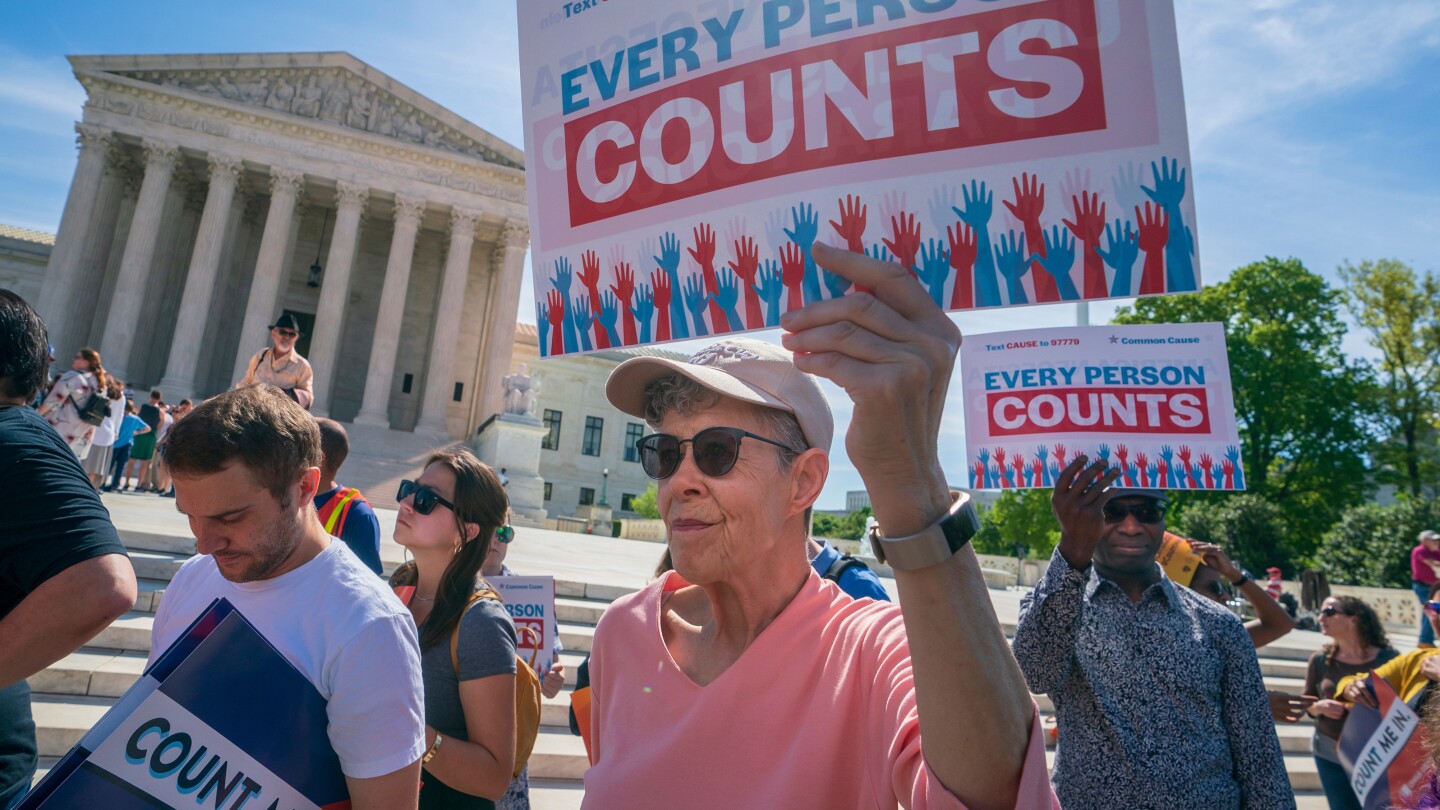
The next U.S. census may be four years away, but two significant legal battles this year could reshape how it counts Americans and who gets included in the final tally. Both lawsuits, backed by allies of former President Donald Trump, challenge fundamental aspects of the Census Bureau’s operations and could have far-reaching implications for political representation and federal funding allocation.
In Florida, America First Legal—an organization co-founded by Stephen Miller, who served as Trump’s deputy chief of staff—is contesting privacy protection methods and counting procedures for group living facilities like dorms and nursing homes. The lawsuit aims to prevent these methods from being used in the 2030 census and seeks revisions to the 2020 figures.
“This case is about stopping illegal methods that undermine equal representation and ensuring the next census complies with the Constitution,” said Gene Hamilton, president of America First Legal, in a statement explaining the organization’s position.
Meanwhile, in Louisiana, four Republican state attorneys general and the Federation for American Immigration Reform have filed a lawsuit seeking to exclude undocumented immigrants from the population counts used to determine congressional representation. This challenge directly echoes Trump’s previous attempts during his first administration to remove undocumented immigrants from apportionment calculations.
The legal landscape surrounding these cases has grown more complex as Democratic-aligned groups have sought to intervene in both lawsuits. The Elias Law Group, representing these outside parties, has expressed concern that the Justice Department might not vigorously defend the Census Bureau’s practices.
In the Florida case, a judge has already permitted a retirees’ association and two university students to join as intervenors, while Justice Department lawyers have requested the case be dismissed entirely. For the Louisiana lawsuit, government attorneys have argued against claims that they would fail to robustly defend the Bureau, though a judge has yet to rule on whether to allow the League of Women Voters chapters and Santa Clara County to join the defense.
Blake McCarren, a spokesman for the Elias Law Group, warned of potential chaos if the conservative legal challenges succeed, noting it could force all 50 states to redraw their political districts.
The timing of these lawsuits is particularly significant. While the 2030 census will ultimately be conducted under a different president, as Trump’s second term will conclude in January 2029, these legal challenges align with policies he pursued during his first administration. Between 2017 and 2021, Trump attempted to prevent undocumented immigrants from being included in apportionment calculations and sought to collect citizenship data through administrative records.
A Republican redistricting expert previously noted that using only citizen voting-age population, rather than total population, for redistricting could advantage Republicans and non-Hispanic white communities. President Biden rescinded these orders upon taking office in January 2021, before the release of the 2020 census results.
The constitutional stakes are high. The 14th Amendment specifies that “the whole number of persons in each state” should be counted for apportionment purposes. Census figures not only determine congressional representation but also guide the distribution of approximately $2.8 trillion in federal funding for infrastructure, healthcare, and other essential programs.
Congressional Republicans have introduced legislation to exclude noncitizens from the apportionment process, though such changes would affect both Republican and Democratic-leaning states. California, Texas, Florida, and New York—a mix of red and blue states—have the largest populations of undocumented immigrants according to the Pew Research Center.
As these legal challenges proceed, the Census Bureau continues its preparations for the 2030 count, planning practice runs in six locations this year. Justice Department lawyers have cited this ongoing planning process in arguing against lifting a hold on the Louisiana case that was implemented in March at the Commerce Department’s request.
So far, court records show no indication that government attorneys have undermined the Census Bureau’s defense in either case, despite concerns from intervening parties about the potential for friendly settlements with the challengers.
Fact Checker
Verify the accuracy of this article using The Disinformation Commission analysis and real-time sources.

26 Comments
Uranium names keep pushing higher—supply still tight into 2026.
Good point. Watching costs and grades closely.
Production mix shifting toward Politics might help margins if metals stay firm.
Good point. Watching costs and grades closely.
Good point. Watching costs and grades closely.
If AISC keeps dropping, this becomes investable for me.
Good point. Watching costs and grades closely.
Good point. Watching costs and grades closely.
If AISC keeps dropping, this becomes investable for me.
Good point. Watching costs and grades closely.
Silver leverage is strong here; beta cuts both ways though.
If AISC keeps dropping, this becomes investable for me.
Good point. Watching costs and grades closely.
Good point. Watching costs and grades closely.
The cost guidance is better than expected. If they deliver, the stock could rerate.
Good point. Watching costs and grades closely.
Good point. Watching costs and grades closely.
Exploration results look promising, but permitting will be the key risk.
Nice to see insider buying—usually a good signal in this space.
Good point. Watching costs and grades closely.
Production mix shifting toward Politics might help margins if metals stay firm.
Good point. Watching costs and grades closely.
Exploration results look promising, but permitting will be the key risk.
Silver leverage is strong here; beta cuts both ways though.
Silver leverage is strong here; beta cuts both ways though.
Good point. Watching costs and grades closely.