


Listen to the article
Congress Stalls on College NIL Legislation Amid Political Divisions
Congress has failed to advance legislation addressing the controversial Name, Image, Likeness (NIL) landscape in collegiate athletics, with lawmakers planning to revisit the issue in early 2026 amid continuing disagreements on regulation approaches.
The House recently withdrew a proposed NIL bill in December after it became entangled in partisan politics and timing controversies. The legislation, known as the Student Compensation and Opportunity through Rights and Endorsements (SCORE) Act, would cap the percentage of athletic revenue schools can use to pay athletes at 22 percent.
NIL, which allows college athletes to profit from their personal brand through endorsement deals and marketing opportunities, has transformed collegiate athletics since its implementation. Athletes now routinely transfer between institutions seeking better visibility and more lucrative NIL contracts, with players at powerhouse programs like Ohio State commanding significantly higher values than those at smaller schools like North Dakota State.
This shift has exacerbated concerns about competitive balance, with dominant conferences like the SEC and Big Ten further consolidating their advantage over smaller conferences such as the Mid-American and Sunbelt. With the NCAA appearing unable to establish consistent nationwide rules, many stakeholders have looked to Congress for a federal framework.
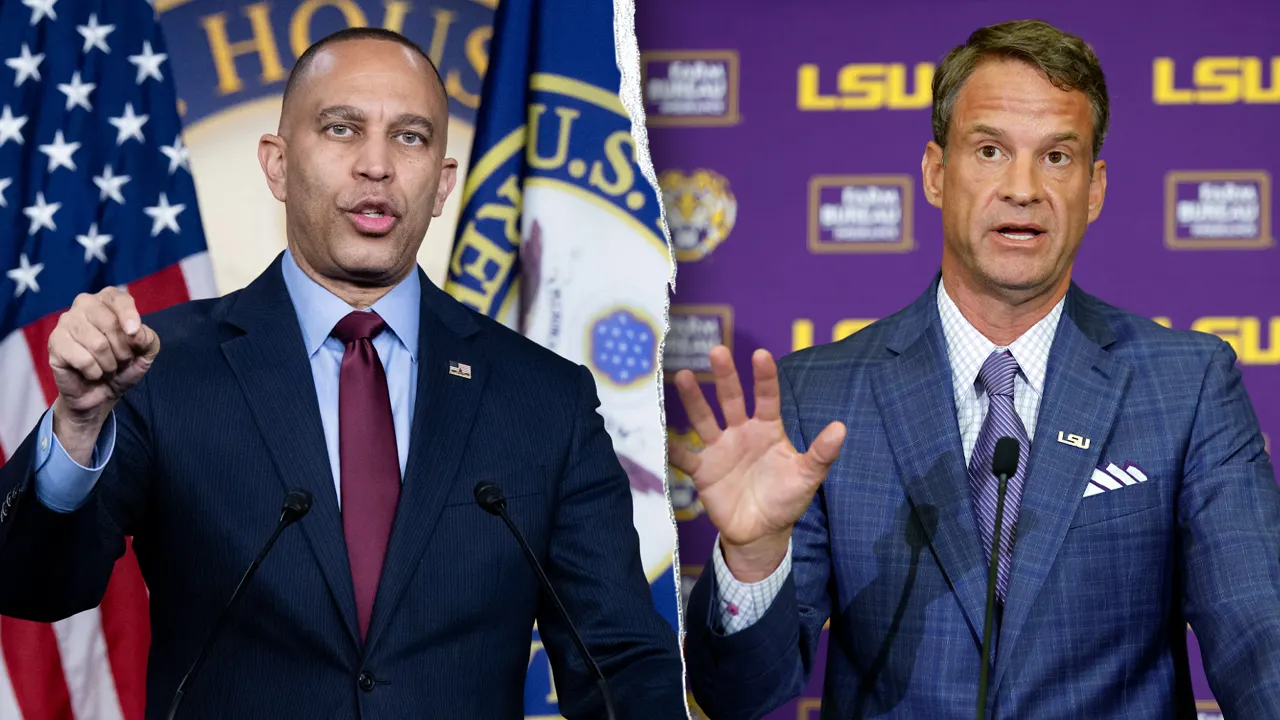
House Minority Leader Hakeem Jeffries (D-N.Y.) raised eyebrows by questioning the timing of the legislation, which coincided with former Ole Miss coach Lane Kiffin’s high-profile move to Louisiana State University. Jeffries publicly wondered whether the bill’s push was influenced by House Speaker Mike Johnson and Majority Leader Steve Scalise – both LSU graduates – and wealthy alumni connected to the school, dubbing it the “Lane Kiffin Protection Act.”
“People are asking the question, ‘Why did you decide to bring this bill this week?’ with all the other issues that the country is demanding that we focus on,” Jeffries said, suggesting other priorities should take precedence.
The controversy proved too divisive, forcing Republican leadership to pull the legislation from consideration. However, House Budget Committee Chairman Jodey Arrington (R-Texas) emphasized the urgency, stating, “I think we need to do it sooner rather than later.”
Rep. Debbie Dingell (D-Michigan) echoed similar sentiments during summer preparatory sessions: “We need a national framework. One with clarity and real enforcement to bring fairness, transparency, and equity to the new NIL era.”
The divide largely falls along party lines. Most Republicans support the SCORE Act’s approach, while Democrats contend it favors institutions over athletes, particularly regarding labor rights and whether student-athletes should be classified as university employees.
“Passing the SCORE Act as it stands would only eliminate students’ abilities to collectively bargain,” argued Rep. Emilia Sykes (D-Ohio).
The fundamental question remains unresolved: Should athletes be considered employees? Senator Cynthia Lummis (R-Wyoming) was unequivocal: “I do not think they should be granted employee status.”
Some lawmakers question whether Congress should involve itself in collegiate athletics at all. Rep. Frank Pallone (D-New Jersey), ranking Democrat on the Commerce Committee, suggested Congress should prioritize “very real threats to our nation’s colleges and universities” rather than sports regulations.
Republican Rep. Chip Roy of Texas criticized the bill for favoring major conferences while calling for comprehensive NCAA governance reforms, particularly regarding excessive coaching compensation packages.
Meanwhile, Senator Josh Hawley (R-Missouri) has proposed a broader approach that would extend NIL rights to all Americans as protection against Big Tech and artificial intelligence. “We ought to give name, image and likeness rights to every single American. You should be able to control your image online. Control your data. Control your kids’ data,” Hawley said.
Lawmakers plan to revise the NIL legislation and attempt another vote in early 2026, possibly coinciding with college football’s championship period. However, the crowded legislative calendar – including healthcare subsidies, government funding deadlines, and other pressing matters – raises questions about whether Congress will prioritize this issue.
As collegiate athletics continues its transformation under the current NIL system, the lack of consistent national standards remains a challenge for schools, conferences, and athletes alike, with the prospect of federal regulation still uncertain.
Fact Checker
Verify the accuracy of this article using The Disinformation Commission analysis and real-time sources.

14 Comments
This debate over college athlete compensation rights highlights the broader commercialization and professionalization of major college sports programs. It’s a challenging issue without easy answers.
Indeed, the NCAA has resisted meaningful changes for a long time. Thoughtful, nuanced policymaking will be crucial as lawmakers try to find the right balance.
The NIL landscape has certainly shaken up college sports in recent years. It will be important for lawmakers to find an approach that preserves the student-athlete model while also giving players more economic opportunities.
Absolutely, it’s a delicate balance. Thoughtful regulation could help address concerns around competitive fairness while still allowing athletes to benefit from their name and brand.
The failure to advance NIL legislation in Congress is disappointing, but not surprising given the political divides. This issue requires thoughtful, bipartisan solutions to work for all involved.
Absolutely, partisanship has unfortunately seeped into an issue that should be about fairness and opportunity for student-athletes. Hopefully lawmakers can find common ground soon.
The NIL debate underscores the power dynamics and money at play in big-time college sports. While athletes deserve more rights, implementing fair and effective regulations will be challenging.
Agreed, this is a complex issue without easy answers. Any new rules will need to carefully balance the interests of athletes, schools, and the overall integrity of the system.
This issue highlights the ongoing tensions between amateurism and commercialization in college athletics. Curious to see if Congress can find a legislative solution that satisfies all stakeholders.
Good point. The NCAA and schools have resisted big changes for a long time, so it will be interesting to see if federal intervention can finally resolve this long-standing debate.
Curious to see how the NIL landscape continues to evolve, especially with the potential for more athlete transfers seeking better endorsement deals. This could further destabilize competitive balance in college sports.
That’s a good point. The transfer portal dynamic adds another layer of complexity. Any new NIL regulations will need to consider how to maintain some level of parity between programs.
Interesting to see the ongoing debate around NIL rights and the impact on college athletics. While there are valid concerns about competitive balance, allowing athletes to profit from their name and image seems like an important step forward.
I agree, it’s a complex issue with valid arguments on both sides. Striking the right balance will be key as the NCAA and lawmakers navigate this evolving landscape.