


Listen to the article
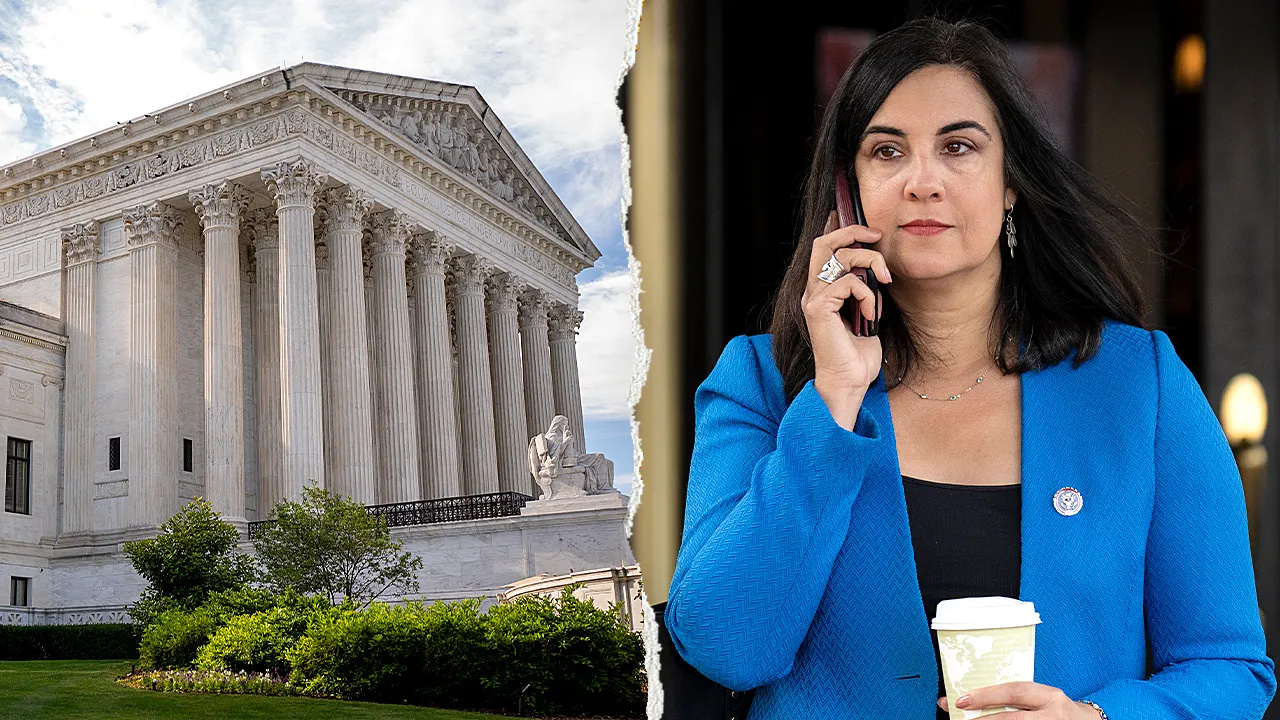
New York’s sole Republican House member has appealed to the Supreme Court to block a Democrat-backed redistricting effort that threatens to reshape her congressional district ahead of November’s elections.
Rep. Nicole Malliotakis filed the petition last week, seeking to halt a state court-ordered redraw of New York’s 11th congressional district (NY-11), which encompasses Staten Island and parts of southern Brooklyn. The district stands as the only Republican-held seat in New York City after Malliotakis defeated Democrat Max Rose in 2020.
The legal battle began when a New York State Supreme Court judge ruled last month that Malliotakis’ district unconstitutionally dilutes the voting power of Black and Latino residents. The lawsuit was spearheaded by attorney Marc Elias’ law firm on behalf of four New York residents.
In her Supreme Court petition, Malliotakis argues that the Manhattan court “violated the Equal Protection Clause by prohibiting New York from running congressional elections until the state racially gerrymanders” her district. She points out the irony of claims that minorities are disenfranchised when she herself is Latina, with a Cuban mother who fled communism.
“The fact that they’re claiming somehow Hispanics and minorities are disenfranchised when I’m the first Hispanic elected to represent the district makes it even more ridiculous,” Malliotakis stated in a recent interview.
Justice Jeffrey Pearlman’s decision found that “Black, Latino, and Asian Staten Islanders’ political representation and participation in politics still lags behind White Staten Islanders,” violating the New York State Constitution. The ruling determined that minority groups vote as a bloc, as do white voters, but minority-preferred candidates “usually” lose.
Malliotakis counters that the New York State Legislature adopted the district’s current boundaries just two years ago “with an overwhelming majority of the Legislature’s Black and Latino members voting in favor of it.” Her petition emphasizes that the lawsuit was filed “less than four months ago” claiming that votes of the district’s Black and Latino residents—who comprise about 23% of the population—are unconstitutionally diluted because their preferred candidates win only 25% of the time.
The congresswoman warns that the court’s decision to “racially gerrymander” the district creates “unconstitutional chaos” with election preparations already underway. Candidate nominating petitions are set to begin circulating on February 24, adding urgency to the dispute.
Democrats have made no secret of their desire to eliminate the city’s lone Republican House seat. House Democratic Leader Hakeem Jeffries praised the ruling as “the first step toward ensuring communities of interest remain intact from Staten Island to Lower Manhattan.”
The New York redistricting fight represents one flashpoint in a nationwide battle over congressional maps that could determine control of the House of Representatives. Similar redistricting conflicts have occurred in Texas, where Republicans redrew maps to potentially gain five House seats, and California, where Democrats sought similar advantages.
The case highlights the increasing role courts play in determining electoral boundaries, with significant implications for representation and the balance of power in Congress. For Malliotakis, the outcome could determine whether New York City retains any Republican representation in the House, while for Democrats, it presents an opportunity to gain ground in their quest to reclaim the House majority.
As the Supreme Court considers the petition, both parties are watching closely, recognizing that the resolution of this single district dispute could influence not just New York politics but potentially the national political landscape as well.
Fact Checker
Verify the accuracy of this article using The Disinformation Commission analysis and real-time sources.

8 Comments
The potential for gerrymandering to dilute the voting power of minority communities is a serious concern. I hope the Supreme Court carefully considers the arguments on both sides and reaches a decision that upholds democratic principles.
It’s noteworthy that Rep. Malliotakis, as a Latina Republican, is challenging the Democratic-led redistricting efforts. This adds an interesting angle to the discussion around political representation and the diversity of perspectives within each party.
This is an interesting case regarding redistricting and political representation. I’m curious to see how the Supreme Court rules on this matter and whether they uphold the state court’s decision or side with Rep. Malliotakis’ appeal.
The dynamics of this case highlight the ongoing debate over redistricting and how to balance political interests with ensuring fair and equitable representation for all constituents. I’ll be following this story closely.
The Supreme Court’s decision on this case could have significant implications for the upcoming midterm elections and the political landscape in New York. I’m curious to see how they navigate the complex legal and political considerations involved.
This case touches on important issues of voting rights, political representation, and the role of the judiciary in redrawing district boundaries. I’ll be interested to see how the Supreme Court approaches this sensitive and high-stakes matter.
As a Latina GOP representative, Rep. Malliotakis’ perspective on this redistricting challenge is particularly notable. The court’s ruling will shed light on how it balances the rights of minority communities with partisan interests.
As a Latina GOP representative, Rep. Malliotakis makes a compelling argument about the potential for her district to be unconstitutionally gerrymandered. The voting power of minority residents is an important consideration in redistricting.