


Listen to the article
The Labor Department announced a nearly $14 million investment to revitalize America’s struggling shipbuilding industry through specialized workforce training programs. This initiative aligns with President Donald Trump’s broader strategy to strengthen U.S. maritime capabilities in the face of growing competition from global rivals.
The funding will be distributed between two American educational institutions: Delaware County Community College will receive $8 million to partner with Hanwa Philly Shipyard and South Korea, while Massachusetts Maritime Academy will get $5.8 million to collaborate with Finland and Bollinger Shipyards. Both programs aim to provide American workers with advanced shipbuilding skills through internationally recognized trade curricula and expanded apprenticeship opportunities.
“Restoring America’s maritime dominance can’t be accomplished without skilled American workers,” Secretary of Labor Lori Chavez-DeRemer said in a statement. “In line with President Trump’s executive orders, these projects will help train our next generation of shipbuilders and ensure the skills critical to revitalizing our shipbuilding industry are developed here at home.”
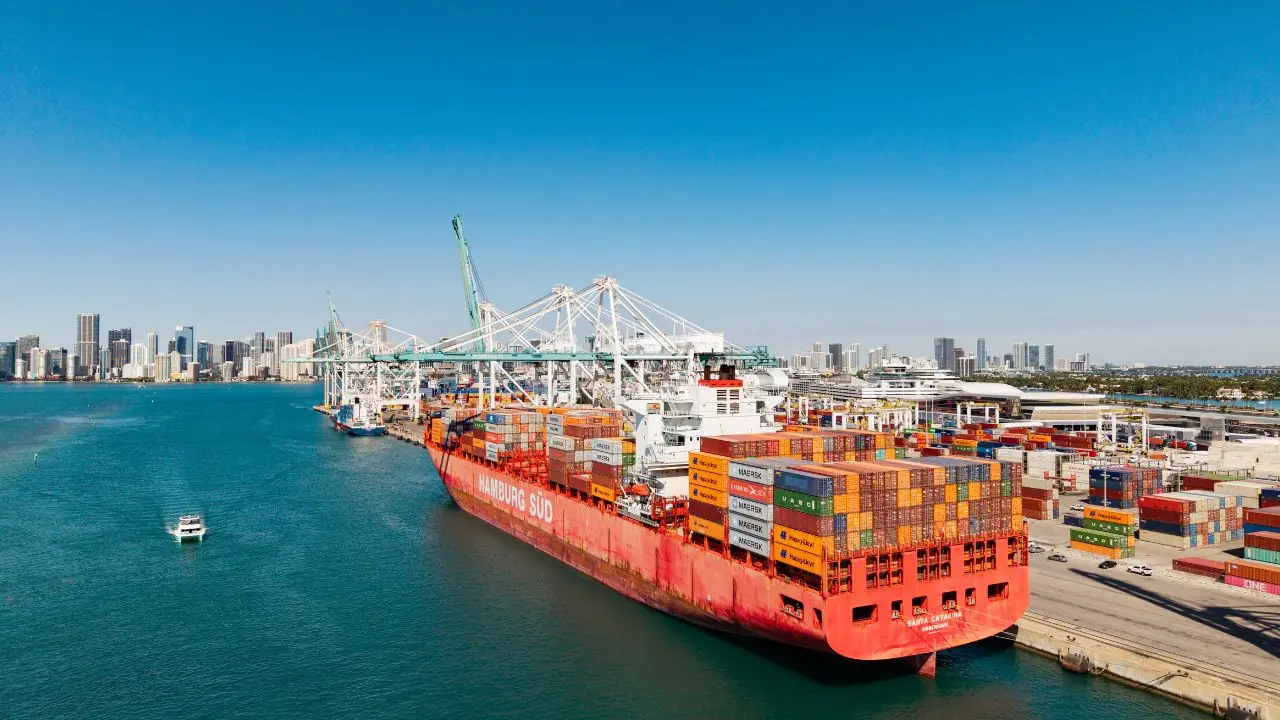
The initiative comes as the United States faces a significant competitive disadvantage in global shipbuilding. According to data from the Center for Strategic and International Studies (CSIS), China dominates the sector with over 50% of global shipbuilding output, followed by South Korea at nearly 29% and Japan at 13%. The U.S. accounts for a mere 0.1% of the world’s shipbuilding production.
This decline has serious implications beyond commercial interests. A March report from CSIS warned that “the erosion of U.S. and allied shipbuilding capabilities poses an urgent threat to military readiness, reduces economic opportunities, and contributes to China’s global power-projection ambitions.”
The initiative also seeks to tap into specialized expertise from key allies. Finland, for instance, is a global leader in icebreaker technology, with Finnish firms designing approximately 80% of icebreakers worldwide and Finnish shipyards constructing more than 60% of these vessels, according to the Wilson Center.
President Trump has made reinvigorating American shipbuilding a priority. In March, he told lawmakers he would “resurrect” both commercial and military shipbuilding sectors. This was followed by an executive order in April that outlined a comprehensive approach to strengthening the industry.
The executive order called for assessments of potential financial support mechanisms, including the Defense Production Act, the Department of Defense Office of Strategic Capital, and a proposed Maritime Security Trust Fund. It also directed agencies to develop a maritime action plan and instructed the U.S. trade representative to formulate recommendations for countering China’s “anticompetitive actions within the shipbuilding industry.”
This workforce development initiative represents one component of a broader strategy to address the complex challenges facing America’s shipbuilding industry. Beyond training workers, revitalization will require significant investment in infrastructure, technology, and policy support to compete with established global players.
The partnerships with South Korea and Finland are particularly strategic, as they allow American institutions to learn from countries with thriving shipbuilding sectors. South Korea has emerged as a global leader in commercial shipbuilding, particularly for large vessels, while Finland’s expertise in specialized craft like icebreakers offers valuable knowledge for niche maritime applications.
As global maritime trade continues to expand and geopolitical tensions heighten the importance of naval power, the ability to design and construct ships domestically has taken on renewed strategic significance for the United States. Whether these training initiatives will meaningfully shift the balance in global shipbuilding remains to be seen, but they signal a recognition of the industry’s importance to both economic and national security interests.
Fact Checker
Verify the accuracy of this article using The Disinformation Commission analysis and real-time sources.

28 Comments
I like the balance sheet here—less leverage than peers.
Good point. Watching costs and grades closely.
Good point. Watching costs and grades closely.
If AISC keeps dropping, this becomes investable for me.
Silver leverage is strong here; beta cuts both ways though.
Good point. Watching costs and grades closely.
I like the balance sheet here—less leverage than peers.
Good point. Watching costs and grades closely.
Good point. Watching costs and grades closely.
I like the balance sheet here—less leverage than peers.
Good point. Watching costs and grades closely.
Good point. Watching costs and grades closely.
Uranium names keep pushing higher—supply still tight into 2026.
Good point. Watching costs and grades closely.
Interesting update on Labor Department Launches Multimillion-Dollar Shipbuilding Training Initiative to Close Gap with China. Curious how the grades will trend next quarter.
Good point. Watching costs and grades closely.
Nice to see insider buying—usually a good signal in this space.
Good point. Watching costs and grades closely.
I like the balance sheet here—less leverage than peers.
Nice to see insider buying—usually a good signal in this space.
Good point. Watching costs and grades closely.
The cost guidance is better than expected. If they deliver, the stock could rerate.
Good point. Watching costs and grades closely.
The cost guidance is better than expected. If they deliver, the stock could rerate.
Good point. Watching costs and grades closely.
The cost guidance is better than expected. If they deliver, the stock could rerate.
Good point. Watching costs and grades closely.
Silver leverage is strong here; beta cuts both ways though.